
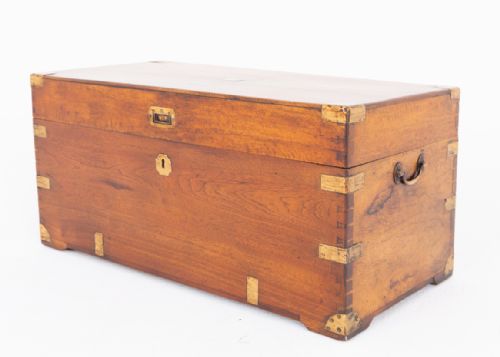


Wood Bound Travel Trunk
A wood bound travel trunk is a portable piece of history built for movement, offering robust storage with character.
Wood Bound Travel Trunk
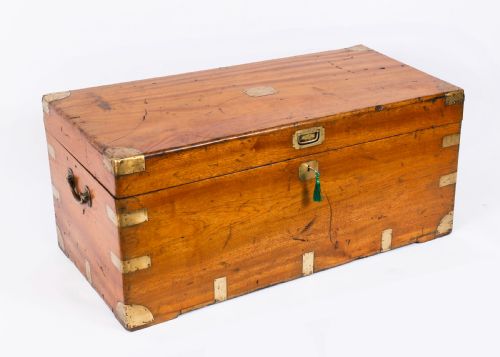
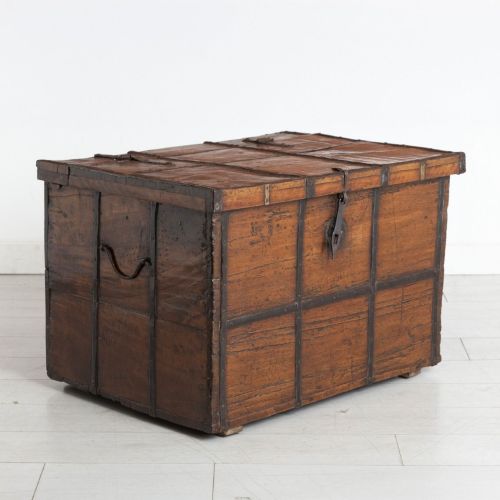
When you search for a wood bound travel trunk, you are looking at utilitarian luggage designed to withstand long journeys by land and sea during the nineteenth and early twentieth centuries. These pieces combine sturdy timber construction with protective exterior battens, corners, and straps.
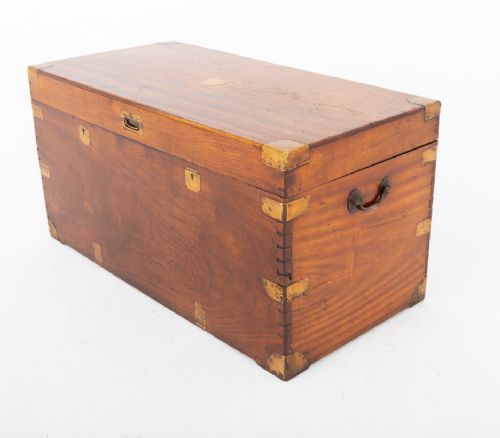
You are most likely to meet campaign styles made from camphor wood, mahogany, or pine, reinforced with brass or iron bands to handle rough transit. They appear as heavy chests, blanket boxes, and steamer trunks suited for military officers or civilian travellers.
The forms range from compact China Trade chests to large Victorian military trunks fitted with interior compartments. Each piece reflects the practical demands of nineteenth-century mobility and colonial expansion.
How they were made
Cabinetmakers and trunk makers constructed these pieces using solid timbers like camphor wood, mahogany, and pine, often covered in canvas or leather. Camphor wood was selected for its insect-repellent properties, making it ideal for storing textiles during long voyages.
Structural integrity relied on exterior metalwork, including iron and brass straps, corner brackets, and flush-fitting drop handles. These additions protected the wooden edges from heavy impact and allowed officers and staff to lift cumbersome loads easily.
Listings feature wood bound travel trunks spanning the nineteenth century up to the 1930s, using materials including camphor wood, brass, iron, leather, and canvas.
What varies in quality
The distinction between ordinary utility luggage and finer pieces rests on the choice of primary timber and the execution of the metal mounts. Solid camphor wood or finely figured mahogany paired with heavy brass binding marks a higher standard than plain pine and simple iron.
Interior fittings further separate standard trunks from superior examples, particularly those retaining original compartmentalisation, key locks, or maker's labels. The precision of the dovetail joints and the quality of the flush hardware determine the overall craftsmanship of the chest.
Charles Kingston·P&OSN Co
The Wood Bound Travel Trunk Glossary
- Campaign trunk
- A portable chest designed for military officers on active service, featuring recessed handles and reinforced corners for transit. These pieces dismantle or open easily for field use.
- Camphor wood
- An aromatic hardwood native to Asia, prized in nineteenth-century furniture for its distinct scent and natural resistance to pests. It was widely utilised for trunks travelling in tropical climates.
- Steamer trunk
- A lower-profile travel trunk introduced for cabin use on ocean liners during the late nineteenth and early twentieth centuries. Their shallow depth allowed them to fit beneath ship berths.
- China Trade
- Goods manufactured in China during the nineteenth century specifically for export to Western markets, often including camphor wood chests. These items combined traditional local craftsmanship with European forms.
Wood Bound Travel Trunk: Frequently Asked Questions
What is a wood bound travel trunk?
A wood bound travel trunk is a heavy-duty storage chest reinforced with wooden battens and metal hardware, designed for moving personal belongings across long distances during the nineteenth and early twentieth centuries.
These trunks were built to endure the rigours of military campaigns, colonial travel, and ocean liner voyages, functioning as both mobile wardrobes and secure storage.
How were campaign trunks used?
Campaign trunks were utilised by military officers and colonial administrators to transport uniforms, documents, and personal valuables during postings abroad. Their sturdy construction allowed them to be strapped to pack animals, loaded onto carts, and stacked in ships.
Inside, compartments kept items organised while on the move, and drop handles enabled multiple handlers to lift the heavy loads safely.
Where should I put a travel trunk at home?
These trunks sit well at the foot of a bed, in a hallway, or beneath a window as a functional coffee table with internal storage. Their robust timber and metal details anchor a room and provide practical space for blankets or winter clothes.
Keep them away from direct heat sources to prevent the wood and any leather or canvas coverings from drying out.
How do I tell an earlier trunk from a later one?
Earlier trunks from the early nineteenth century often feature solid camphor wood or mahogany construction with heavy brass mounts and hand-forged ironwork. They frequently display the hallmarks of campaign furniture, such as recessed brass carrying handles.
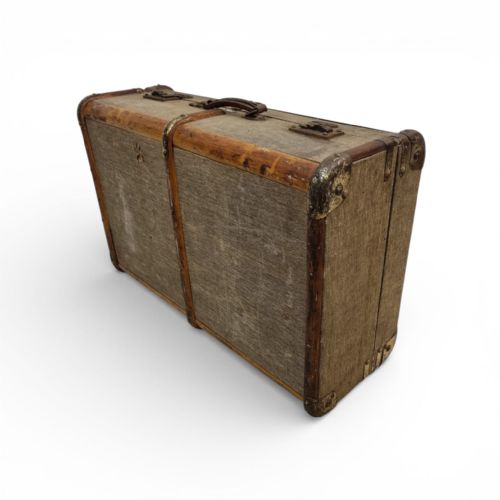
Later examples from around 1900 to 1930 tend to incorporate canvas coverings, stamped metal hardware, and lighter internal frames suited for modern steamship travel.