

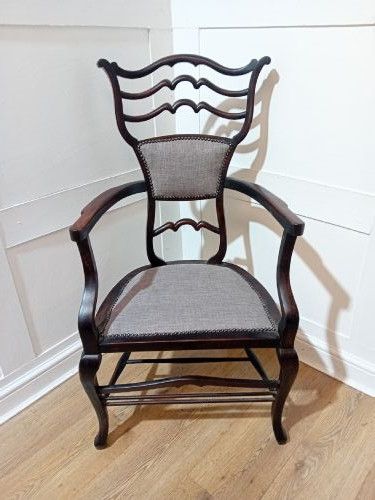
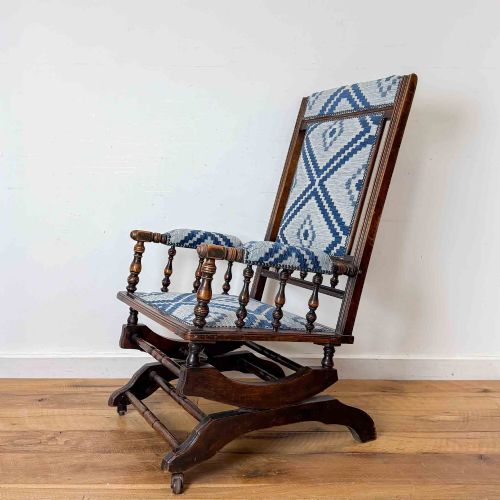
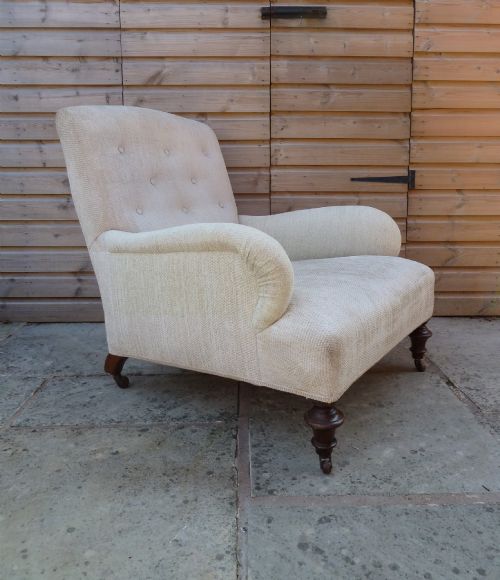


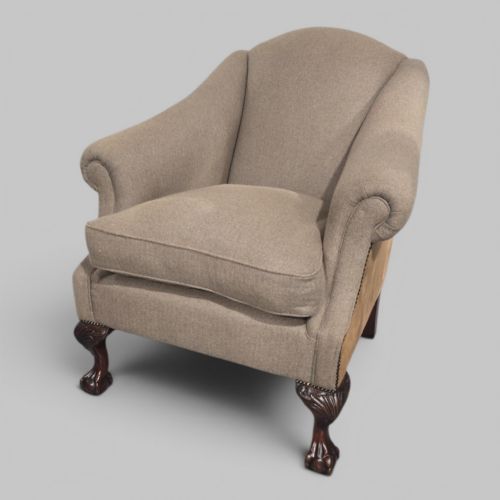
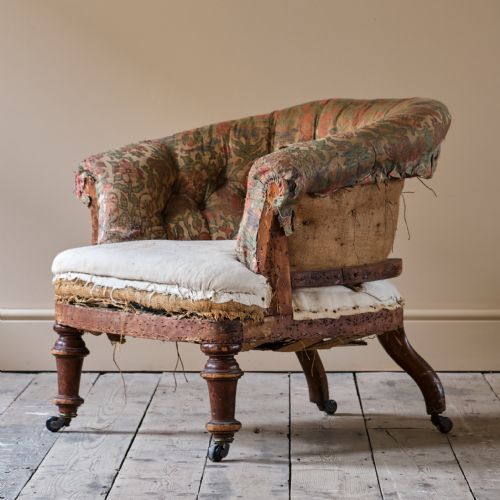
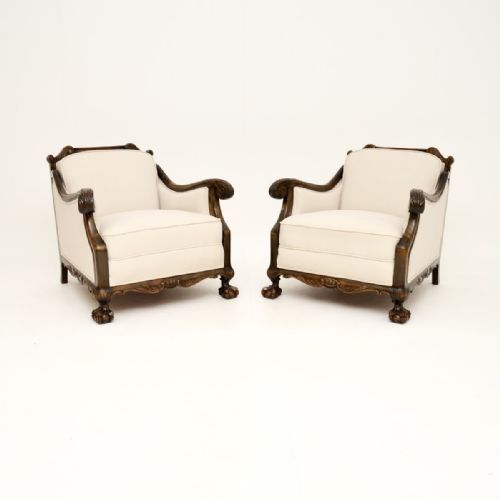
Wood and Fabric Armchair
A wood and fabric armchair brings traditional comfort to a room through solid timber frames and upholstered seats.
Wood and Fabric Armchair
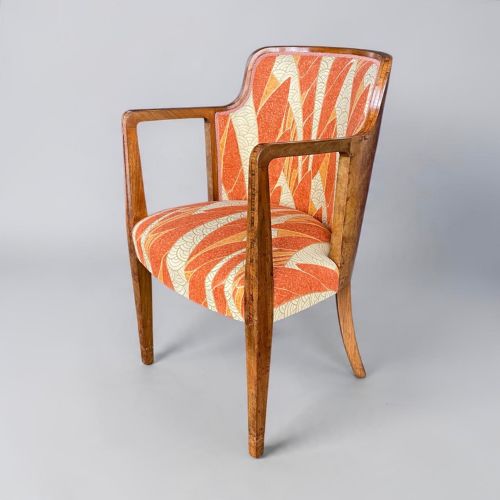
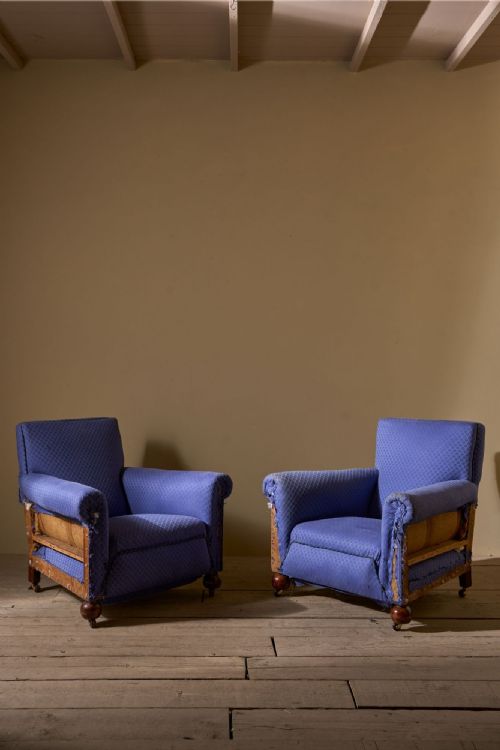
A wood and fabric armchair is a seating form combining a timber frame with upholstered elements such as padded seats, backs, and armrests. Buyers searching this phrase encounter pieces spanning the nineteenth century through the early twentieth century, alongside revival styles and specific regional forms.
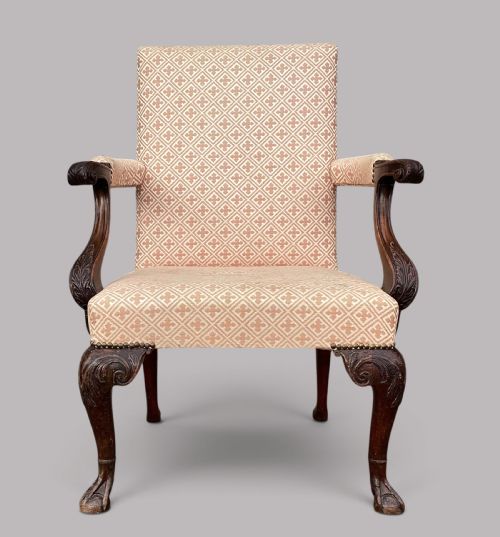
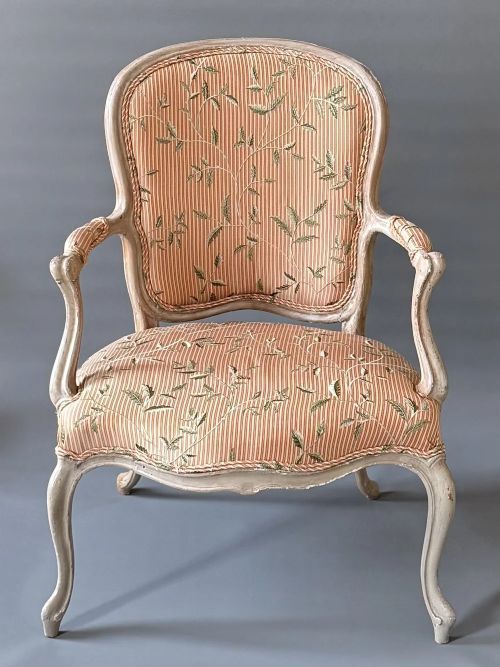
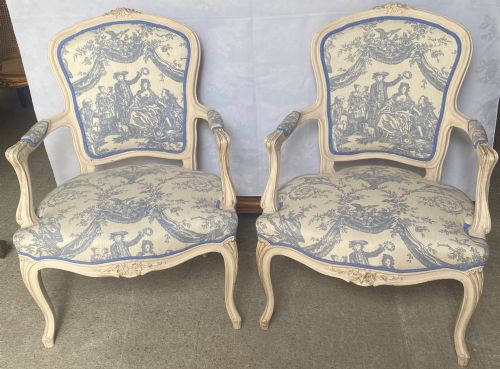
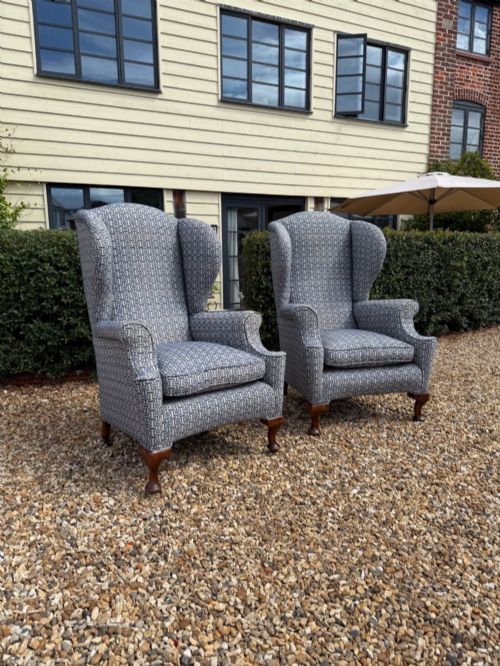
The selection ranges from sturdy Victorian library armchairs and Edwardian open armchairs to French salon chairs and Art Deco club chairs. Common variations include tub backs, wing chairs, and rocking chairs constructed from mahogany, walnut, satin birch, and painted woods.
Makers and designers referenced in these pieces include Giles Grendey, Colefax and Fowler, and the distinctive proportions associated with Howard and Sons. Many examples feature upholstered surfaces covered in silk, textile, or patterned fabric resting on timber legs.
Construction and materials
These armchairs rely on hardwood frames made from mahogany, walnut, and beech, joined with traditional woodworking techniques to support the seating load. Carved details, giltwood finishes, and painted surfaces appear across French and English examples from the nineteenth century.
Upholstery involves textile, fabric, and silk stretched over internal padding and secured to the wooden structure. Brass accents and metal hardware occasionally reinforce structural joints or decorate the exterior timber.
Wood and Fabric Armchair Retail Price Guide 2026
Typical asking prices for wood and fabric armchair among the pieces listed under this phrase on Sellingantiques today, from the lower quarter to the upper quarter. They describe what is for sale here now, not the wider market.
Assessing quality in seating
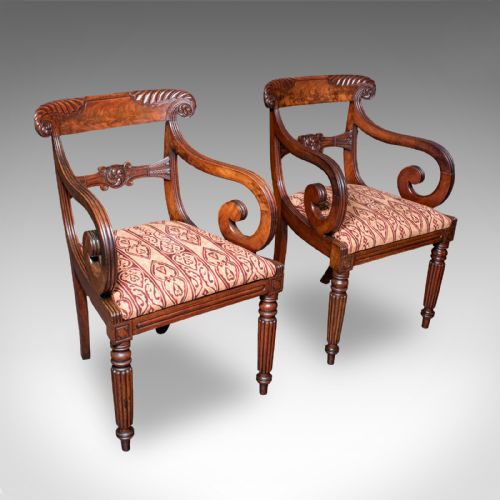
Quality rests in the precision of the timber carving and the structural integrity of the wooden frame. Pieces exhibiting substantial mahogany or walnut construction alongside finely executed cabriole legs or claw and ball feet demonstrate superior workshop standards.
The standard of the upholstery work and the selection of covering materials further distinguish the pieces. Original frames paired with sympathetic reupholstery maintain historical character more effectively than heavily altered examples.
Giles Grendey·Colefax and Fowler·Howard and Sons
The Wood and Fabric Armchair Glossary
- Cabriole leg
- A furniture leg that curves outward at the knee and tapers inward toward an ankle and foot. This shape derives from animal forms and appears frequently on Victorian and eighteenth-century seating.
- Tub chair
- An armchair with a continuous curved back and arms forming a single circular enclosure. This form provides enclosed seating comfort.
- Wing chair
- An armchair with side panels attached to the back to shield the user from drafts. These upholstered seats date across multiple centuries of English and continental design.
- Satin birch
- A pale timber with a lustrous grain utilised in Swedish and European chair frames. It offers a distinct light tone compared to dark mahogany.
Wood and Fabric Armchair: Frequently Asked Questions
What is a wood and fabric armchair?
A wood and fabric armchair is a seat featuring a visible timber frame combined with upholstered padding on the back, arms, or seat. These pieces range from formal Victorian library chairs to relaxed Edwardian open armchairs.
Such seating provides both structural support through woods like mahogany and walnut and soft comfort via textiles, silks, and contemporary or historic upholstery fabrics.
How do I date an antique armchair?
Dating relies on examining the timber species, joinery methods, and stylistic characteristics of the wooden frame. Victorian pieces often display heavy mahogany and carved walnut, while Edwardian examples show lighter mahogany frames.
Secondary clues include the type of upholstery materials, such as silk or textured fabric, and specific design revivals like Louis XVI or Queen Anne forms.
Where were these armchairs used?
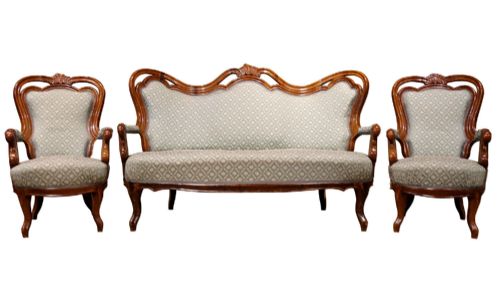
These armchairs served multiple domestic spaces including libraries, morning rooms, salons, and bedrooms. Parlour and salon suites provided formal seating for guests in nineteenth-century homes.
Other variants like rocking chairs and tub chairs suited private chambers and reception rooms, offering comfortable seating tailored to specific household activities.
How do I care for wooden frames?
Preserving the timber frame involves keeping the armchair away from direct heat sources and strong sunlight that can dry out mahogany and walnut. Regular dusting with a soft, dry cloth maintains the polished surface.
Avoid using harsh chemical polishes on antique finishes, particularly on giltwood, painted surfaces, or satin birch, to protect the original wood beneath.