
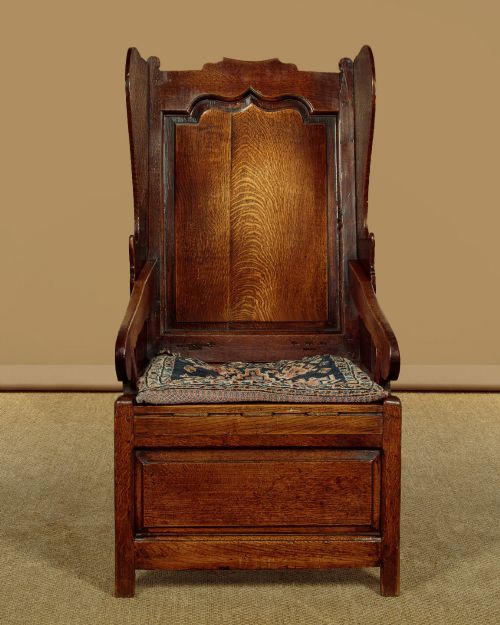
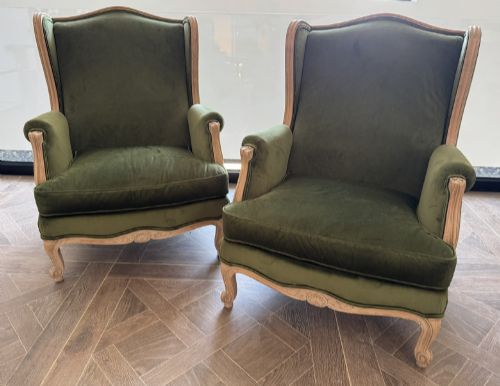
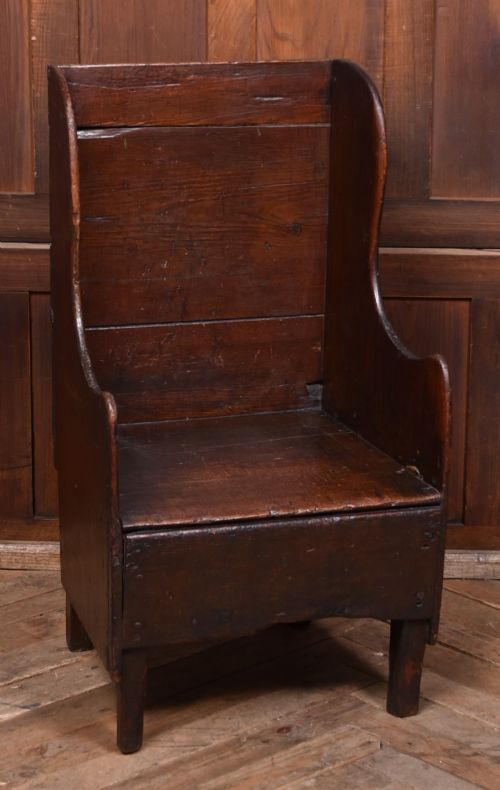
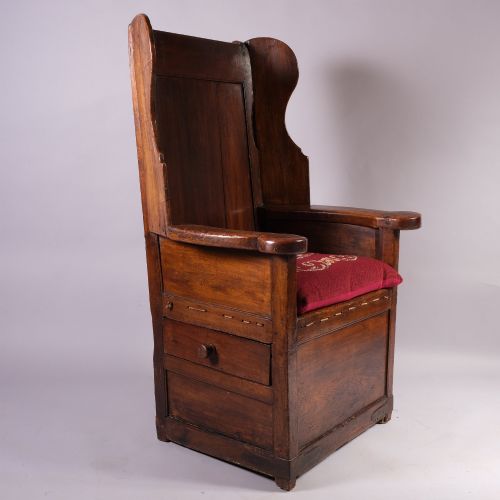


Winged Oak Chair
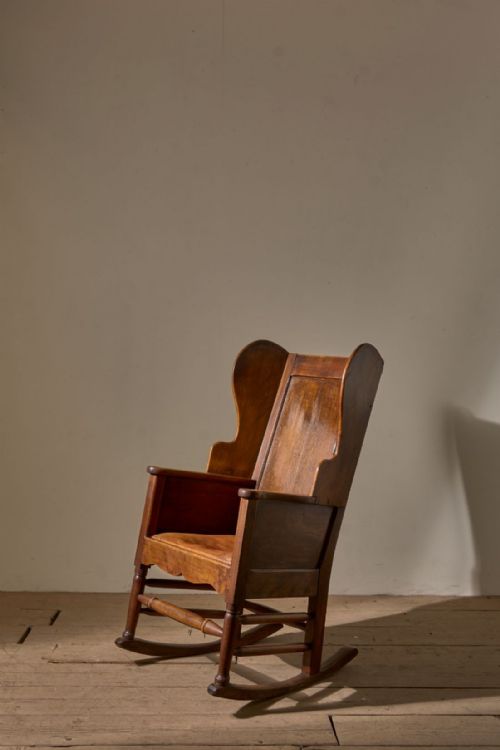
These winged oak chair examples range from sturdy 17th-century vernacular seating to comfortable 20th-century library pieces.
Winged Oak Chair
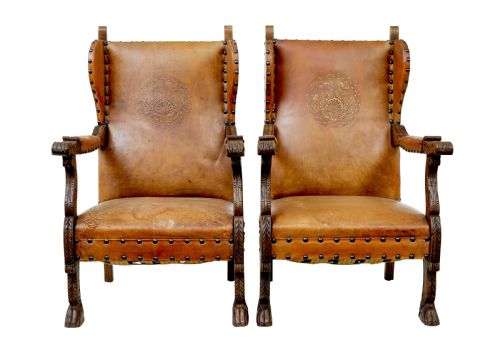
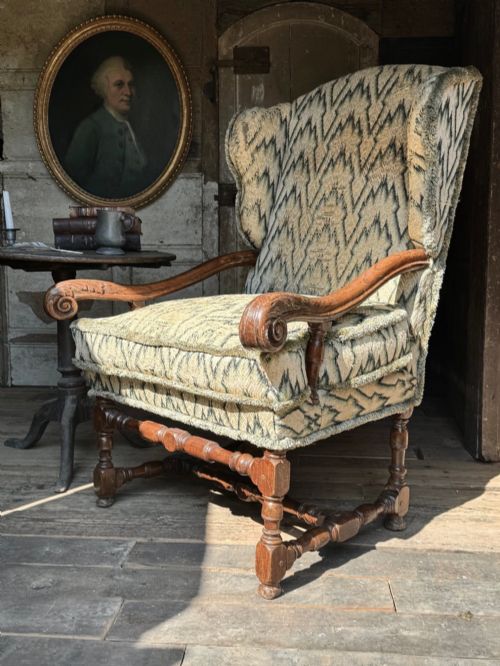
When you search for a winged oak chair, you find heavy timber seating designed to keep drafts away from the body by means of solid side panels or upholstered wings. The examples here span from the 17th century through the Victorian era and into the early 20th century, encompassing various regional forms.
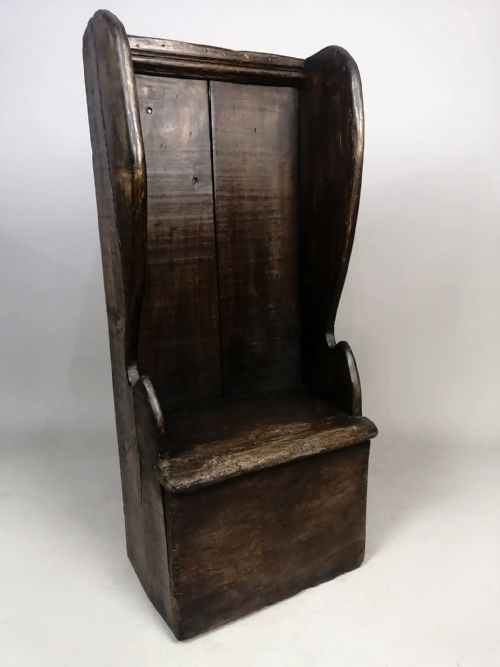
You will frequently encounter lambing chairs and library armchairs among these listings, alongside child-sized variants and rocking configurations. Styles shift from Georgian vernacular and 17th-century vernacular to Victorian Gothic Revival and Edwardian framing.
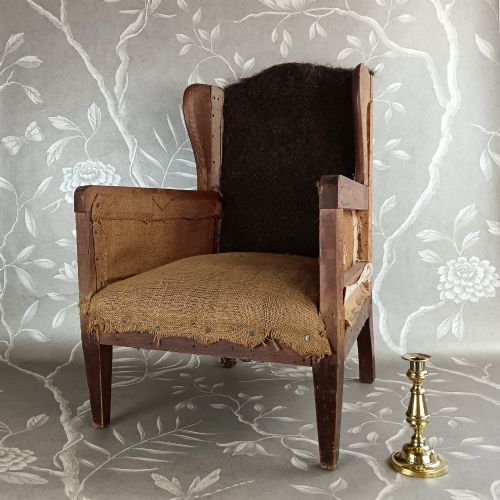
Origins include Welsh and Lakeland country workshops as well as French chateau pieces, demonstrating how domestic comfort evolved alongside timber craftsmanship. Most survivors utilise solid oak structures paired with leather, fabric, hessian, velvet, or textile upholstery.
What varies in quality
Quality in these chairs rests upon the integrity of the timber framing and the proportion of the wings relative to the seat. Earlier vernacular examples show direct hand-working of the oak, while later pieces demonstrate more refined turning and carving details.
The choice and execution of covering materials, whether embossed leather, velvet, or simple fabric, alter the character and historical consistency of each piece. Surviving examples that retain their original structural elements and period upholstery materials stand apart from heavily altered or later reconstructed items.
Listings feature oak combined with materials including brass, leather, fabric, hessian, velvet, and textile across multiple centuries.
George Montague Ellwood·Thomas Hope
The Winged Oak Chair Glossary
- Lambing chair
- A traditional high-backed timber seat featuring solid wings, often built with a drawer beneath the seat or enclosed sides to shield the occupant from cold drafts. These forms frequently originate in rural domestic settings during the 17th and 18th centuries.
- Monopodia
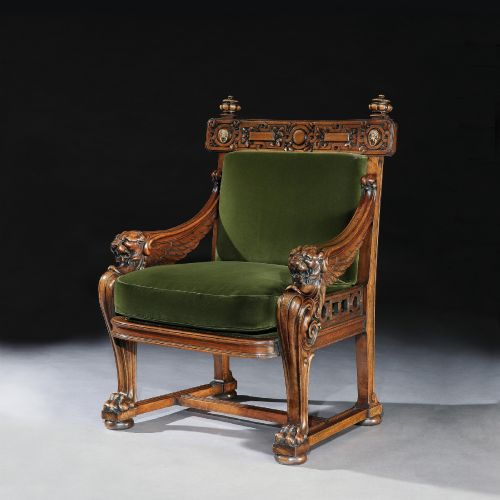
- A carved furniture support taking the form of a single lion leg and paw, often seen on classical revival seating. This decorative detail reflects formal design influences applied to timber frames.
- Vernacular
- Everyday furniture built by local carpenters to regional patterns rather than high-style metropolitan designs. These pieces prioritise functional domestic utility using readily available local timber such as oak.
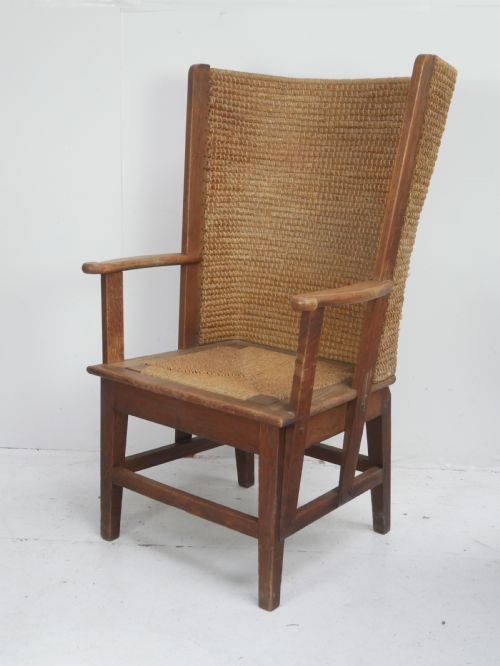
- Orkney chair
- A distinct form of high-backed chair featuring a frame woven from oat straw, associated with northern island traditions. Examples combine timber framing with natural cordage.
- Grotesque
- A decorative carving style incorporating stylized human and animal forms intertwined with foliage. Such motifs appear on 19th-century revival frames and hall chairs.
Winged Oak Chair: Frequently Asked Questions
What is a lambing chair?
A lambing chair is a traditional wooden seat featuring high enclosed sides and wings designed to keep out household drafts. They were commonly used in rural farmhouses.
Many examples include a solid panelled base or a small drawer beneath the seat. Their practical design made them a staple of country life for centuries.
Were these chairs used outdoors?
These chairs were built strictly for indoor domestic use, specifically positioned near hearths to protect inhabitants from cold air currents. Their heavy oak construction kept them stable on uneven stone floors.
Despite their robust timber build, exposure to damp outdoor environments would damage both the wood and the leather or fabric coverings.
How do I care for antique leather?
Antique leather requires gentle cleaning and occasional conditioning to prevent the hide from drying out and cracking over time. Avoid modern chemical cleaners that strip natural oils.
Keeping the chair away from direct sunlight and heat sources preserves the suppleness of Victorian and Edwardian upholstery.