





Wine Bucket on Stand
When you need a wine bucket on stand, you are looking at substantial vessels designed to chill bottles at table or beside a sideboard.
Wine Bucket on Stand
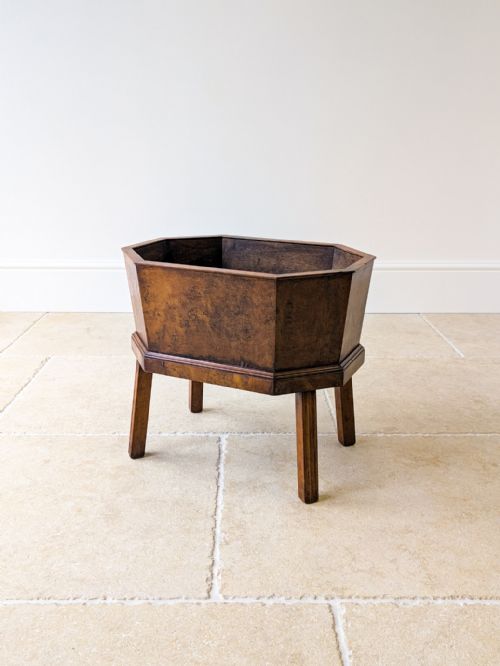
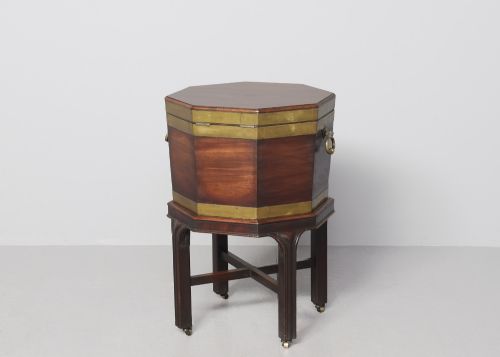
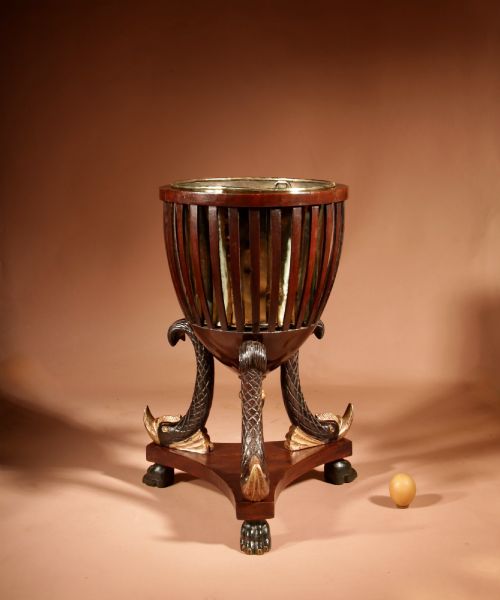
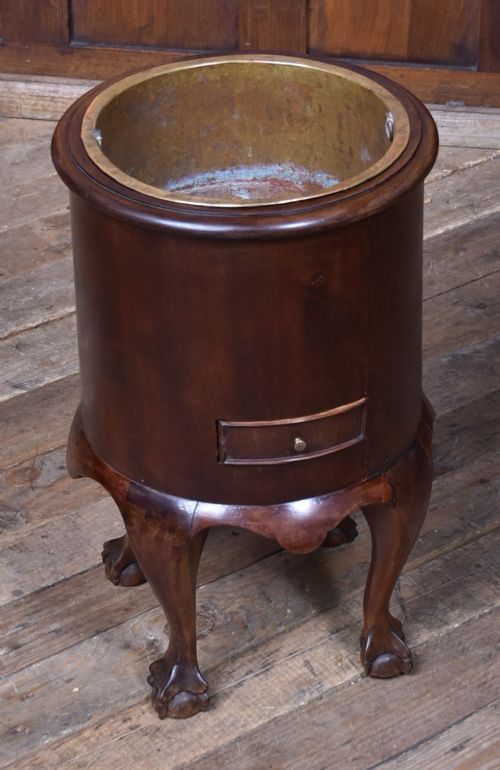
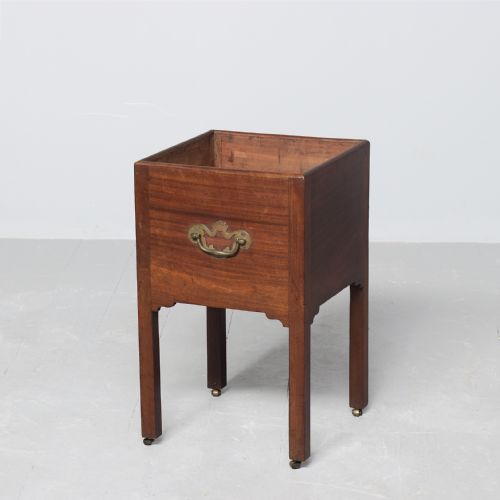
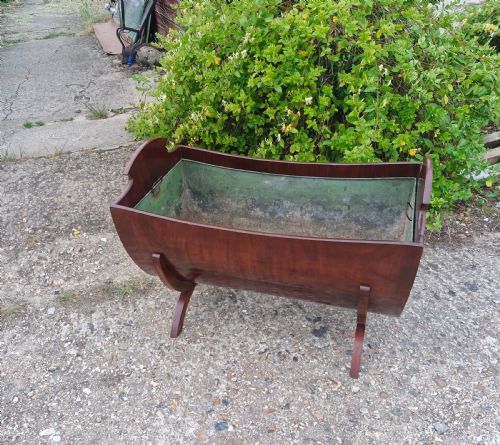
A wine bucket on stand brings together a deep vessel and a fitted support, appearing in forms such as cellarettes, jardinières, and coopered barrels across Georgian, Victorian, and Edwardian periods.
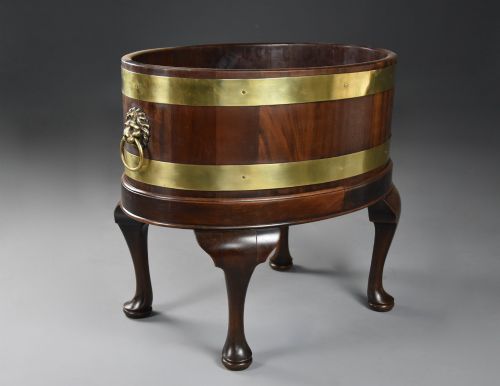
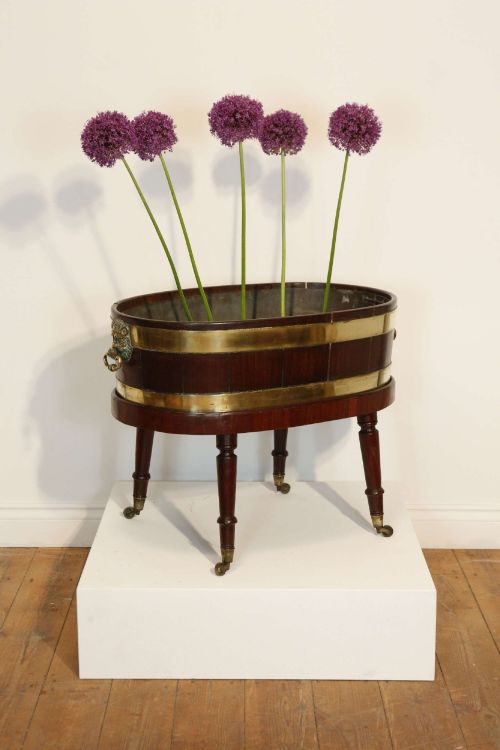
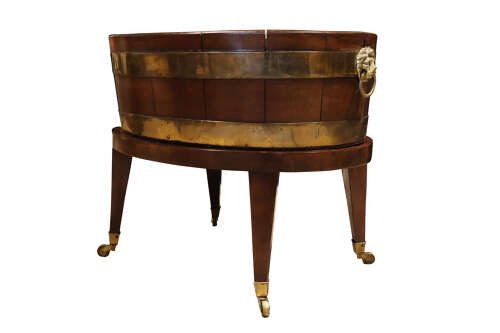
The version you are most likely to meet on this page is the brass-bound mahogany bucket, frequently oval or elliptical in shape, raised on slender legs or a dedicated stand.
Originating largely from English and continental workshops, these pieces bridge the practical needs of dining and the formal presentation of wine in domestic interiors.
Materials and construction
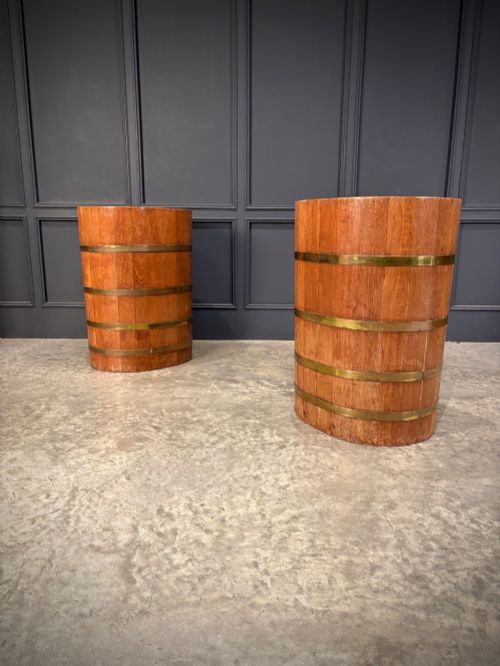
Construction relies heavily on traditional cooperage techniques, using tight staves of mahogany, oak, or walnut shaped to form deep, watertight or metal-lined cylindrical and oval bodies.
Metal components play a central structural and decorative role, employing hand-beaten brass bands, copper liners, and silver plate to secure the wooden staves and retain ice.
Secondary materials such as zinc, ebonised wood, and iron appear across specific periods, providing durable internal linings and contrasting exterior mounts.
Wine Bucket on Stand Retail Price Guide 2026
Typical asking prices for wine bucket on stand among the pieces listed under this phrase on Sellingantiques today, from the lower quarter to the upper quarter. They describe what is for sale here now, not the wider market.
Grape hods once carried harvests down French hillsides before retiring to British drawing rooms as champagne coolers.
Judging quality
Quality rests on the integrity of the timber selection and the precision of the cooperage, where tightly fitted staves and rich natural patina distinguish finer examples from plain utilitarian containers.
The refinement of the metalwork, from hand-selected brass bands to heavy cast handles and fitted liners, marks the distinction between standard production and exhibition pieces.
Warings and Gillow·Gillows·Christofle·WMF
The Wine Bucket on Stand Glossary
- Coopered
- Made with curved wooden staves joined edge-to-edge and bound with metal hoops, much like a traditional barrel. This method provides the structural strength needed for holding heavy liquids and ice.
- Cellarette
- A lockable container used to store wine bottles near the dining table before serving. Many examples sit within dedicated stands or frames.
- Jardinière
- An ornamental pot or stand designed to hold plants or flowers. In this context, the form often doubles as a bottle cooler.
- Hotter
- A traditional continental carrier or hod used during grape harvests. These wooden and metal vessels occasionally adapt to domestic cooling duties.
- Teestoof
- A Dutch warming vessel or foot stove adapted into a decorative bucket. These pieces demonstrate distinctive regional joinery and brass work.
Wine Bucket on Stand: Frequently Asked Questions
What is a wine bucket on stand?
A wine bucket on stand is a freestanding vessel created to hold wine bottles and ice during meals. These objects elevate the bottle container to a convenient height beside the dining table.
They combine deep wooden or metal buckets with matched legs or frames, serving both practical cooling and decorative functions in formal rooms.
How were these stands used?
Historically, servants filled the internal metal liners with ice and water to chill champagne and wine during long courses. The stand kept the heavy container off the floor and within easy reach of the host.
Over time, many of these vessels transitioned into general plant holders or log baskets when dining habits changed.
How do I spot a coopered piece?
Coopered pieces show distinct vertical wooden staves fitted tightly together and secured by exterior metal bands. You can feel the subtle curve of the individual boards on the interior and exterior walls.
This technique mimics barrel-making and allows the wood to expand and contract naturally without splitting.
How do I care for antique wood?
Keep wooden stands away from direct heat sources and sudden temperature shifts to prevent the staves from shrinking or cracking. Apply a neutral beeswax polish occasionally to nourish the grain and maintain the finish.
Avoid leaving standing water directly on unprotected wooden surfaces inside the bucket.