





William Mary Writing Cabinet
A William Mary writing cabinet is a purposeful desk designed for correspondence and storage, bringing architectural presence and rich figured veneers into a room.
William Mary Writing Cabinet
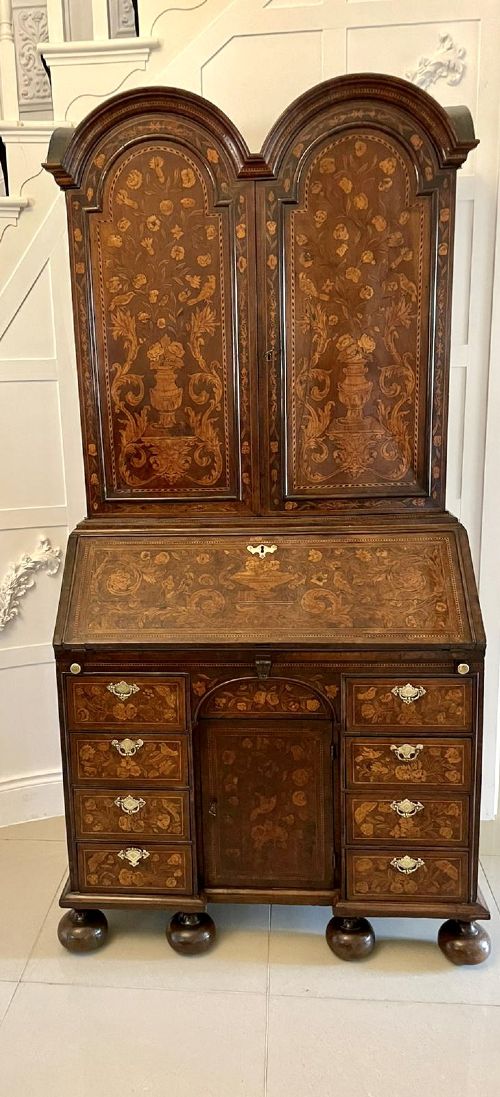
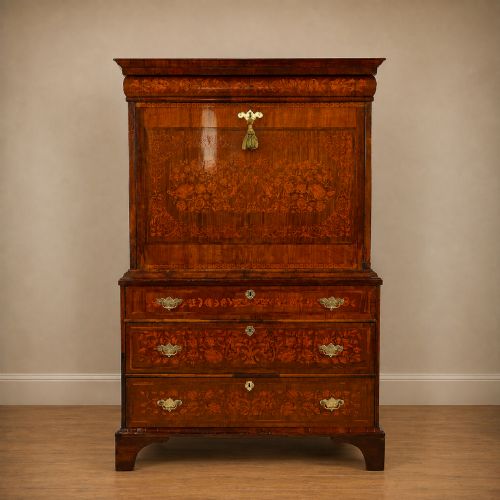
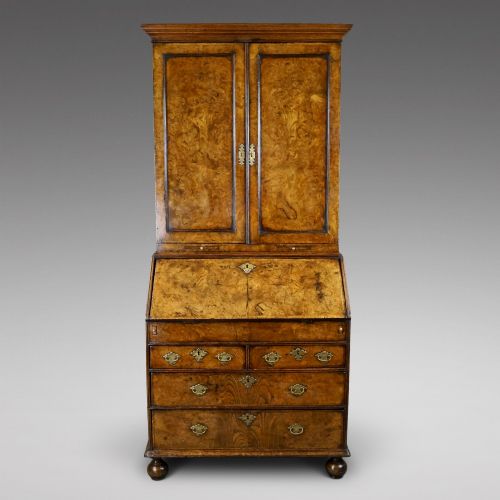
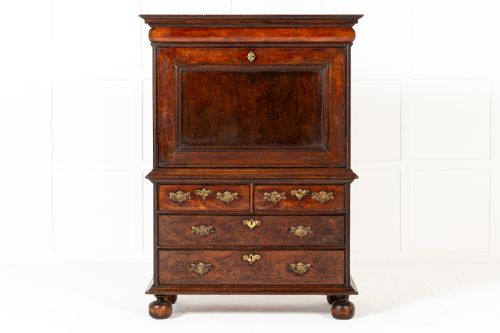
A William Mary writing cabinet unites a drop-front writing surface or bureau compartment with upper bookcase sections and lower drawer configurations, forming a commanding focal point for the interior. The pieces found here span genuine 17th century examples alongside later revival interpretations from the 19th and early 20th centuries.
Buyers encounter substantial bureau bookcases and compact escritoires alongside smaller oak bureaus and miniature apprentice pieces. The primary stylistic expressions range from rigorous William and Mary period designs to Dutch Baroque influences and floral marquetry decoration.
Materials and construction
Cabinetmakers relied on substantial carcasses of oak or elm as foundations for decorative surface treatments. Artisans applied figured walnut, burr walnut, and mulberry veneers to primary display surfaces, frequently enhancing the grain patterns with intricate marquetry inlay and herringbone banding.
Fine brass drop handles, escutcheons, and hinges secure the fall-front desks and upper doors. Specialised techniques such as oyster veneering cut small circular cross-sections from branch wood to create repetitive, eye-catching patterning across the exterior.
William Mary Writing Cabinet Retail Price Guide 2026
Typical asking prices for william mary writing cabinet among the pieces listed under this phrase on Sellingantiques today, from the lower quarter to the upper quarter. They describe what is for sale here now, not the wider market.
Listings feature walnut, oak, and elm cabinets spanning the late seventeenth century through the William and Mary revival of 1920.
Quality variations
The sophistication of the timber selection and veneer matching defines the upper tier of these cabinets. Superior examples display meticulously aligned burr walnut or complex floral marquetry that wraps coherently around the entire carcass.
Structural integrity and the preservation of original hardware separate refined specimens from heavily restored pieces. The crispness of the mouldings and the precision of the internal pigeonholes and drawers reflect the original maker's skill.
Coxed & Woster
The William Mary Writing Cabinet Glossary
- Escritoire
- A tall writing cabinet featuring a fall-front flap that conceals a fitted interior of small drawers and pigeonholes. This form evolved during the late seventeenth century to provide secure private storage for correspondence.
- Oyster veneer
- Slices of branch wood laid down to resemble the patterning of oyster shells. This decorative technique became highly fashionable during the late seventeenth century.
- Marquetry inlay
- The art of applying pieces of veneer to a structure to form decorative patterns and pictorial designs. Craftsmen utilised various stained and natural woods to achieve contrasting floral motifs.
- Burr walnut
- Wood taken from a walnut tree growth featuring swirling grain configurations. It commands attention for its rich visual texture on primary surfaces.
- Bureau bookcase
- A dual-component furniture form combining a slant-front desk base with an enclosed shelving superstructure above. These tall pieces served as both libraries and private writing stations.
William Mary Writing Cabinet: Frequently Asked Questions
How do I identify a genuine period piece?
Examine the construction methods, timber patination, and secondary woods used inside the drawers. Authentic late seventeenth-century examples display period-appropriate joinery and hand-cut boards without modern fasteners.
Compare the carcass proportions and hardware placement against documented examples from the same era. Subtle inconsistencies in timber ageing often reveal later revival work from the nineteenth or twentieth centuries.
Where should I place a writing cabinet?
Position the cabinet against a stable interior wall away from direct sunlight and heat sources to protect the delicate veneer. These substantial pieces anchor a study, library, or formal living space effectively.
Ensure there is sufficient clearance in front of the cabinet to lower the writing flap comfortably. Adequate room allows you to access the internal drawers without obstructing pathways.
How do I maintain walnut veneers?
Dust the exterior regularly with a soft, dry cloth to prevent particulate buildup on the delicate timber surfaces. Avoid silicone-based polishes that can penetrate old finishes and soften historical wax.
Maintain stable room humidity levels to prevent the wood from expanding or contracting excessively. Sudden environmental changes risk causing the fine veneers to lift or split.