




William IV Period Seating
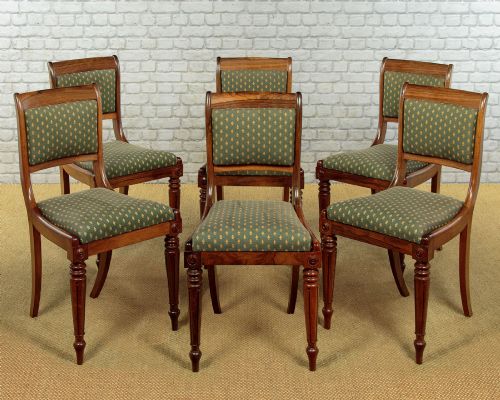
These william iv period seating pieces bring solid timber, rich rosewood, and substantial comfort directly to the dining room.
William IV Period Seating
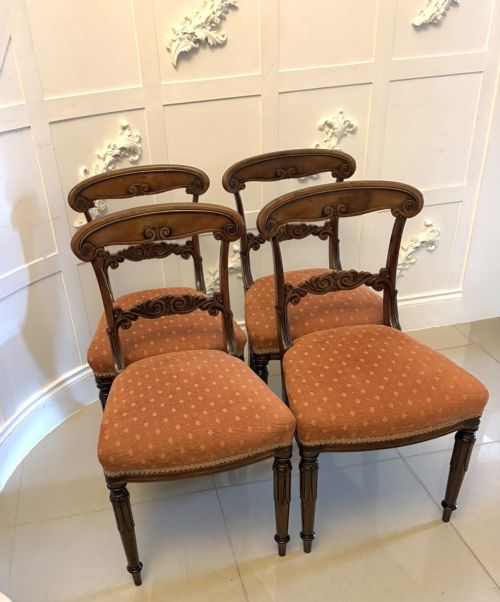
When you search for william iv period seating, you encounter sturdy dining chairs, armchairs, settees, and large sofas designed in the nineteenth century. These forms reflect the transitional taste between Regency elegance and early Victorian mass, often retaining bold proportions and generous seating spaces.
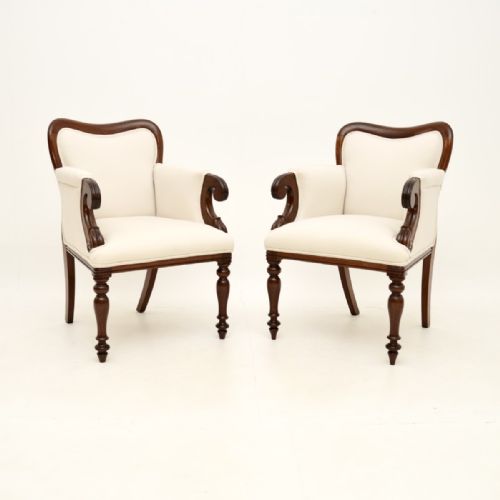
The most common examples on this page are dining chairs made in sets of six, eight, or ten, alongside pairs of mahogany armchairs. You will also find drawing room sofas and hall chairs that showcase the heavy wood frames characteristic of the period.
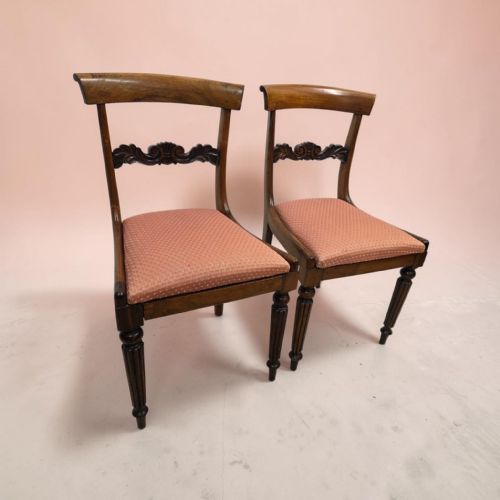
Makers and workshops of the era drew upon Georgian conventions while introducing heavier turned legs and carved crest rails. Pieces span styles from late Regency through to William IV proper, alongside later revival interpretations.
Materials and construction
Cabinetmakers relied heavily on dense tropical hardwoods, chiefly solid mahogany and figured rosewood, to construct these frames. Selected pieces incorporate decorative touches such as faux birdseye maple to mimic rarer veneers.
Upholstery traditionally involved textile coverings like velvet and various woven fabrics secured over webbed frames. Carved details on bar backs and show frames required skilled hand tool work by period joiners.
William IV Period Seating Retail Price Guide 2026
Typical asking prices for william iv period seating among the pieces listed under this phrase on Sellingantiques today, from the lower quarter to the upper quarter. They describe what is for sale here now, not the wider market.
Sets of six, eight, and ten dining chairs form the majority of the available seating arrangements.
Judging the work
The distinction between standard examples and superior pieces rests on the selection of timber and the crispness of the carved ornament. Dense, highly figured rosewood or finely grained mahogany elevates a set above plain utility pieces.
Consistency across a large set of chairs marks the upper tier of production, particularly when matching grain patterns and original show frames. Complete sets of eight or ten matching chairs demonstrate greater workshop ambition than smaller or assembled groupings.
J Proctor
The William IV Period Seating Glossary
- Bar back
- A chair back featuring a horizontal cross rail, often curved or carved, typical of dining seating from this era. This design provides robust support for daily dining use.
- Show frame
- The exposed wooden perimeter of an upholstered sofa or settee, carved and polished to display the timber. It frames the fabric upholstery without covering the structural wood.
- Rosewood
- A heavy, dark timber with distinct figuring, favoured for fine dining chairs and cabinet work during the nineteenth century. Its rich natural colour deepens with age and polish.
- Hall chair
- A rigid wooden seat intended for an entrance hall, generally lacking upholstered padding and featuring a solid carved back. These were built to withstand heavy traffic near the front door.
- Settee
- A small upholstered sofa designed to seat two or more people within a drawing room or parlour setting. They share the heavy wooden show frame styling of contemporary armchairs.
William IV Period Seating: Frequently Asked Questions
How do I care for rosewood dining chairs?
Keep wooden surfaces clean with a dry cloth and avoid placing them near direct heat sources that dry out the timber.
Protect upholstered areas by limiting direct sunlight to preserve the fabric and velvet pile.
Were these chairs used daily?
Dining chairs and armchairs were built for active household use around large dining tables.
Robust mahogany and rosewood construction ensured these heavy seats survived generations of family meals.
What defines the William IV style?
This style bridges late Regency grace and early Victorian weight through heavy turned legs and bold carved crest rails.
Proportions are generous, favouring solid timber and substantial show frames over delicate ornamentation.
How do I spot a matched set?
Examine the wood grain, turning details, and frame dimensions across all chairs in a dining set.
Original sets share identical timber characteristics and workshop carving styles rather than mixed components.