




William IV Period Chairs
William iv period chairs bring robust frames and rich timber into a room, offering solid seating rooted in early nineteenth-century design.
William IV Period Chairs
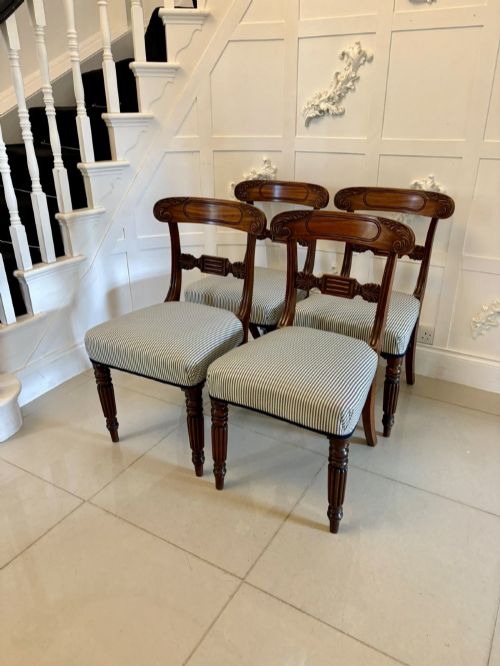
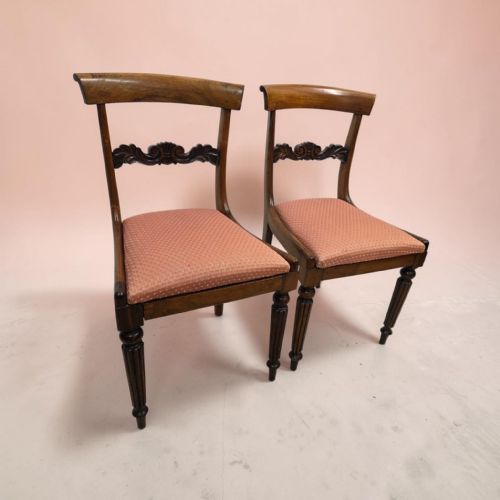
William iv period chairs encompass seating made during the early nineteenth century, bridging Regency elegance and early Victorian mass, with dining chairs forming the bulk of what is seen here.
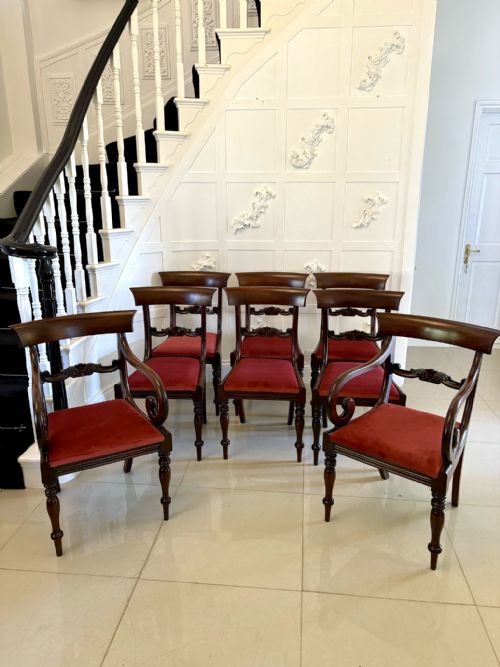
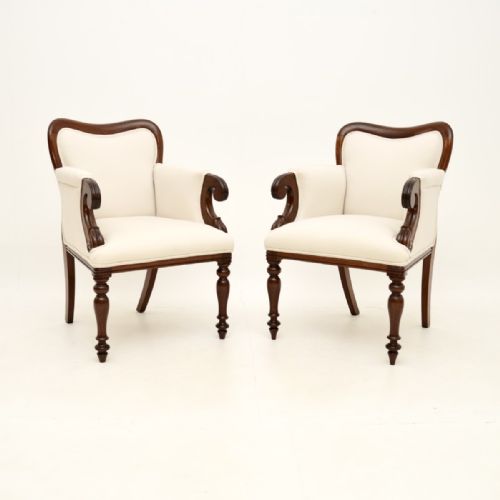
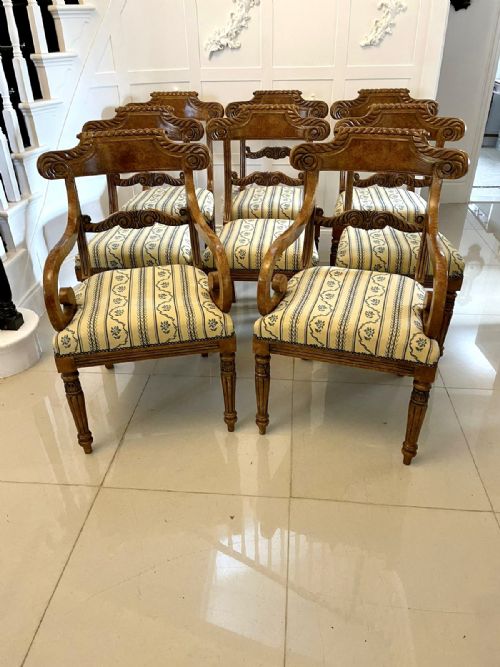
Buyers will frequently encounter sets of mahogany dining chairs alongside individual armchairs, desk chairs, and hall chairs shaped by the tastes of the eighteen-thirties.
The material palette leans heavily on dark tropical hardwoods complemented by various fabrics, leather, and caning for seat pads.
How they were made
Cabinetmakers worked predominantly with solid mahogany and rosewood, often turning to maple and satin birch for specific decorative sets.
Joinery combined sturdy mortise and tenon frames with carved scrollwork, reeded legs, and bar backs steam-bent into shape.
Upholstery utilised traditional stuffing methods covered in leather, velvet, or textile, while certain chairs incorporated woven cane panels.
Keep an eye out for decorated faux birds-eye maple when standard brown timber feels too predictable for the dining room.
What varies in quality
The standard of carving and the selection of timber dictate the standing of a set, with heavily figured flamed mahogany or dense rosewood marking out superior examples.
Completeness matters greatly in larger suites, as mismatched replacements or altered frames diminish the integrity of an assembled dining set.
Refined proportions, crisp execution of classical motifs, and original structural timber separate standard workshop output from exceptional cabinetmaking.
J Proctor·Gillows·James Mein Of Kelso
The William IV Period Chairs Glossary
- Bar back
- A horizontal top rail curved for comfort, frequently seen on dining chairs of this era.
- Caning
- Woven rattan material used to form light, supportive panels for seats and backrests.
- Regency
- A stylistic precursor spanning the early part of the century, known for classical restraint and lighter forms.
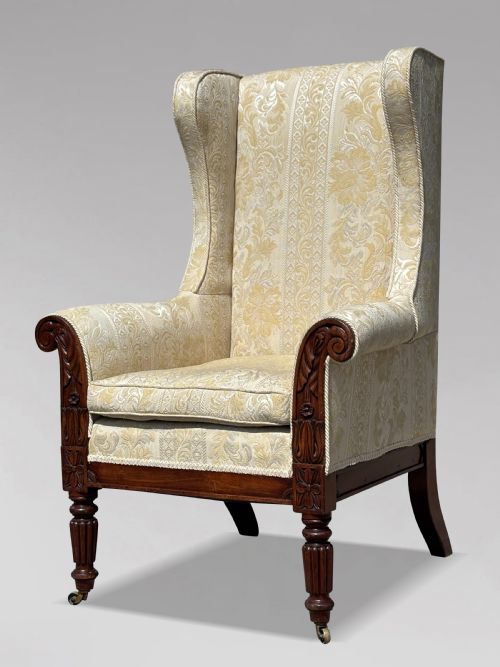
- Wing back
- An armchair featuring protective side panels designed to shield the sitter from draughts.
William IV Period Chairs: Frequently Asked Questions
How do I spot a real William IV chair?
Look for heavy proportions, characteristic scroll-carved details, and dense timbers like mahogany or rosewood rather than lighter woods.
Construction methods should match early nineteenth-century cabinetmaking standards, showing hand-cut joinery and period upholstery techniques.
Are these chairs suitable for daily dining?
These pieces were built for robust daily use by nineteenth-century households and remain remarkably sturdy when joints are sound.
Ensure seat heights and depths match modern dining table requirements before committing to a full set for everyday meals.
What is the difference between Regency and William IV?
Regency designs lean towards lighter, neoclassical lines influenced by ancient Greek and Roman forms.
William IV pieces generally display heavier proportions, bolder scrollwork, and a transition towards early Victorian solidity.
Can I mix different chair styles around a table?
While matching sets are traditional for formal dining, pairing armchairs at the heads of the table with side chairs along the sides was common practice.
Ensure wood tones and overall heights align reasonably well if you choose to combine disparate seating types.