




William IV Fireside Chair
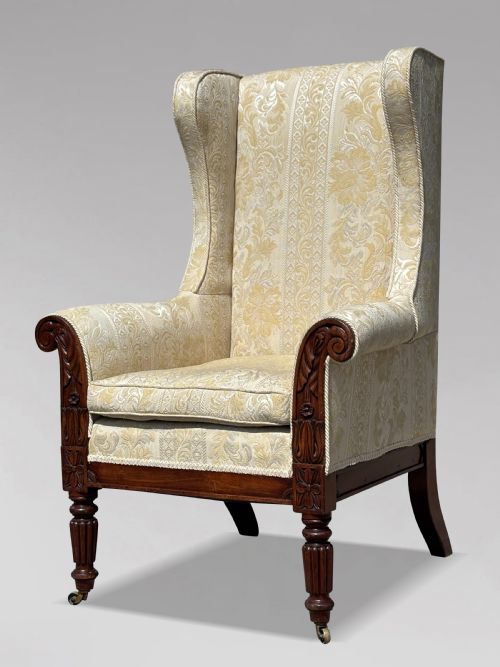
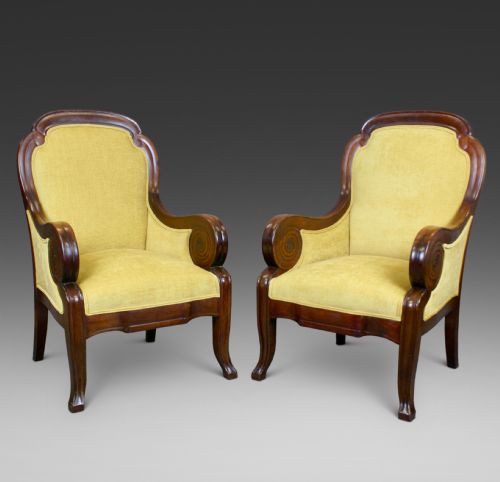
These mahogany and rosewood armchairs give any fireside the solid warmth of the eighteen-thirties, built for comfort and dignity.
William IV Fireside Chair
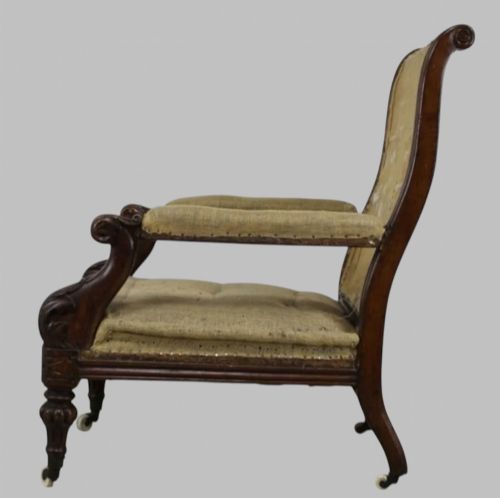
When you search for a William IV fireside chair, you are looking at substantial seating designed during the transitional decades between the Regency and Early Victorian periods. The examples found here span the nineteenth century, including specific pieces from around eighteen thirty to eighteen thirty-five alongside related Victorian and Edwardian interpretations. You will frequently encounter library armchairs, wing backs, and nursing chairs that place timber and upholstery at the forefront of domestic comfort.
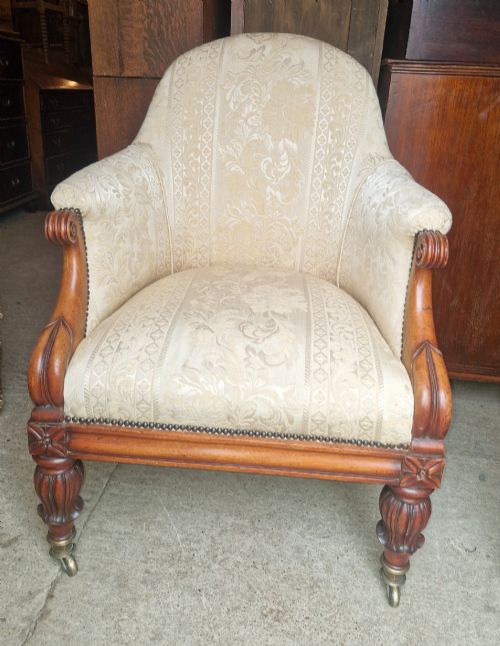
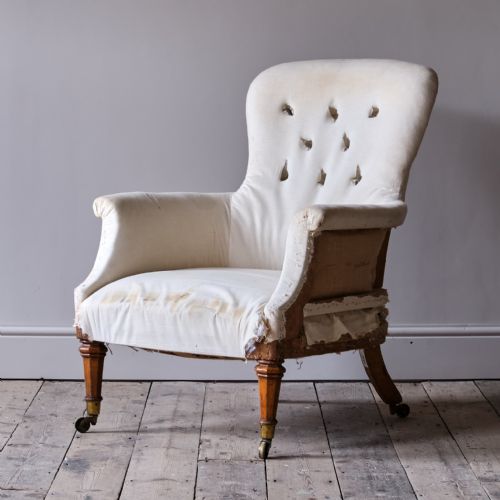
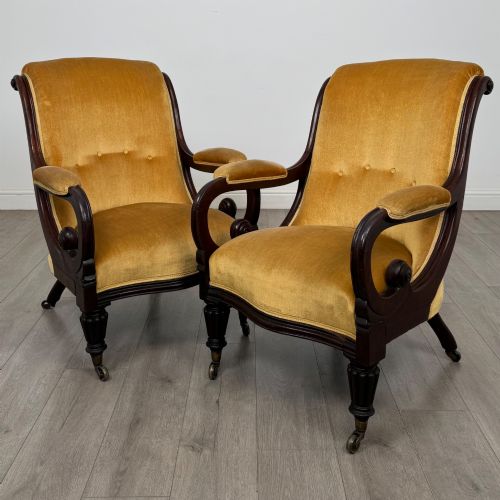
The most common forms on this page feature mahogany or rosewood frames paired with traditional coverings such as velvet, damask, calico, or leather. Many listings reflect the classic proportions of the early nineteenth century, offering low seats and supportive backs intended for sitting by the hearth. While some pieces retain their original fabric or hessian foundations, others are presented ready for fresh upholstery to suit modern interiors.
Materials and construction methods
The framework of these armchairs relies heavily on dense hardwoods like mahogany and rosewood, selected for their deep colour and strength. Cabinet makers shaped these timbers into sturdy frames, often incorporating brass castors to ease movement across heavy carpets. Structural support came from traditional webbing and stuffing, enclosed beneath layers of durable fabric.
Upholstery techniques varied from simple calico and hessian foundations to button back finishes and decorative damask or velvet covers. Metal details such as brass studs occasionally appeared along the borders of the upholstery, adding a subtle metallic contrast to the dark polished wood.
William IV Fireside Chair Retail Price Guide 2026
Typical asking prices for william iv fireside chair among the pieces listed under this phrase on Sellingantiques today, from the lower quarter to the upper quarter. They describe what is for sale here now, not the wider market.
Listings for this phrase encompass the Regency, William IV, and Victorian periods, with mahogany and rosewood serving as the primary framing materials.
Judging the quality of an armchair
Quality in these seating pieces rests upon the crispness of the timber carving and the integrity of the underlying frame. Finer examples display well-figured rosewood or rich mahogany with smooth patination, where the grain remains active and deep. The overall proportions dictate the visual balance, separating robust library armchairs from lighter nursing variants.
The standard of the upholstery work and the survival of original components also influence the character of each piece. Chairs that retain their supportive internal webbing and well-sprung shapes demonstrate superior craftsmanship from their period of origin.
The William IV Fireside Chair Glossary
- Mahogany
- A durable tropical hardwood prized for its reddish-brown colour and fine grain. It served as a primary material for high-quality furniture throughout the nineteenth century.
- Rosewood
- A dense, heavily figured timber with dark streaks, often utilised in luxury furniture during the Regency and William IV periods. Its rich appearance suits formal library and parlour seating.
- Calico
- A plain-woven cotton fabric commonly used as an initial upholstery layer or inner lining beneath decorative top covers. It provides a stable base for buttoning and stuffing.
- Hessian
- A coarse woven fabric, typically made from jute fibres, utilised for traditional webbing and internal support. It underpins the padding of many nineteenth-century seats.
- Damask
- A reversible figured fabric with patterns woven flat into the cloth, frequently chosen for formal period upholstery. It offers a subtle sheen that complements polished hardwood frames.
William IV Fireside Chair: Frequently Asked Questions
What defines a William IV armchair?
A William IV armchair typically dates from the eighteen-thirties, sitting stylistically between late Regency and early Victorian design. These chairs feature sturdy mahogany or rosewood frames, generous proportions, and comfortable seating intended for parlours and libraries.
Craftsmen of this era favoured solid woods and often incorporated turned legs, scroll arms, and brass castors. Their substantial presence distinguishes them from lighter eighteenth-century seating.
How do I choose between mahogany and rosewood?
Choosing between mahogany and rosewood depends largely on the depth of colour and grain pattern you prefer in your room. Mahogany offers a warm, reddish-brown tone with a classic grain that blends easily with traditional British interior schemes.
Rosewood presents a darker, more dramatic surface with prominent black streaks and a high natural polish. Both timbers provide exceptional durability and structural integrity for fireside use.
Were these chairs meant for the fireside?
Many nineteenth-century armchairs served as comfortable seating positioned near the hearth to capture warmth from the fire. Their low seats and supportive backs were engineered for long periods of relaxation.
While some were designated specifically as library chairs or nursing chairs, their robust build made them versatile additions to any principal reception room.
Can I reupholster a period armchair?
Reupholstering a nineteenth-century armchair is a common practice that breathes new life into worn or fragile fabric. Many pieces are offered ready for upholstery, allowing you to select modern or period-appropriate textiles.
Traditional methods utilising hessian, webbing, and horsehair stuffing should be respected to maintain the correct profile and comfort of the original frame.
How do I spot a nursing chair?
A nursing chair is traditionally characterised by a lower seat and a slightly more compact back than a standard library armchair. This design allowed women in the nineteenth century to tend to infants with greater ease.
They often feature rosewood or mahogany frames and may include button back upholstery or decorative carving on the crest rail.