


William IV Carved Table
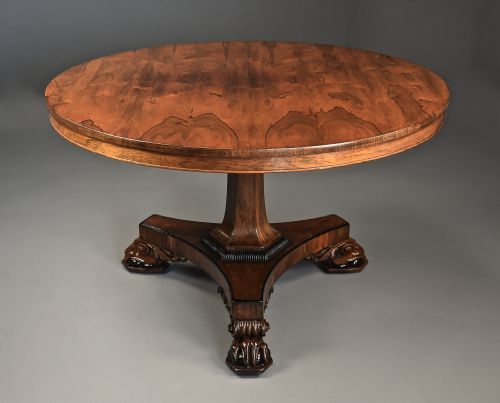
A william iv carved table brings solid mahogany, rich rosewood and heavy triform bases together into the nineteenth-century interior.
William IV Carved Table
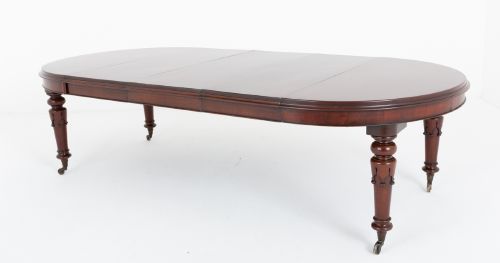
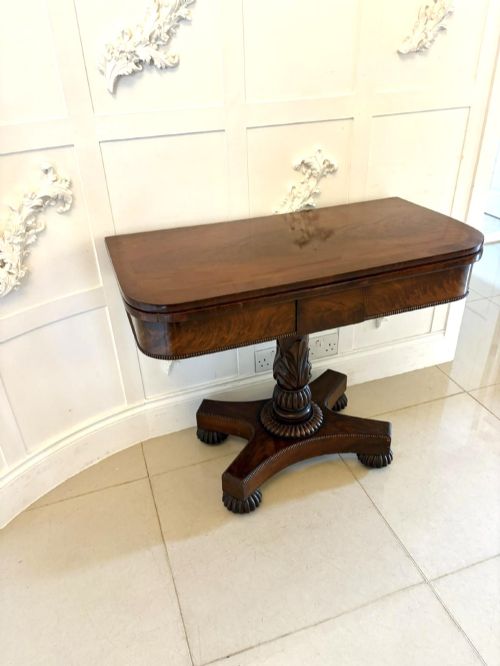
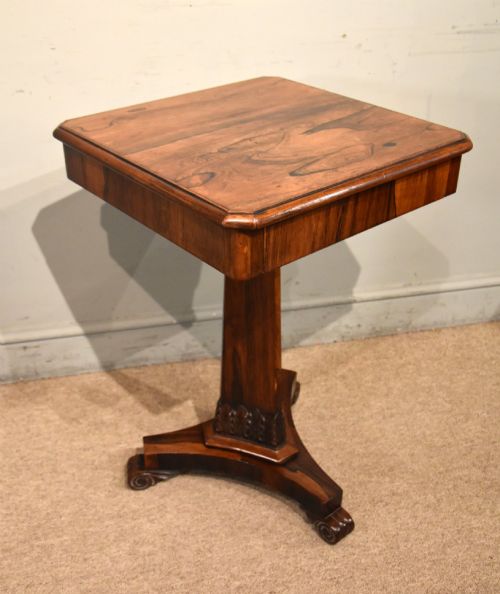
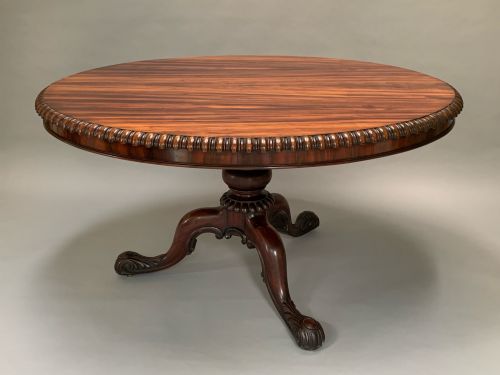
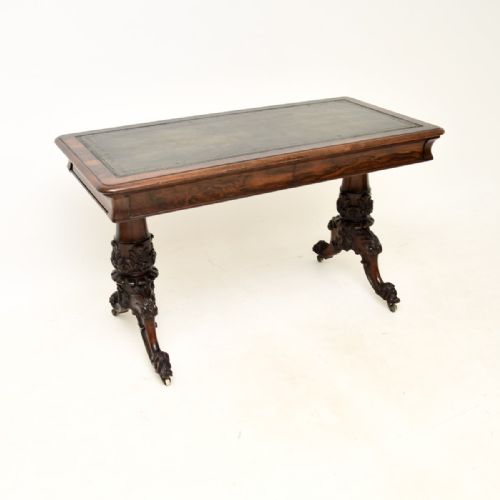
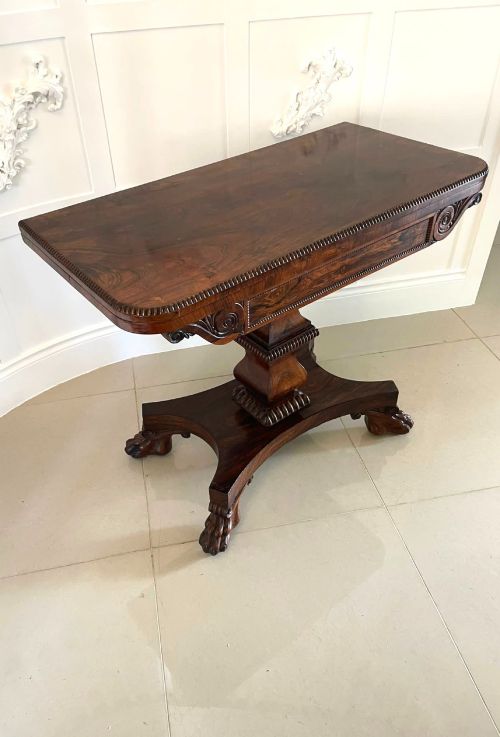
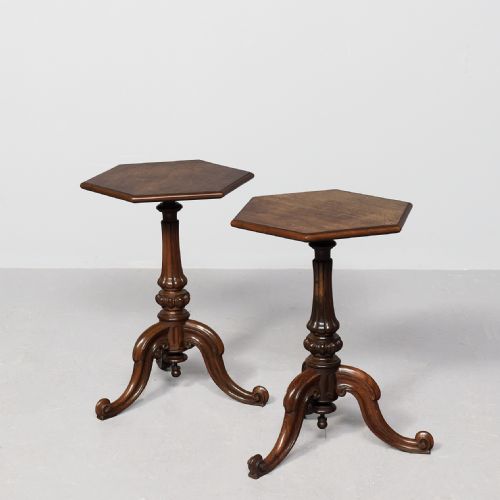
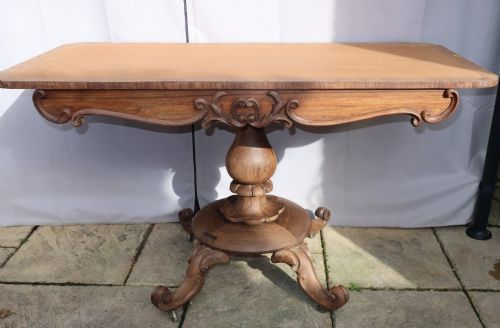
A william iv carved table encompasses dining, centre, library and card forms produced during the nineteenth century, drawing on Regency and early Victorian design traditions. Buyers searching this phrase meet substantial timber constructions that often feature circular tops and heavy pedestal supports.
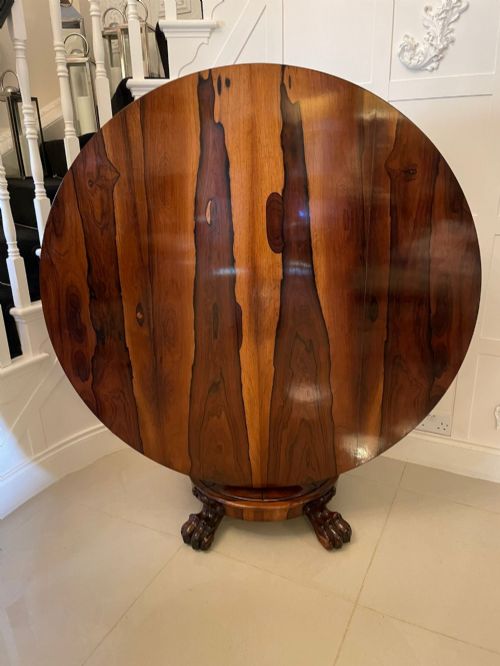
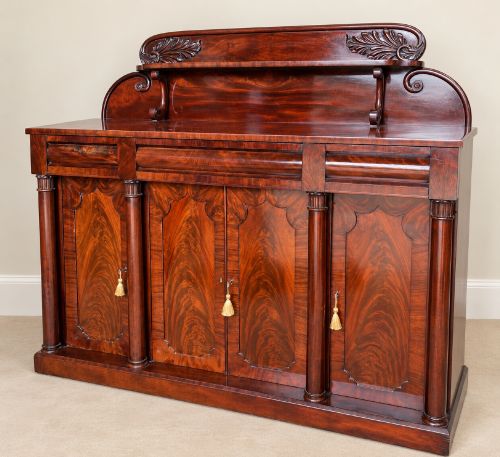
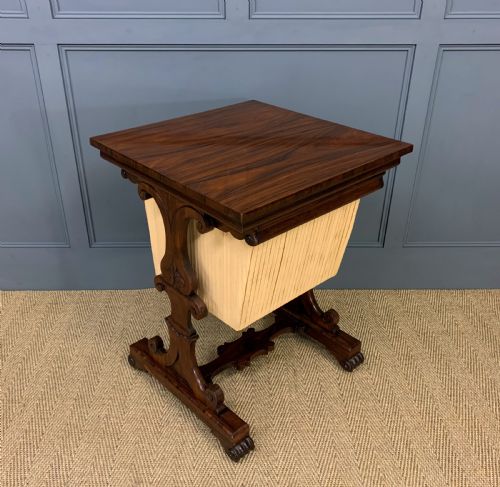
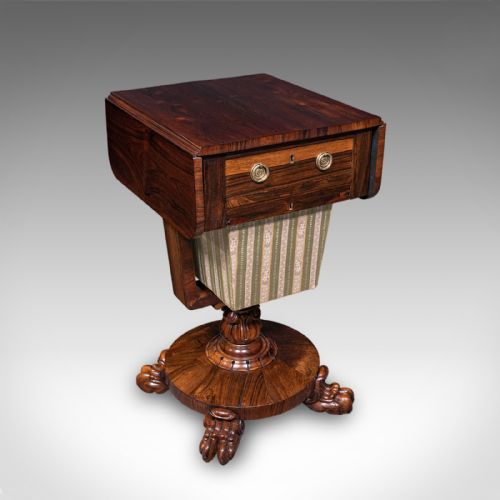
Rosewood and mahogany dominate the offerings, frequently showing figured grains, flame veneers and specific carved details such as acanthus leaf feet. These pieces serve practical functions as dining surfaces, writing desks or occasional tables while anchoring a room with distinct period weight.
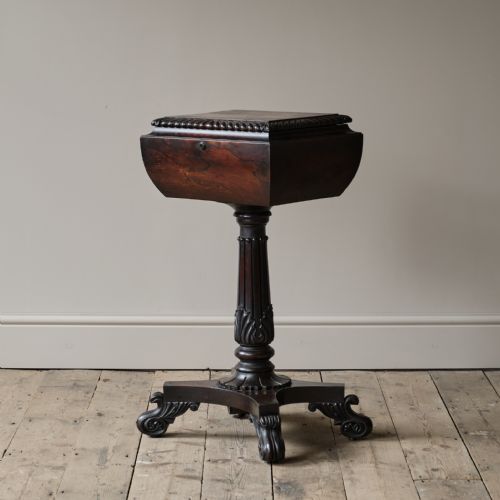
The selection ranges from smaller work tables and teapoys to grand circular dining and library tables resting on triform bases. Many examples bridge late Georgian restraint and early Victorian ornamentation, reflecting the transitional taste of the era.
How they were made
Cabinet makers utilised solid timbers alongside veneers, applying flame mahogany and rosewood over secondary woods to create rich surface patterns. Tables often incorporate brass fittings, leather inserts and fabric elements depending on their specific form as desks, games tables or writing surfaces.
Carving formed an essential part of the construction, executed by hand on pedestals, legs and stretchers with motifs like sunbursts and acanthus leaves. Tilting mechanisms, drop leaves and extending frames required precise joinery to ensure stability in heavy dining and breakfast tables.
Listings feature rosewood, mahogany, oak and zebrawood across forms from library tables to tea caddies.
What varies in quality
The depth and crispness of the hand carving separate standard production from superior workshop output, particularly on pedestals and feet. Crisply defined acanthus leaves and sharp linear details indicate skilled craftsmanship rather than routine manufacturing.
Timber selection and veneer matching dictate visual appeal, with highly figured rosewood and flame mahogany commanding greater interest. The stability of triform bases and the smooth operation of tilt-top mechanisms or extending leaves reflect the original structural integrity.
Gillows·Mein of Kelso·Williams and Gibton
The William IV Carved Table Glossary
- Triform base
- A three-sided pedestal support common on nineteenth-century circular tables. This heavy base provides stability for large rosewood or mahogany dining and breakfast surfaces.
- Tilt top
- A table top hinged to tip vertically when not in use. This mechanism allowed tables to be stored against walls in smaller nineteenth-century parlours.
- Flame mahogany
- A veneer cut from the fork of the mahogany tree to create a distinctive flame-like pattern. Cabinet makers used this to add visual movement to table tops and drawer fronts.
- Teapoy
- A small box on a stand used for storing tea leaves. These containers often match the timber and carving style of contemporaneous tables.
- Acanthus leaf
- A classical foliage motif carved into table legs and feet. This ornament reflects the enduring influence of ancient Greek and Roman design on nineteenth-century cabinet making.
William IV Carved Table: Frequently Asked Questions
How do I identify a william iv carved table?
Look for heavy proportions, circular rosewood or mahogany tops, and substantial triform bases resting on carved feet. The transition from Regency restraint to early Victorian ornament often shows in deep floral or leaf carvings.
Check for secondary timbers, veneer quality, and the presence of mechanics like tilt-top hinges or extending dining leaves typical of this nineteenth-century period.
Were these tables used for dining?
Many circular breakfast and dining tables served daily family meals, while larger extending versions accommodated guests. Smaller card and console tables functioned in parlours and reception rooms.
Library and writing tables provided dedicated surfaces for correspondence, reflecting the domestic habits of the nineteenth century.
How do I care for a rosewood table?
Keep nineteenth-century timber away from direct sunlight and sudden temperature changes to prevent veneer cracking. Dust regularly with a soft, dry cloth and avoid modern silicone polishes.
Maintain consistent indoor humidity to protect the underlying carcase woods and traditional adhesives used in the original construction.
What is a tilt top table used for?
The tilting mechanism allowed large circular breakfast tables to be folded flat and pushed against room perimeters when not in active use. This saved floor space in period domestic interiors.
When lowered, the top locked securely onto a heavy pillar and triform base for dining or social gatherings.