

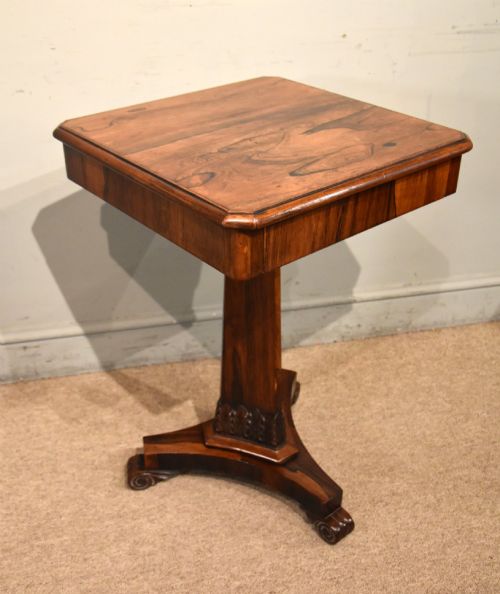
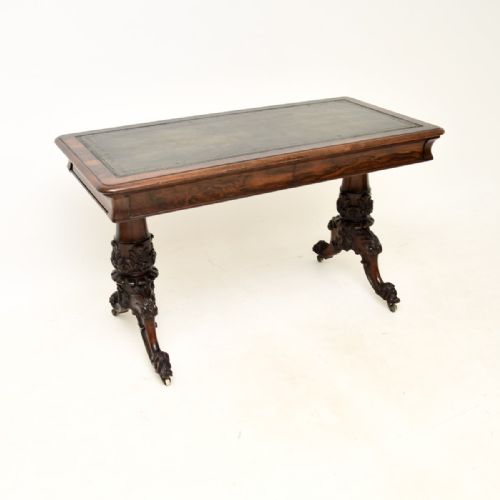
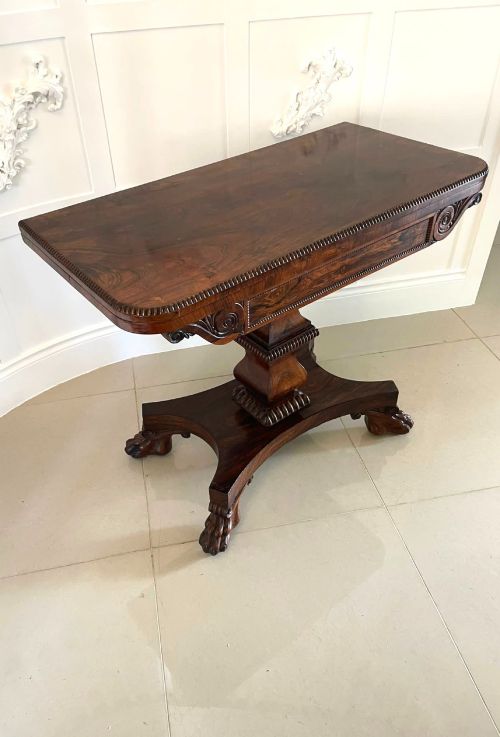
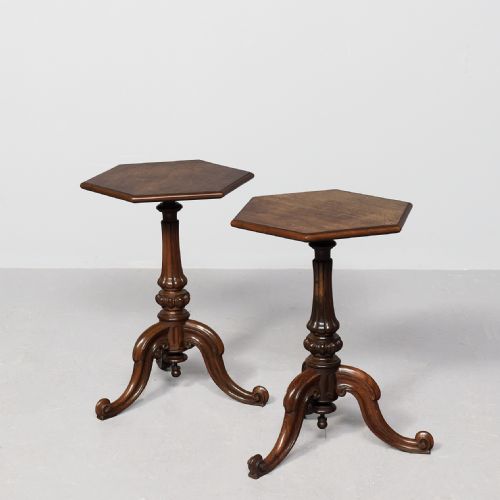
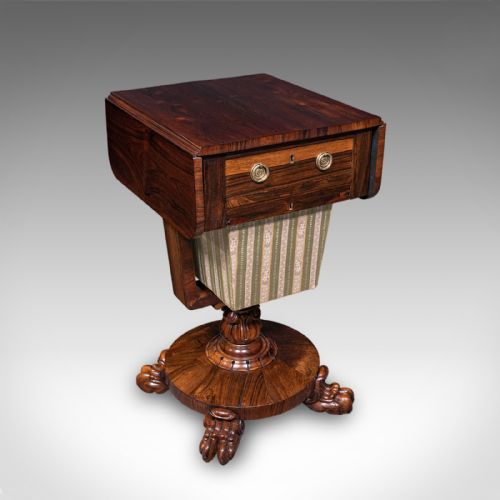
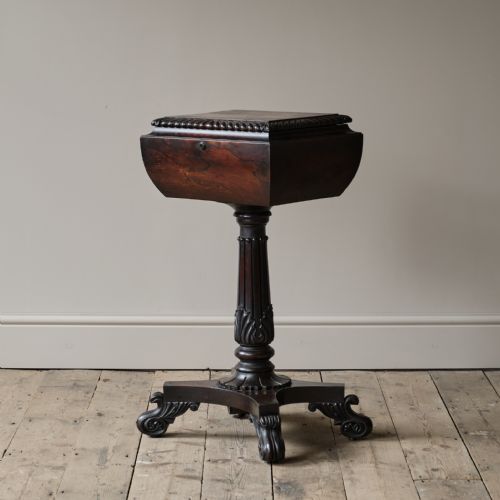
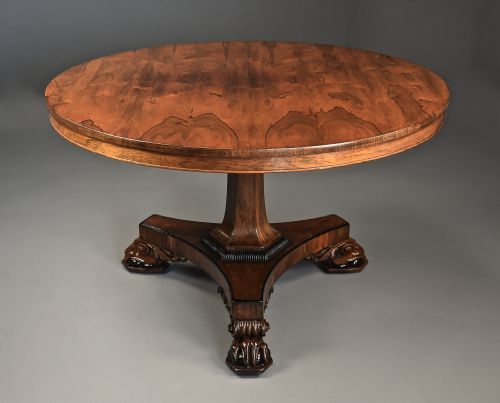
William IV Carved Pedestal Table
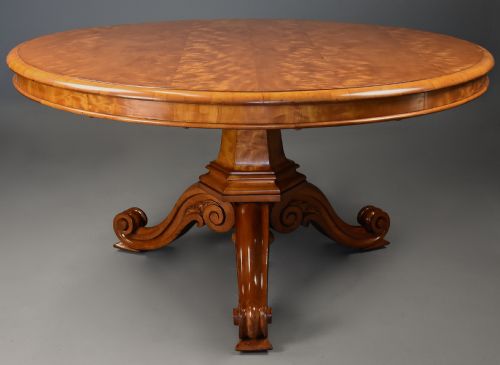
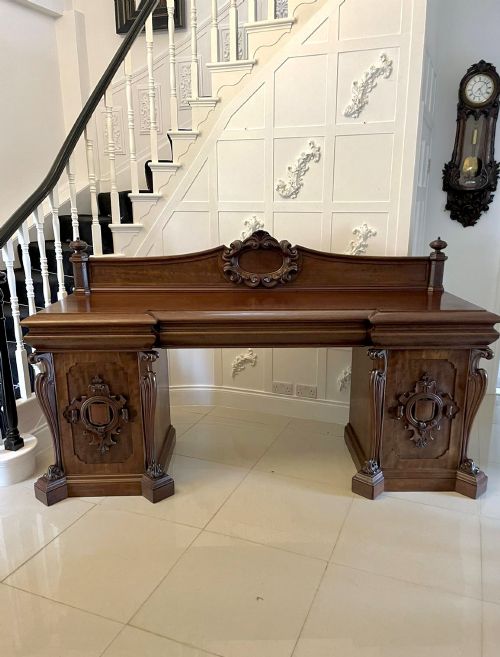
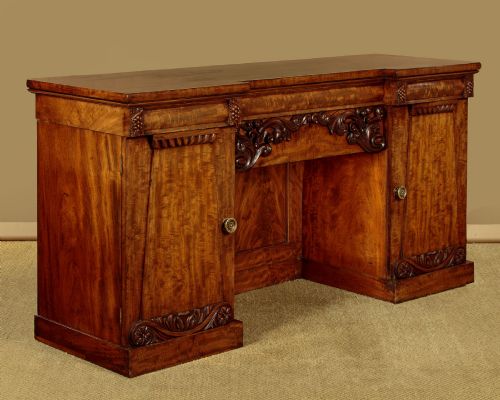
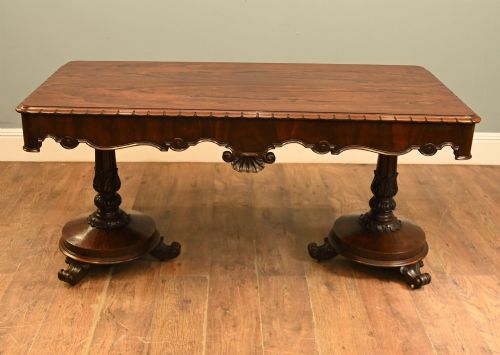
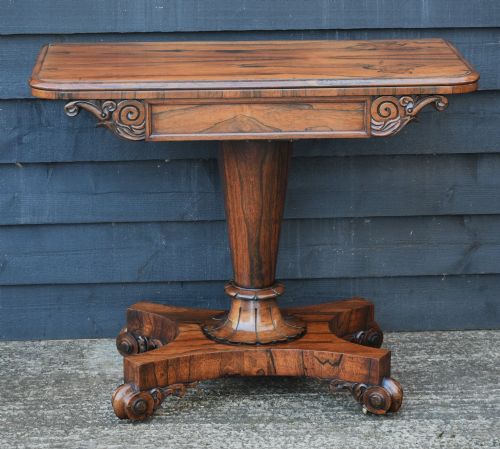
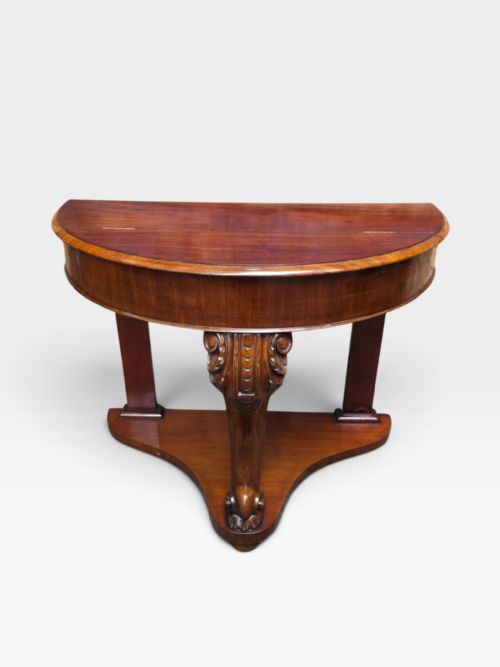
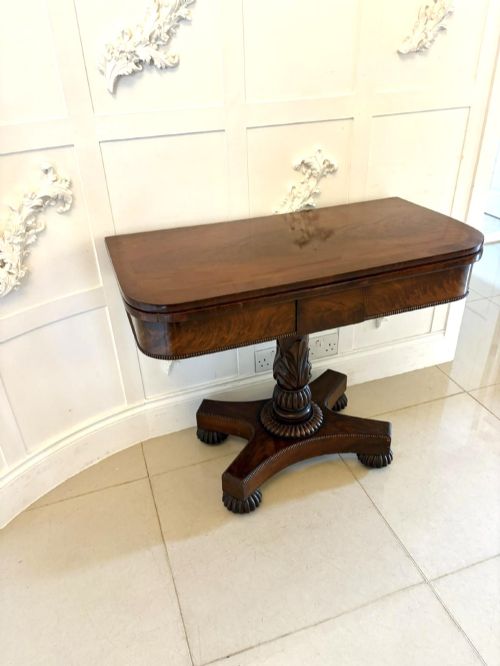
A william iv carved pedestal table brings substantial timber and sculptural bases together for domestic use.
William IV Carved Pedestal Table
When you search for a william iv carved pedestal table, you encounter heavy timber furniture designed for nineteenth-century domestic spaces. These pieces span dining, breakfast, card, library, and centre tables originating from the Georgian, Regency, and nineteenth-century periods.
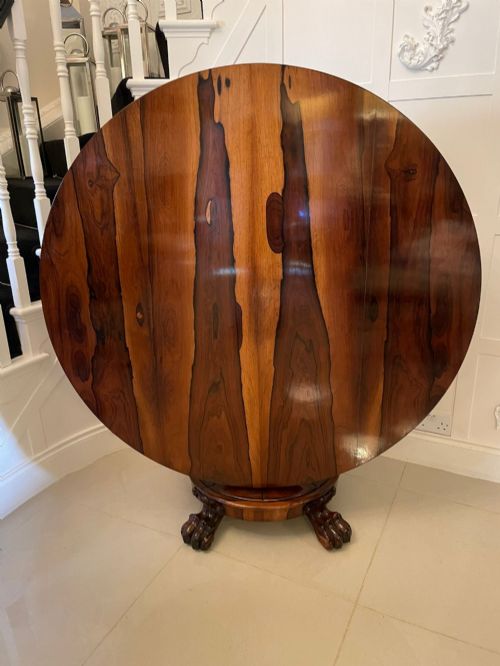
The version you meet most frequently on this page is the circular rosewood or mahogany breakfast or centre table featuring a central pillar supported by a triform or platform base. Makers adapted these forms for specific domestic tasks, producing specialised card tables, work tables, and occasional furniture alongside larger dining pieces.
Materials and Technique
Cabinetmakers constructed these tables primarily using solid mahogany and rosewood, often applying flame mahogany veneers or specialised timbers such as pollard oak, burr yew, and Albuera wood to visible surfaces. Rich grain patterns were prioritized to create striking visual depth across large tabletops.
Construction techniques relied on heavy central pedestals, frequently incorporating triform bases, tilt-top mechanisms, and elaborate hand-carved details like paw feet and sunburst motifs. Brass hardware, leather inserts, and baize linings appear on specific forms such as library, writing, and games tables.
Some tables double as fire screens, proving nineteenth-century furniture excelled at multitasking long before modern apartments.
Distinctions in Standard
Quality separates ordinary cabinetwork from exceptional production through the selection of timber veneers and the crispness of carved enrichment. Pieces displaying highly figured rosewood, burr yew, or pollard oak paired with deep, hand-chiseled pedestal carvings stand apart from plainer examples.
The integrity of the structural joinery and the smooth operation of mechanisms such as tilt-top pivots or rotating drums define the upper tier. Attribution to documented workshops like Gillows, Mein of Kelso, or Williams and Gibton also elevates a piece through superior execution and finish.
Gillows·Mein of Kelso·Williams and Gibton
The William IV Carved Pedestal Table Glossary
- Triform base
- A three-sided pedestal support resting on feet, commonly found beneath circular breakfast and centre tables of this era. This configuration provides stability for heavy timber tops.
- Tilt-top mechanism
- A hinged sub-top allowing the table surface to pivot upright when not in use. This design saved floor space in nineteenth-century interiors.
- Flame mahogany veneer
- A sliced layer of mahogany timber displaying a distinctive flickering flame pattern. Cabinetmakers applied this to prominent surfaces for decorative impact.
- Teapoy
- A small stand or box fitted for storing tea, sometimes mounted on a pillar and base. These pieces served aristocratic and middle-class drawing rooms.
- Card table
- A folding table designed for gaming, typically lined with baize or leather. The top rotates or folds open to reveal a play surface.
William IV Carved Pedestal Table: Frequently Asked Questions
What is a william iv pedestal table?
A william iv pedestal table is a nineteenth-century furniture form defined by a central pillar supporting a timber top, often featuring carved details and heavy wood construction.
These pieces served various domestic functions, acting as dining tables, breakfast tables, card tables, and library writing surfaces in homes of the period.
How do I identify a tilt-top table?
A tilt-top table utilises a hinged mechanism beneath the surface that allows the main board to lock into a vertical position. This enabled owners to store the furniture against a wall when the room was needed for other activities.
Inspect the underside of the central pillar where the release catch and pivot block secure the tabletop to the pedestal base.
What woods were used for these tables?
Cabinetmakers relied heavily on dense hardwoods, utilising solid mahogany and rosewood alongside decorative veneers. More ambitious examples featured figured timbers such as pollard oak, burr yew, and Albuera wood.
Secondary woods like oak appeared in internal frames, drawers, and structural blocking beneath the show surfaces.
How do I care for rosewood surfaces?
Rosewood requires stable indoor humidity and protection from direct sunlight to prevent the timber from drying out or fading. Dust the surface regularly with a soft, dry cloth and avoid silicone-based polishes.
Applying occasional wax preserves the natural sheen of the wood without building up a sticky residue over the antique finish.
Were these tables used for dining?
Larger circular examples function as breakfast or dining tables, while smaller variations served as centre tables or occasional furniture in reception rooms. Dining versions often incorporated robust triform bases to support heavy meals and tableware.
Drop-leaf and Pembroke variations offered flexible surface area depending on daily domestic requirements.