



William IV Arm Chair
A william iv arm chair brings robust timber and scroll arms together, offering a solid seat for a library or study.
William IV Arm Chair
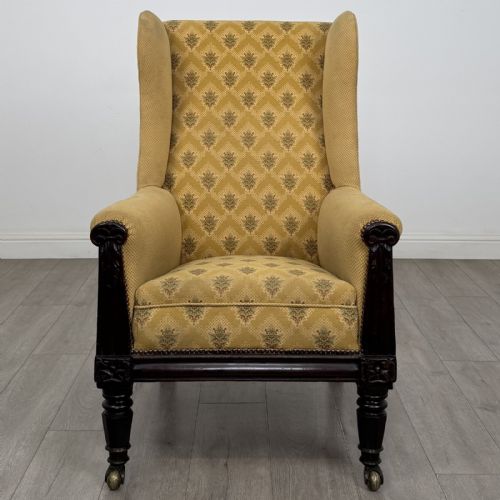
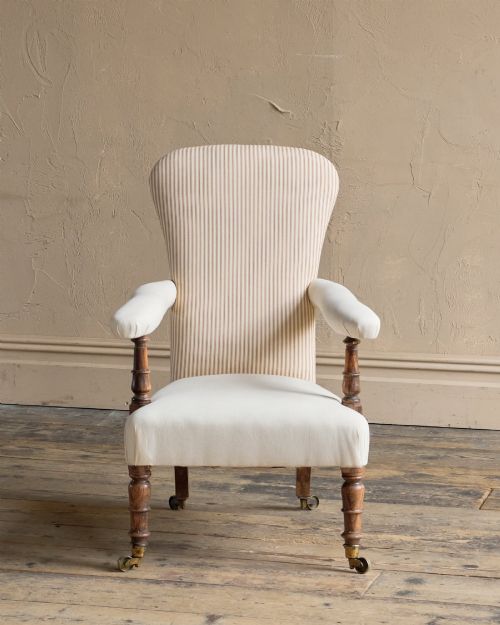
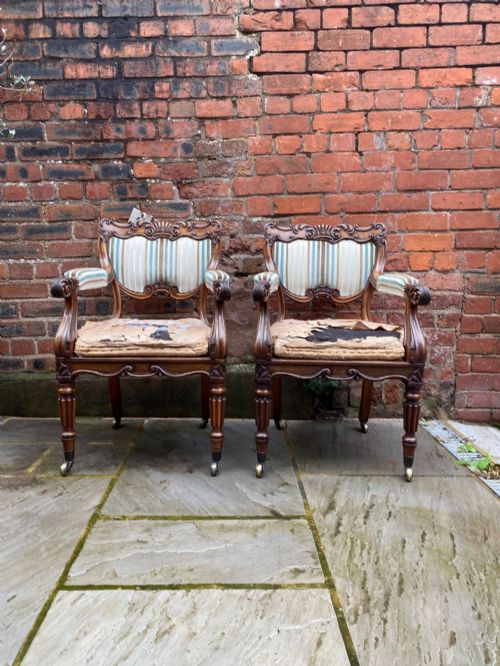
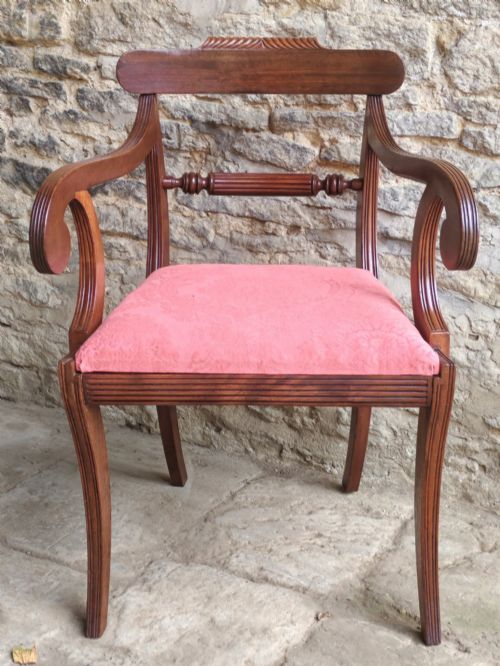
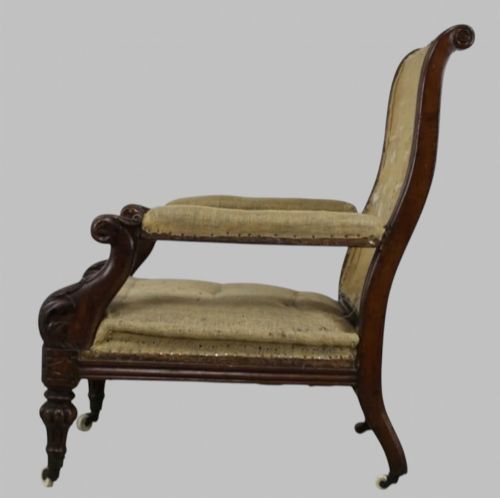
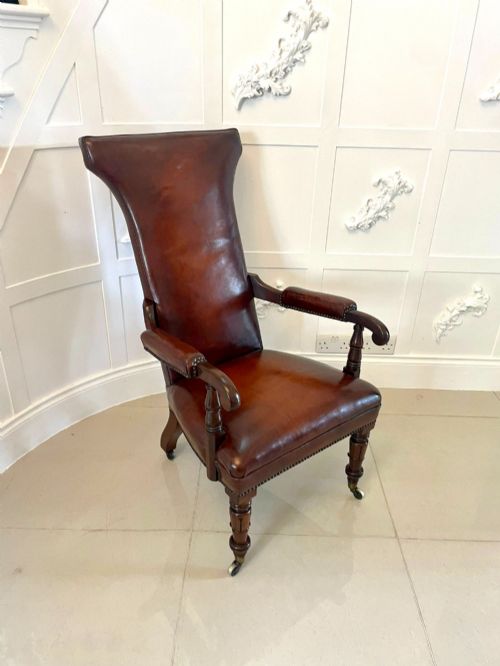
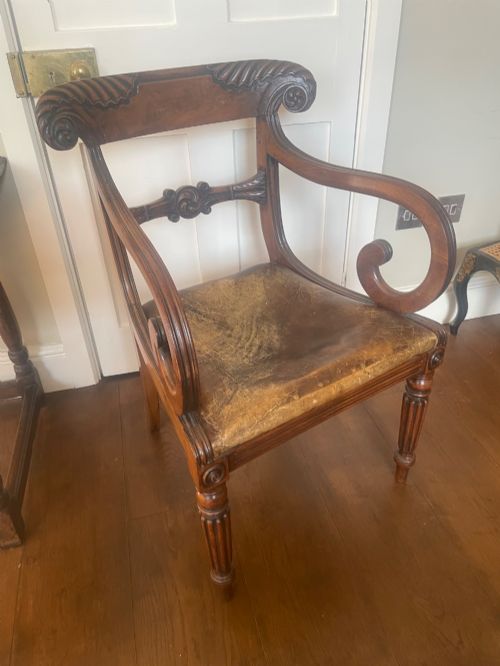
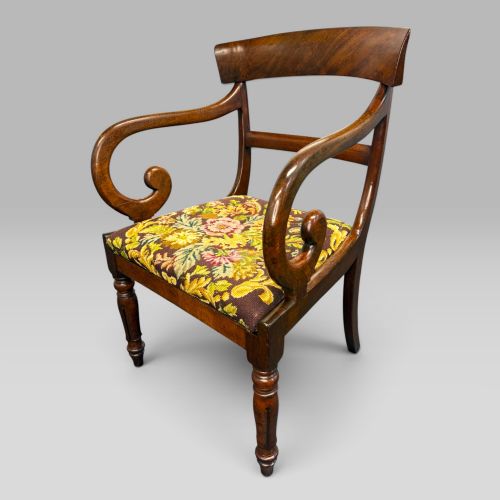
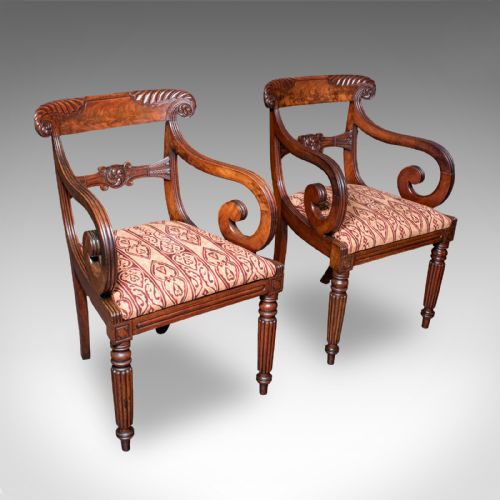
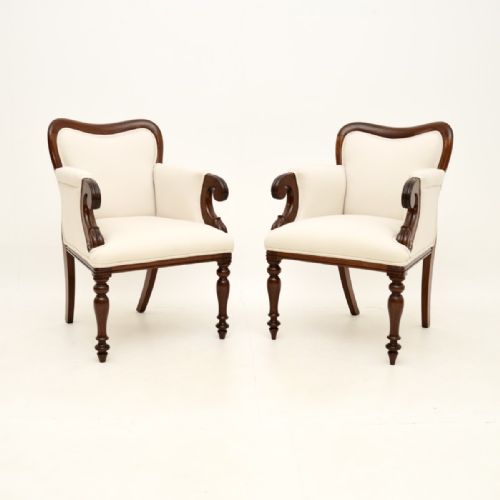
When you search for a william iv arm chair, you encounter sturdy seating primarily originating from the nineteenth century, including the Regency and early Victorian eras. The selection spans distinct forms such as library chairs, carver chairs, and open armchairs designed for parlours and reception rooms.
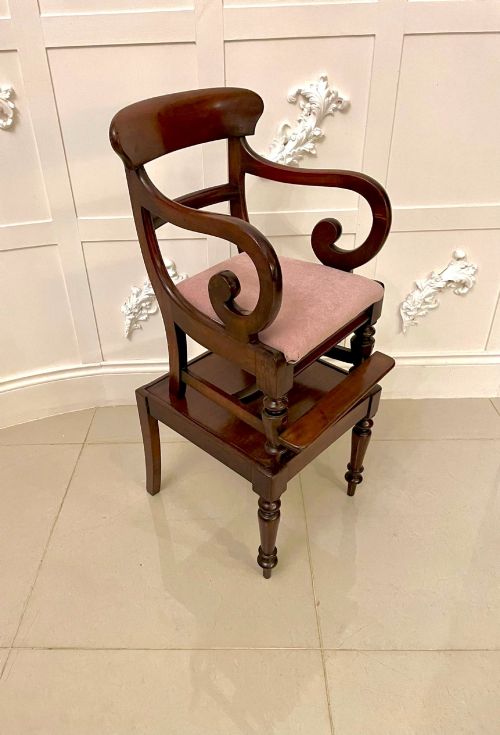
Mahogany predominates on this page, often supplemented by rosewood, oak, and brass details. You meet varied seating formats, from pairs of dining carvers to reclining library chairs and child's armchairs with stands.
How they were made
Cabinet makers utilised dense hardwoods like mahogany and rosewood to construct the frames, frequently incorporating carved scroll arms and show frames. Timber selection provided structural integrity and a dark, polished grain.
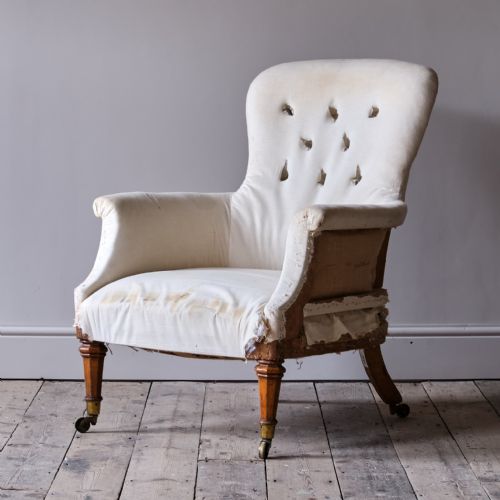
Upholstery involved materials such as leather, velvet, tapestry, fabric, and calico, often secured over buttoned backs or sprung seats. Brass fittings appeared on castors or structural supports.
William IV Arm Chair Retail Price Guide 2026
Typical asking prices for william iv arm chair among the pieces listed under this phrase on Sellingantiques today, from the lower quarter to the upper quarter. They describe what is for sale here now, not the wider market.
The furniture spans transitional periods, recording styles from late Regency through to early Victorian manufacture.
What varies in quality
The degree of carving sophistication and timber selection define the upper tier of pieces, where heavier scrollwork and finer mahogany grain distinguish workshop production. Attribution to notable makers elevates an example above standard domestic seating.
The preservation of original show frames and the integrity of secondary timbers indicate superior craftsmanship. Pieces retaining period leather or specific upholstery treatments demonstrate higher execution than plain utilitarian frames.
Miles and Edwards·Gillows
The William IV Arm Chair Glossary
- Carver chair
- An armchair designed to match a set of dining chairs, typically positioned at the head of a table. These pieces often feature open arms and sturdy mahogany frames.
- Scroll arm
- A curved structural arm shaped like a rolled scroll, characteristic of nineteenth century seating design. This profile provides substantial support for the user's arms.
- Library chair
- A heavy, upholstered armchair intended for reading rooms, frequently finished in leather or velvet. Such examples often incorporate reclining mechanisms or wider proportions for comfort.
- Show frame
- A wooden structural framework left exposed around the upholstered portions of an armchair. This technique displays the polished mahogany or rosewood grain directly to the viewer.
William IV Arm Chair: Frequently Asked Questions
Where did people place these chairs?
These chairs served multiple domestic functions, appearing in libraries, morning rooms, and around dining tables as carver seats.
They suited formal reception spaces as well as private studies where reading or writing took place.
How do I identify the period?
Characteristics such as scroll arms, heavy mahogany timber frames, and specific upholstery styles help align pieces with nineteenth century production.
Overlapping influences from Regency and early Victorian designs often appear within the same grouping.
What is a carver chair?
A carver is an armchair made to complement a set of single dining chairs, placed at the ends of the table.
These pieces share the timber and stylistic traits of the dining set while offering enclosed armrests.
How should I care for leather upholstery?
Leather surfaces benefit from gentle cleaning and conditioning to maintain the material's flexibility over time.
Keeping the chair away from direct heat sources preserves both the timber frame and the covering.