

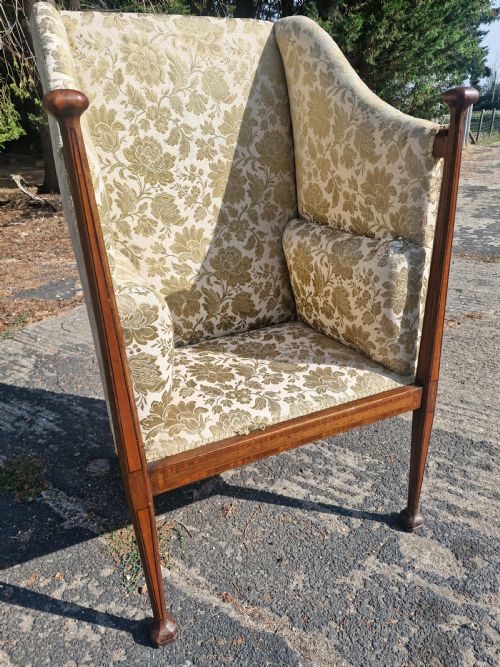


Gold Damask Wing Chair
A gold damask wing chair brings warmth and stately presence to a room, offering deep-seated comfort paired with draught-excluding side panels.
Gold Damask Wing Chair
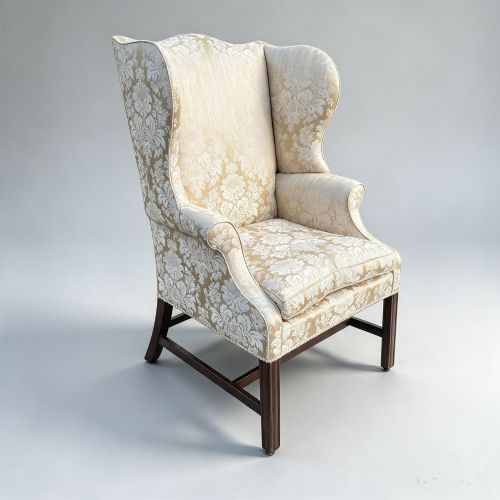
A gold damask wing chair combines traditional upholstered seating with distinctive side wings designed originally to trap heat and block hearth drafts. These armchairs appear across several historical periods, most notably in Georgian, Victorian, and Regency iterations.
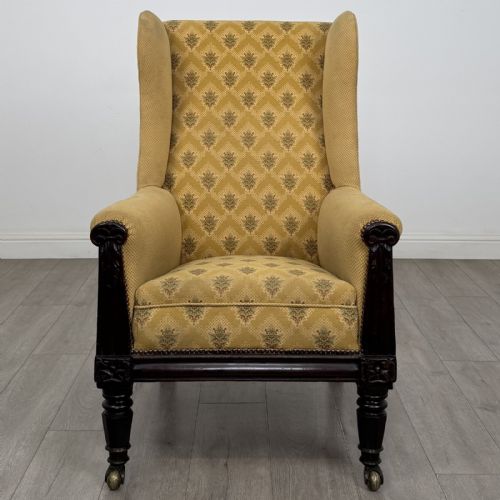
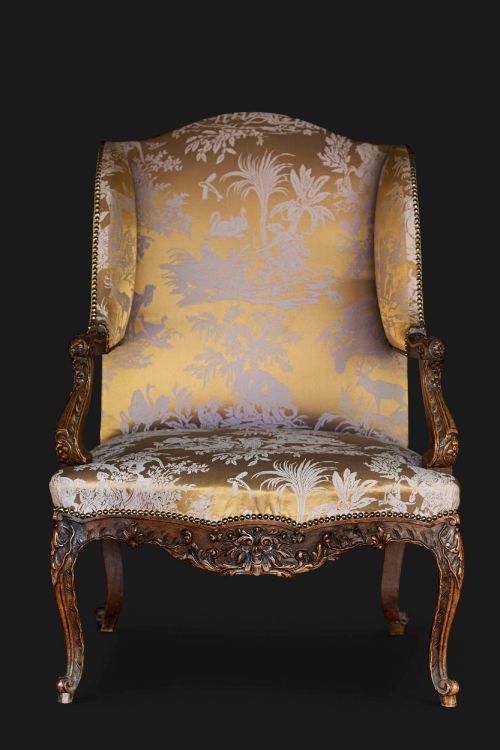
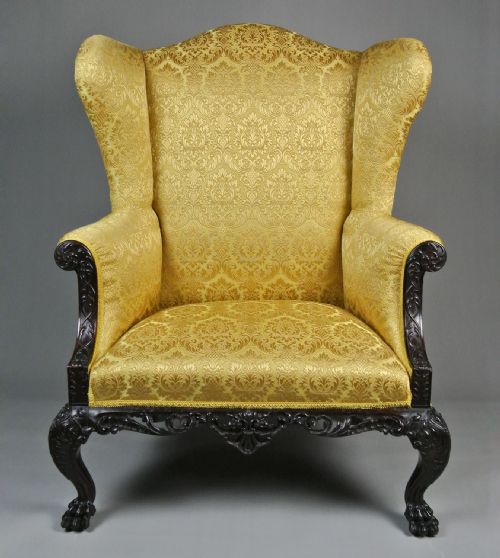
The versions most commonly met on this page span mahogany frames from the eighteenth and nineteenth centuries, paired with patterned damask fabric upholstery. They range from formal George III seating to French Louis XV style bergeres and later Art Nouveau examples.
Buyers seek these pieces to anchor a traditional study or drawing room with period character and rich textile texture. The combination of carved wood frameworks and patterned upholstery creates a focal point that works well in both historic and contemporary interiors.
Materials and construction
Makers built the structural frames of these armchairs primarily from solid mahogany or carved wood, often utilising brass details for castors or mounts. The timber was frequently shaped with scroll arms and cabriole or tapered legs.
Upholstery work relied upon damask fabric stretched over deep padding and secured to the winged backrest and armrests. Skilled artisans hand-carved the wooden show-frames, incorporating styles ranging from Irish Georgian motifs to French Empire curves.
Gold Damask Wing Chair Retail Price Guide 2026
Typical asking prices for gold damask wing chair among the pieces listed under this phrase on Sellingantiques today, from the lower quarter to the upper quarter. They describe what is for sale here now, not the wider market.
Current listings feature armchairs spanning the Georgian, Victorian, and Edwardian eras, constructed from mahogany, carved wood, and brass.
Assessing quality and craftsmanship
Quality in these armchairs rests upon the crispness of the wood carving and the integrity of the underlying timber frame. Finer examples display deeply sculpted scroll arms, well-proportioned wings, and robust mahogany joinery.
The grade of the damask upholstery and the fidelity of the period styling further differentiate the pieces. Original or sympathetic restoration preserves the character of the carved wooden components far better than heavy modern alterations.
The Gold Damask Wing Chair Glossary
- Wingback
- An armchair featuring protective side panels attached to the backrest designed to shield the sitter from draughts. These wings became a defining feature of fireside seating from the seventeenth century onwards.
- Damask
- A reversible figured fabric woven on a jacquard loom, traditionally featuring patterns in lustrous satin against a matte ground. This textile provides the characteristic sheen seen on gold damask upholstery.
- Scroll arm
- A furniture arm shaped in a continuous outward curve resembling a rolled scroll. This decorative form appears frequently on Regency and William IV armchairs.
- Bergere
- An enclosed upholstered armchair with wooden framing exposed around the sides and back. Originating in France, this form often includes a loose seat cushion.
- Cabriole leg
- A furniture leg that curves outward at the knee and tapers inward toward the foot, often ending in a pad or claw. This shape is characteristic of eighteenth-century seating styles.
Gold Damask Wing Chair: Frequently Asked Questions
What is a gold damask wing chair?
A gold damask wing chair is a traditional upholstered armchair featuring protective side panels and a rich patterned fabric covering. These pieces combine historic wooden frames with lustrous woven textile upholstery.
They appear in various period styles, offering both decorative presence and functional fireside seating.
How do I date a wing chair?
Dating relies on examining the timber frame, leg shape, arm profile, and overall construction methods. Georgian pieces often display different carving details and wood proportions compared to Victorian or Edwardian iterations.
Comparing the style of the woodwork against known historical periods helps narrow down the decade of manufacture.
How were wing chairs originally used?
These armchairs were placed near fireplaces in large rooms to trap heat around the sitter and block cold draughts. The high back and enclosed wings created a microclimate of warmth.
Over time, they transitioned from purely functional hearth seating to formal drawing room furniture.
How do I style a wing chair today?
A wing chair works well as a reading seat in a study or as an accent piece in a living room. Its traditional silhouette contrasts effectively with minimalist modern decor or complements classic interiors.
Pairing the chair with adequate reading light and complementary textiles enhances its visual impact.