





William and Mary Coffer
A william and mary coffer is a robust storage piece built from solid timber, prized for its honest joinery and deep historical character.
William and Mary Coffer
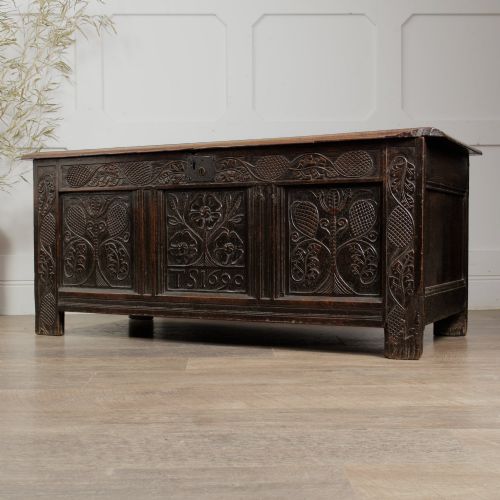
When you search for a william and mary coffer, you encounter sturdy storage chests and mule chests originating primarily from the seventeenth and early eighteenth centuries. These utilitarian forms also appear alongside related variants such as oak panelled chests, oak coffers, and elm coffer bach examples.
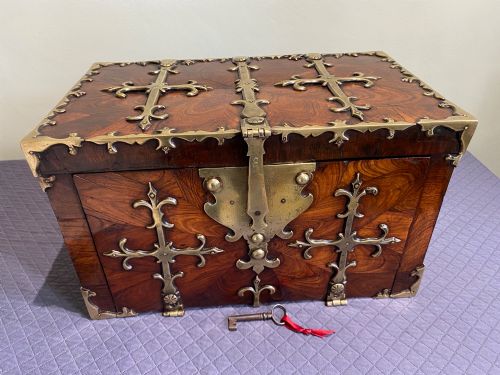
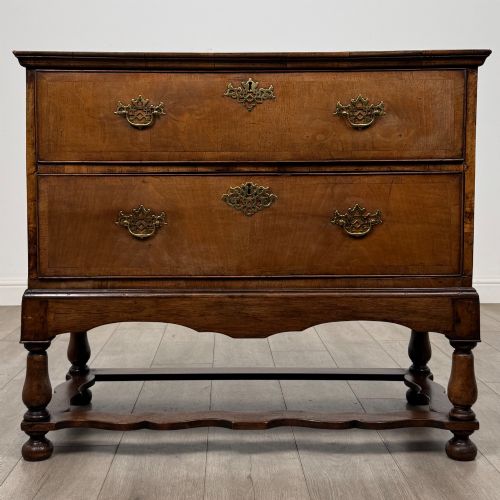
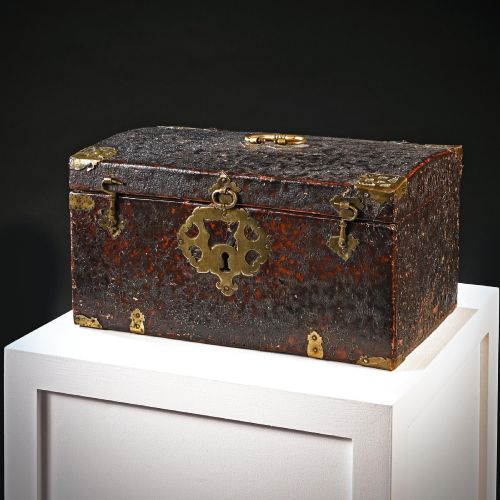
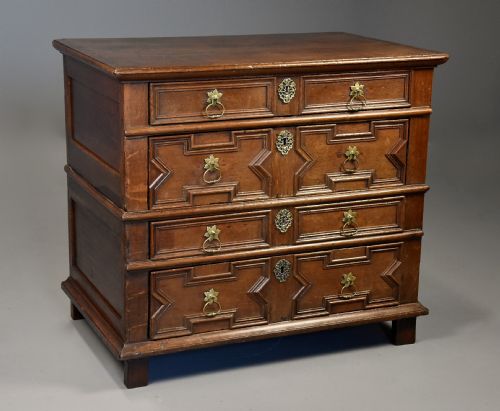
Most pieces you meet on this page display the straightforward timber construction typical of English country workshops from the late seventeenth century. Alongside full-sized trunks and coffers, the selection includes smaller document boxes, miniature furniture, and chests of drawers sharing the same period aesthetic.
Surviving examples bridge the divide between vernacular rustic storage and more formal cabinet work associated with the reign of William and Mary. Their enduring appeal lies in this blend of domestic utility and early joinery techniques.
How they were made
Makers relied principally on solid oak, supplemented by walnut, elm, and kingwood veneers on select pieces. Panels were hand-split or sawn and fitted into grooved frames to accommodate seasonal wood movement without splitting.
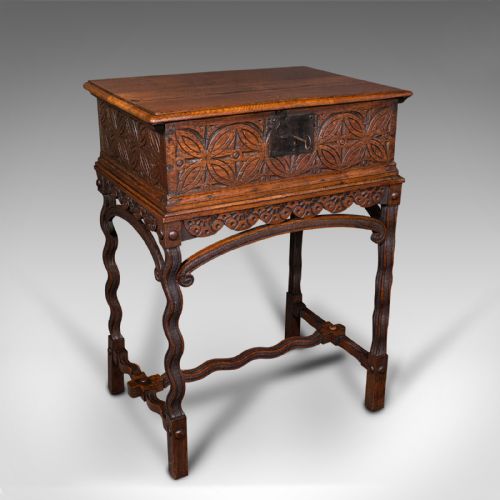
Surface decoration depended on structural joinery and applied mouldings, featuring geometric block fronts, carved details, and inlaid veneers. Iron and brass hardware, including hinges, locks, and travelling box mounts, secured the lids and drawers while adding functional contrast to the dark wood.
William and Mary Coffer Retail Price Guide 2026
Typical asking prices for william and mary coffer among the pieces listed under this phrase on Sellingantiques today, from the lower quarter to the upper quarter. They describe what is for sale here now, not the wider market.
Several travelling boxes survived centuries of transit intact, likely enduring bumpy carriage rides while guarding important documents.
What varies in quality
The degree of original timber retention dictates the standing of an individual coffer. Pieces retaining their original panel boards, floor boards, and hinges command greater respect than those rebuilt with later timber replacements.
The subtlety of the surface finish also marks out superior examples. A natural, untouched patina developed through centuries of handling differs markedly from heavily stripped or overly polished surfaces.
The William and Mary Coffer Glossary
- Coffer
- A heavy wooden chest traditionally used for storing valuables, documents, or household goods. These storage boxes often feature hinged lids and robust panel construction.
- Mule chest
- A storage chest equipped with one or more drawers at the base beneath the primary compartment. This form bridges the gap between the traditional coffer and the chest of drawers.
- Veneer
- A thin slice of ornamental wood, such as kingwood or walnut, applied over a secondary timber core. This technique created rich surface patterns on high-status case furniture.
- Geometric block front
- A facade decorated with projecting and recessed moulded wooden blocks arranged in repeating patterns. This style creates strong shadow lines across drawer fronts and doors.
- Bible box
- A small tabletop chest designed to hold family scriptures or legal documents, often featuring a sloping lid. These compact boxes frequently sit on dedicated stands or tables.
William and Mary Coffer: Frequently Asked Questions
What is a coffer?
A coffer is a heavy wooden chest used historically for storing valuable items, textiles, or documents securely in domestic settings.
Most examples rely on sturdy frame and panel construction to withstand heavy use over centuries.
How were these chests used?
These pieces served as secure storage for household goods, clothing, and important papers before fitted closets became common.
Many functioned double duty as seating or tables within domestic and ecclesiastical interiors.
How do I care for antique oak?
Keep wooden chests away from direct heat sources and dramatic humidity fluctuations to prevent timber splitting and shrinkage.
Feed the surface occasionally with traditional wax to maintain the natural sheen and protect the grain.
How can I tell the period?
Dating relies on examining the joinery methods, tool marks, timber species, and hardware style used in construction.
Original hinges, hand-cut nails, and peg joinery provide reliable clues to the seventeenth or eighteenth-century origin.