



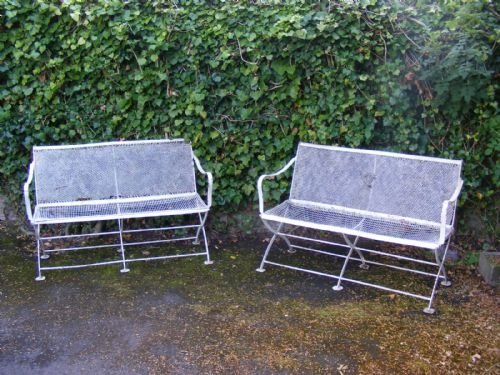
White Wrought Iron Seat
White wrought iron seats bring durable elegance to garden lawns, offering classic outdoor seating crafted from enduring metal.
White Wrought Iron Seat
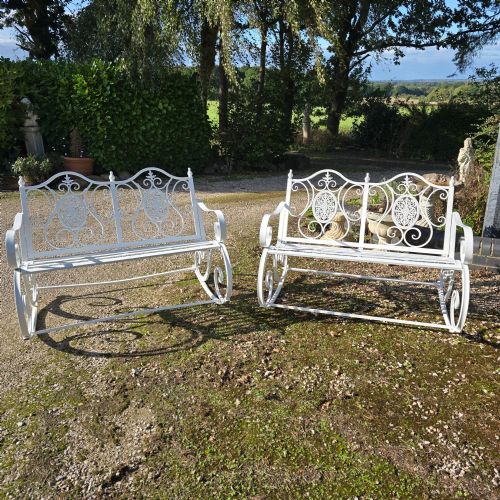
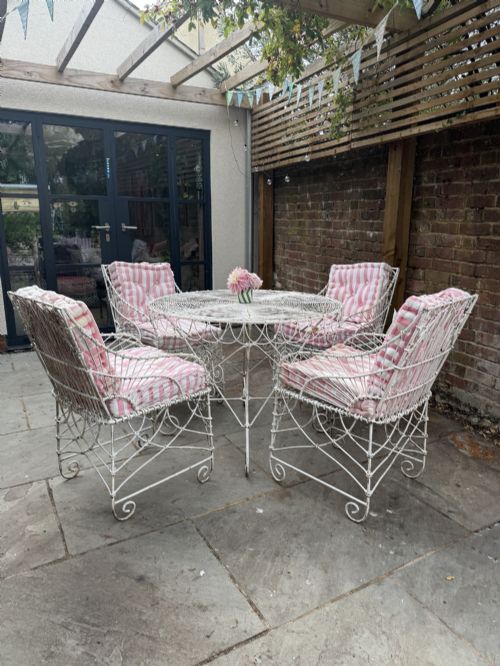
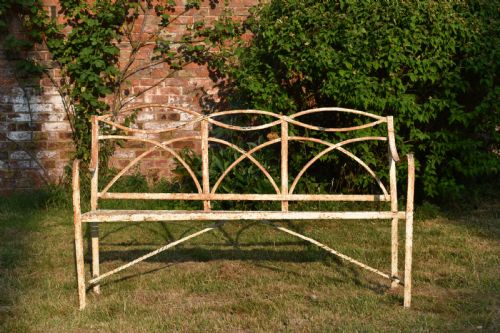
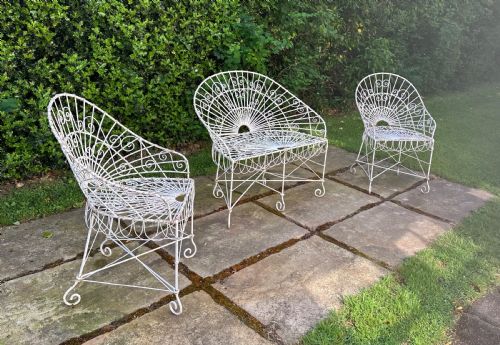
A white wrought iron seat provides functional outdoor seating shaped through traditional metalworking techniques. Buyers searching for a white wrought iron seat will encounter garden benches, chairs, and dining sets spanning the nineteenth and twentieth centuries.
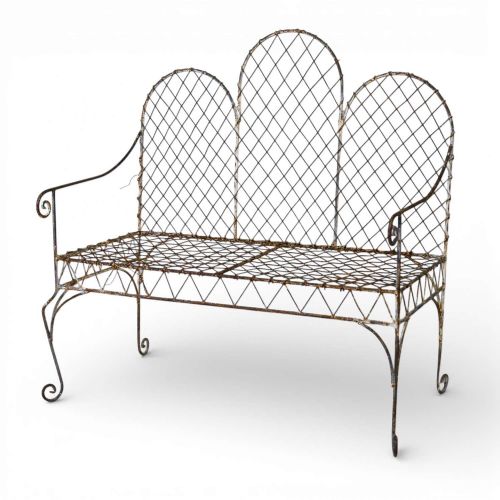
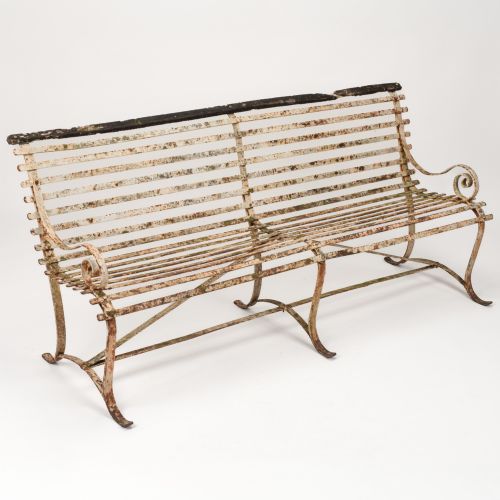
The selections available here range from authentic Regency strapwork benches to Victorian wirework arbours and later twentieth-century garden sets. Many pieces feature painted finishes that highlight the underlying industrial materials and decorative structural forms.
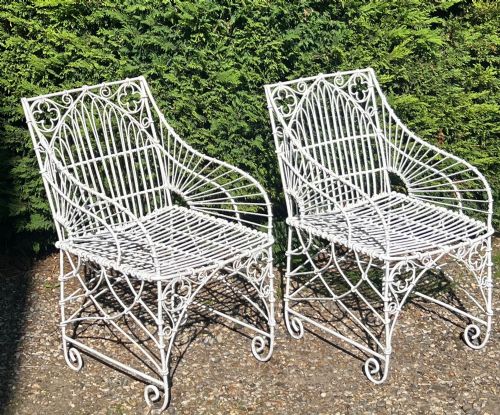
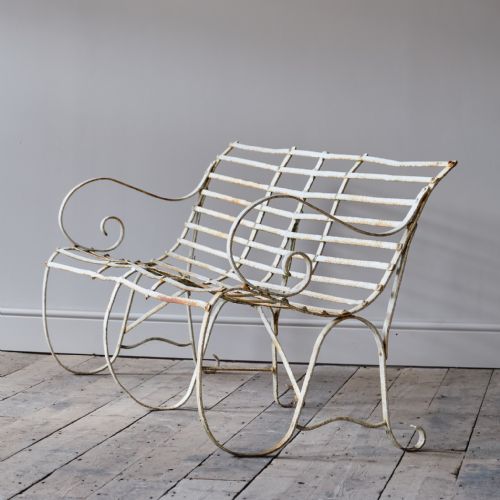
Makers produced these items in various styles including Gothic Revival and Regency revival, adapting metal rods and straps into comfortable garden furnishings. Each surviving example demonstrates how outdoor furniture developed from early nineteenth-century strapwork designs into later wirework and tubular variations.
How they were made
Blacksmiths and manufacturers shaped wrought iron, steel wire, and cast iron components by hand and machine to construct these garden seats. Artisans bent metal bars while hot or cold, fastening joints with rivets or forge-welds to build rigid frames capable of supporting heavy use.
Protective layers of white paint were applied over the metal surfaces to prevent rust and provide a clean aesthetic finish against garden foliage. Wirework items utilised fine steel wire woven closely together, whilst strapwork benches employed flat iron bands arranged in geometric patterns.
White Wrought Iron Seat Retail Price Guide 2026
Typical asking prices for white wrought iron seat among the pieces listed under this phrase on Sellingantiques today, from the lower quarter to the upper quarter. They describe what is for sale here now, not the wider market.
Listings feature items from the Regency period, the Victorian era, and the 1930s, constructed primarily from wrought iron, steel wire, and paint.
What varies in quality
The distinction between standard utility items and finer examples lies in the complexity of the metal manipulation and decorative detail. Superior pieces exhibit carefully forged strapwork, balanced proportions, and integrated stylistic references such as Gothic arches or Regency curves.
Structural integrity depends on the original gauge of the iron and the preservation of the framework through subsequent decades of outdoor exposure. Earlier examples often display more refined hand-forged joints, whereas twentieth-century iterations rely on alternative assembly methods.
The White Wrought Iron Seat Glossary
- Strapwork
- Flat strips of iron arranged in interlaced or geometric patterns across the backrests and seats. This technique provided both structural strength and visual lightness.
- Wirework
- Garden furniture constructed from woven steel or iron wire attached to a heavier frame. This method became popular during the Victorian era for arbours and intricate seating.
- Gothic Revival
- An architectural and decorative style incorporating pointed arches and medieval motifs. Garden benches from this movement reflect church window tracery in their metal backs.
- Regency Style
- A design period characterised by classical restraint, curves, and elegant proportions. Pieces in this tradition often utilise precise strapwork and outward-scrolling arms.
White Wrought Iron Seat: Frequently Asked Questions
How do I care for white wrought iron?
Keep the metal dry and touch up paint chips promptly to prevent underlying rust from forming. Regular cleaning with mild soap preserves the protective white coating through changing seasons.
Store pieces under cover during harsh winter months to minimise moisture exposure and reduce the need for extensive repainting.
Are these seats suitable for permanent outdoor use?
Most of these items were originally manufactured for exterior placement in parks and domestic gardens. The durable metal construction handles typical weather conditions when properly maintained.
Positioning furniture on paved surfaces rather than directly on damp soil helps protect the base of the legs from accelerated corrosion.
How can I identify a Regency period piece?
Regency items typically feature characteristic flat strapwork designs and classical proportions that reflect early nineteenth-century aesthetics. Look for hand-forged joinery and traditional construction methods common to that era.
Later revival pieces often imitate these specific structural patterns but utilise twentieth-century manufacturing techniques and slightly different material gauges.
What is the difference between wrought iron and cast iron?
Wrought iron is malleable and can be heated and beaten into straps and bars, making it ideal for bentwork and strapwork seats. Cast iron is poured into moulds to create rigid, highly decorative components.
Many garden benches combine both materials, using cast iron for decorative ends and wrought iron or timber for the supportive slats.