

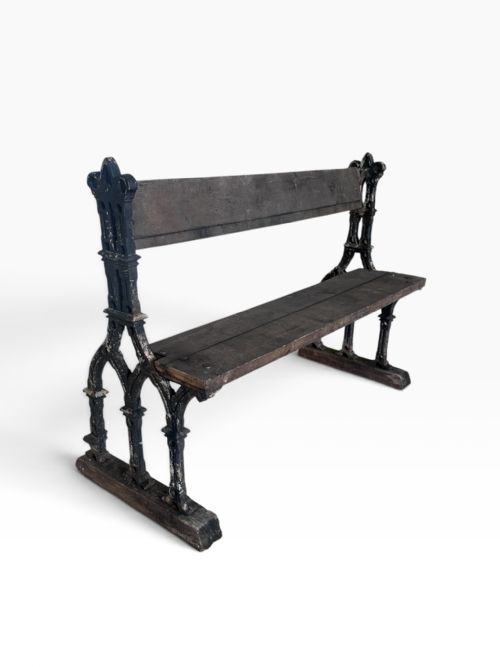
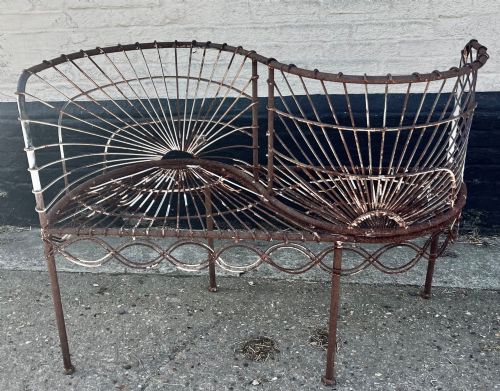
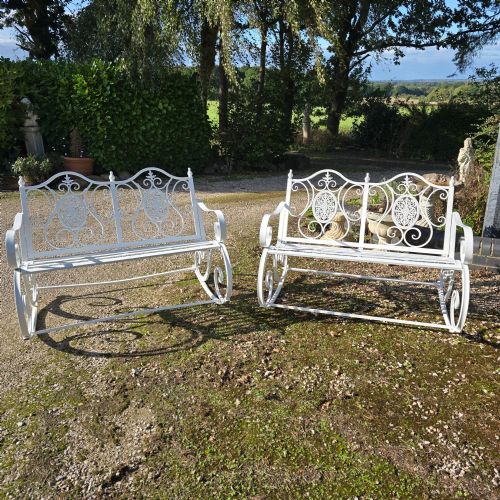
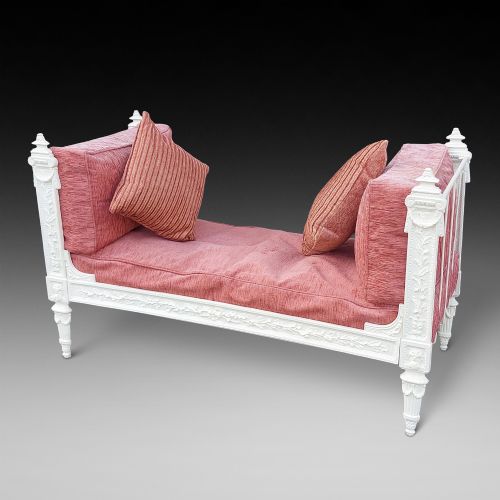


Victorian Style Iron Bench
These Victorian style iron bench examples bring robust metalwork and classic form to outdoor spaces.
Victorian Style Iron Bench
A victorian style iron bench provides durable seating for gardens and verandas, drawing on nineteenth century design traditions. The selection includes nineteenth century examples alongside pieces from the early decades of the twentieth century.
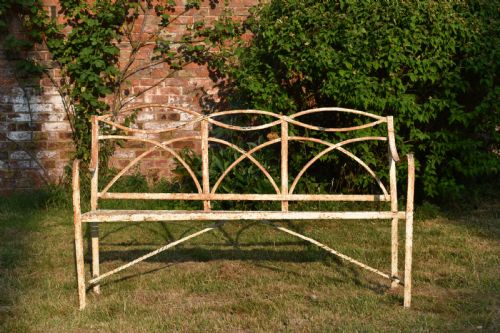
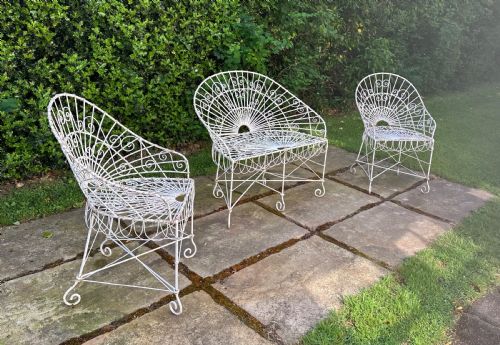
Most items take the form of garden benches, though daybeds, garden sets, and wirework garden arbours also appear. Styles span from Victorian and Victorian Gothic to Regency and Edwardian revivals.
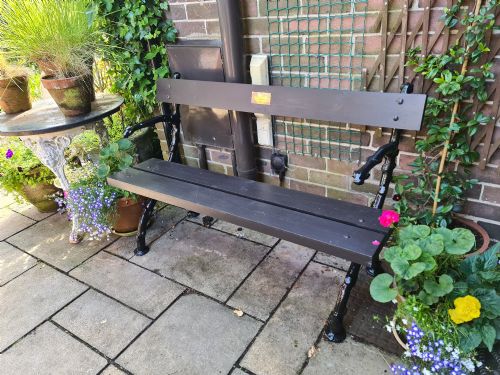
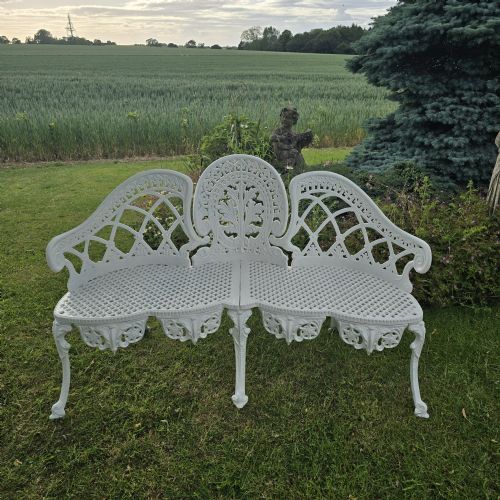
Makers often utilised cast iron and wrought iron, sometimes paired with wood or fabric. These structures range from simple garden seats to elaborate strapwork and rocking benches.
How they were made
Foundries shaped molten metal using traditional casting techniques to create intricate patterns and sturdy frames. Wrought iron elements provided additional strength and linear detail.
Paint finishes protected the metalwork from weathering, while some designs incorporated wooden slats and fabric elements for comfort.
Victorian Style Iron Bench Retail Price Guide 2026
Typical asking prices for victorian style iron bench among the pieces listed under this phrase on Sellingantiques today, from the lower quarter to the upper quarter. They describe what is for sale here now, not the wider market.
Some nineteenth century makers even built rocking mechanisms into garden benches, letting Victorians sway gently among the cabbages.
What varies in quality
The refinement of the casting work dictates the crispness of decorative motifs and structural integrity. Pieces with well-preserved metal surfaces show greater longevity.
Restoration standards vary, particularly regarding paint layers and the preservation of original metal versus replacement components.
The Victorian Style Iron Bench Glossary
- Cast Iron
- A strong, heavy alloy poured into moulds to create rigid forms. It allows for detailed ornamentation on bench ends and backs.
- Wrought Iron
- Iron heated and hammered into shape by hand. This material offers flexibility and tensile strength for structural braces.
- Strapwork
- Flat bands of metal arranged in geometric patterns. This technique appears on Regency and Victorian seating frames.
- Wirework
- Thin metal wires bent and joined to form open structures. It is typical of lighter garden arbours and plant supports.
Victorian Style Iron Bench: Frequently Asked Questions
How do I maintain an iron bench?
Keep the metal protected with suitable exterior paint to prevent rust formation.
Store or cover the seating during harsh winter months to preserve the finish.
Are these benches suitable for outdoor use?
Most examples are constructed from durable cast or wrought iron designed for garden environments.
Check whether wooden or fabric additions require seasonal shelter from rain.
What is the difference between cast and wrought iron?
Cast iron is poured into moulds, resulting in rigid, highly decorative components.
Wrought iron is beaten by hand, producing tougher, fibrous material suited to structural support.
How do I date an iron bench?
Examine the casting quality, bolt types, and stylistic cues such as Gothic tracery or Regency strapwork.
Nineteenth-century examples often display heavier frames and simpler assembly methods than later revivals.