

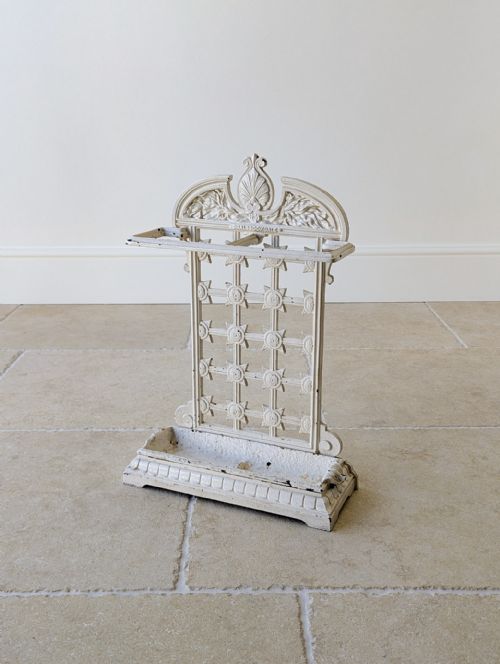
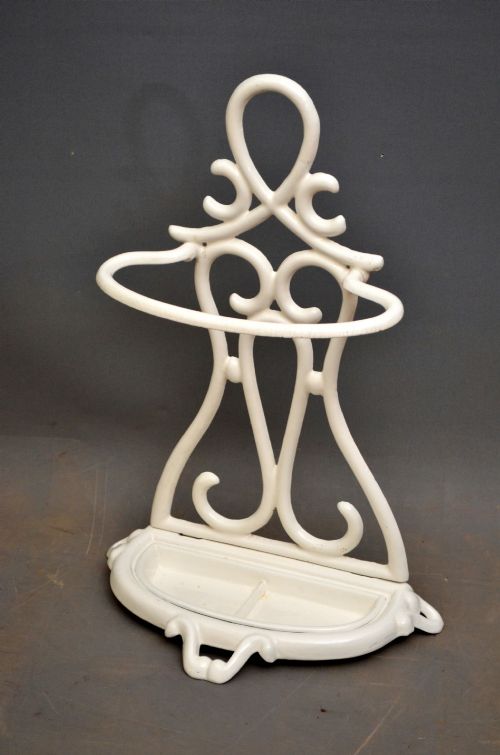
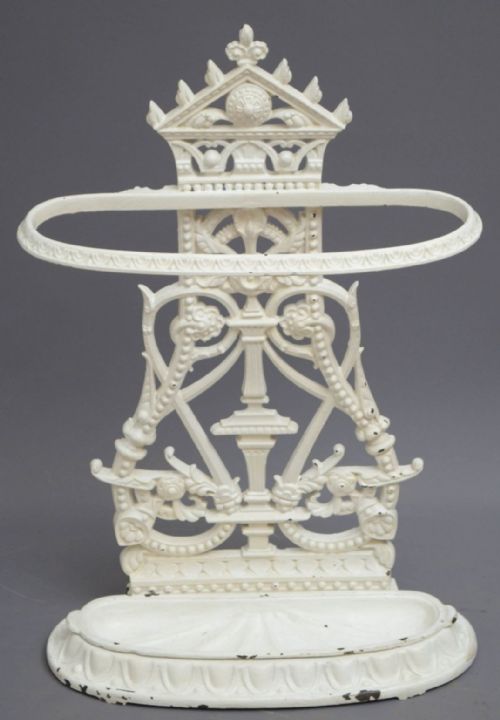


White Umbrella Holder
These white umbrella holder pieces offer practical hallway storage, combining sturdy cast iron and ceramic with ornate Victorian or Art Nouveau forms.
White Umbrella Holder
When you search for a white umbrella holder, you are looking at hallway furnishings designed to keep wet sticks and umbrellas contained. The pieces listed here span the Victorian period, late Victorian era, and around 1900, taking the form of stick stands, hall stands, and coat stands.
You are most likely to meet heavy cast iron examples featuring a white enamel finish, alongside ceramic designs such as Japanese Fukagawa pieces and English chinoiserie stick stands. Some examples incorporate mahogany woodwork and marble shelves to serve dual purposes in entrance halls.
The origins represented stretch across English, French, and Japanese workshops. These items range from utilitarian portico stands with umbrella loops to tall, elaborate Gothic revival and Art Nouveau structures.
How they were made
Makers utilised heavy cast iron, pouring molten metal into detailed moulds to create openwork lattice designs and structural portico frames. These iron structures frequently received a durable white enamel or painted finish to brighten hallway interiors.
Ceramic stands relied on traditional throwing and moulding techniques, finished with decorative glazes in styles such as Japanese Meiji period blue and white or English chinoiserie. Cabinetmakers constructed hall stands from mahogany, incorporating inset marble shelves and brass umbrella loops.
White Umbrella Holder Retail Price Guide 2026
Typical asking prices for white umbrella holder among the pieces listed under this phrase on Sellingantiques today, from the lower quarter to the upper quarter. They describe what is for sale here now, not the wider market.
The listings show a strong reliance on Victorian cast iron and ceramic materials, spanning English, French, and Japanese origins.
What varies in quality
Quality rests upon the crispness of the casting and the complexity of the decorative ironwork or ceramic glaze. Finer examples display deeply struck foundry details and clean, uniform enamel applications rather than heavy, obscured surfaces.
Structural integrity also separates standard utility pieces from grander hall furnishings. Heavier portico frames, well-fitted marble inserts, and intact original drip trays distinguish the more substantial examples from basic hall furniture.
Coalbrookdale
The White Umbrella Holder Glossary
- Cast iron
- Strong iron alloy poured into moulds to create rigid decorative objects. This material forms the primary structure for the heavy umbrella stands on this page.
- Chinoiserie
- European artistic style reflecting Chinese motifs and decorative patterns. This style appears on English stick stands from the early twentieth century.
- Portico
- Architectural framing structure resembling a porch entrance. Several stick and coat stands utilise this monumental architectural form.
- Enamel
- Vitreous coating fused to metal surfaces through high-temperature firing. This provides a hard, smooth white protective finish on iron umbrella stands.
- Meiji Period
- Japanese historical era spanning from 1868 to 1912 noted for fine ceramic arts. Fukagawa pieces from this era appear in stick stand forms.
White Umbrella Holder: Frequently Asked Questions
What is a white umbrella holder?
A white umbrella holder is a hallway furnishing designed to store wet walking sticks and umbrellas upright. They utilise heavy bases and open frames to catch drips while keeping entryways organised.
These pieces range from dedicated cast iron stick stands to multi-functional mahogany hall stands with built-in umbrella loops and marble shelves.
How do I care for cast iron?
Cast iron requires minimal maintenance beyond regular dusting and keeping the inner drip trays clear of stagnant water. Avoid harsh chemical cleaners that might damage the painted or enamelled surfaces.
Ensure the surrounding floor remains protected if the stand lacks an original metal base tray to catch residual moisture from wet umbrellas.
Where were these stands used?
These umbrella holders were placed primarily in the grand hallways, entrance porches, and vestibules of Victorian and Edwardian homes. They provided visitors and residents a designated place to leave wet outdoor gear upon entry.
Larger combination hall stands also incorporated hooks for coats and hats alongside the lower umbrella racks.
How do I date a stick stand?
Dating relies on identifying the prevailing design style, such as Victorian Gothic revival, Art Nouveau, or late nineteenth-century registry marks. Material combinations, such as cast iron paired with white enamel or mahogany and marble, also indicate the manufacturing period.
foundry names or Japanese studio marks provide specific chronological anchors for pieces produced around 1900.