





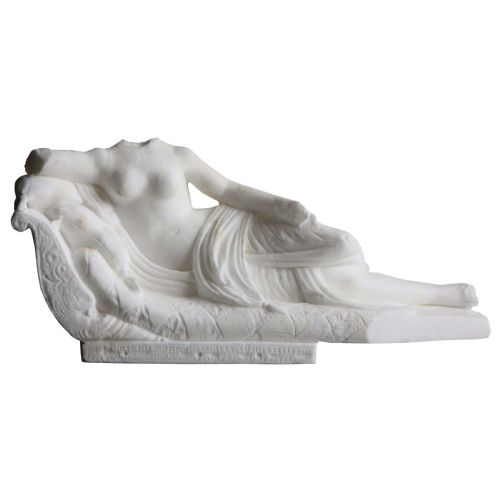


White Stone Female Figure
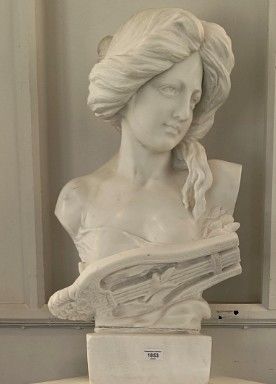
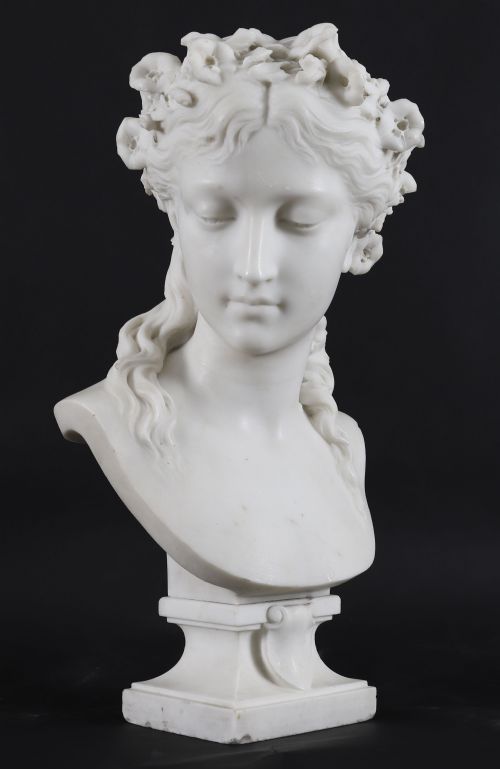
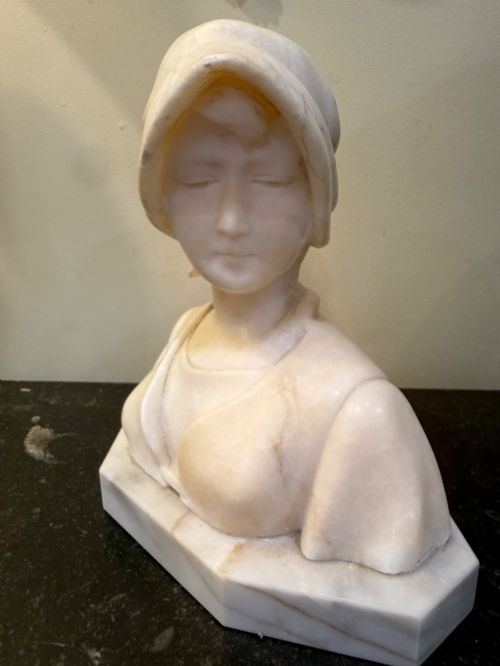
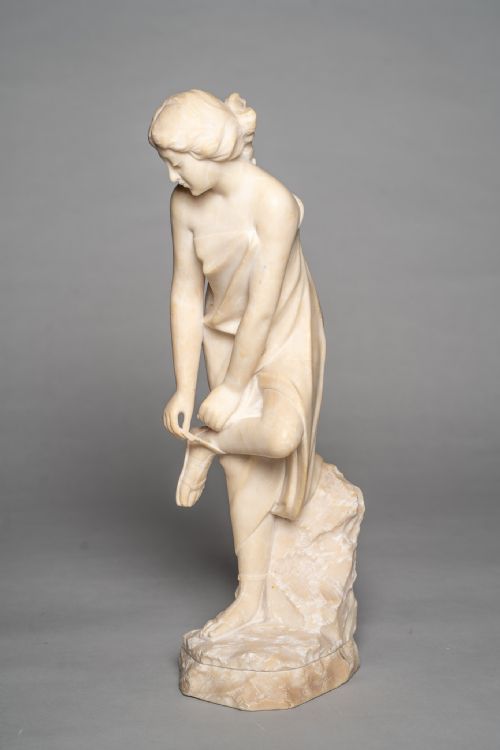
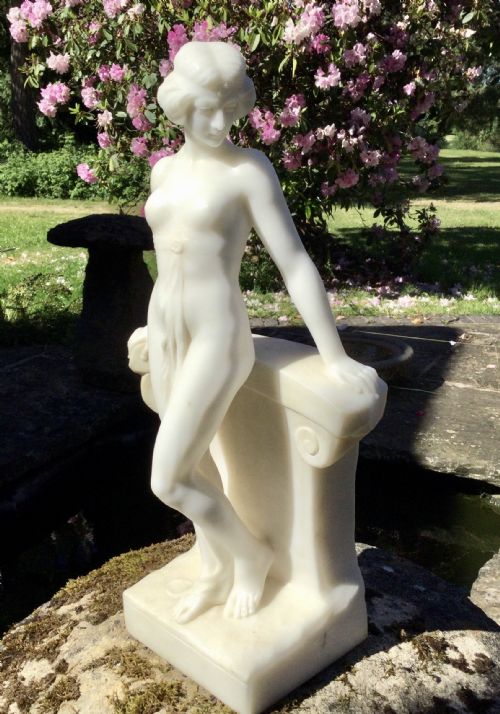
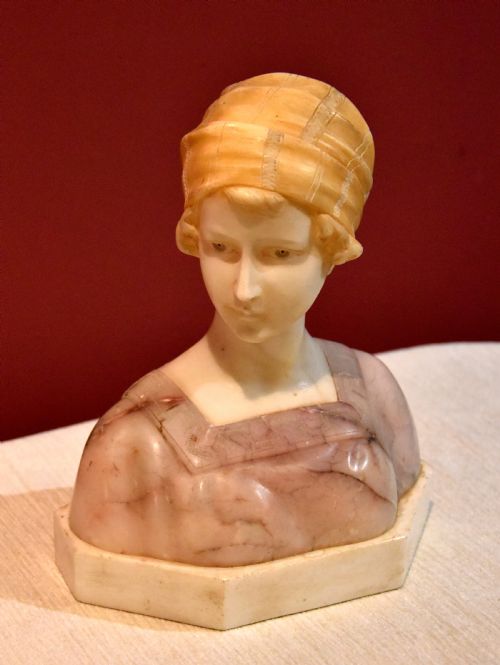
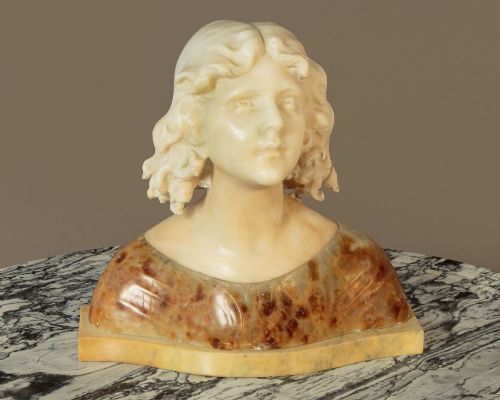
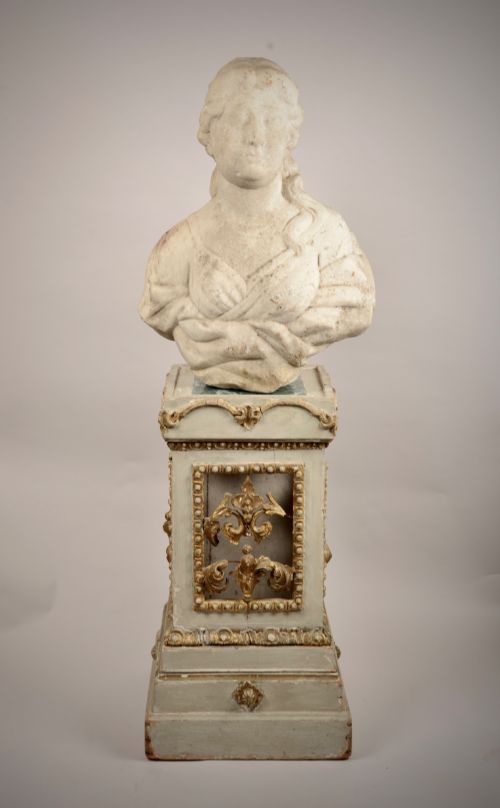
These white stone female figure carvings range from classical garden statues to intimate nineteenth-century portrait busts.
White Stone Female Figure
A white stone female figure brings classical mythology, allegorical subjects and portraiture into domestic spaces through carved stone. These pieces span from seventeenth-century works to early twentieth-century creations, drawing heavily on neoclassical, Victorian and Art Nouveau aesthetics.
Most examples encountered here take the form of sculpted busts or full statues representing muses, goddesses, musicians and classical maidens. Originating largely from Italian and French workshops, these sculptures utilise pale mineral mediums to capture drapery, hair and expression with remarkable fidelity.
Materials and carving techniques
Sculptors relied principally on marble, Carrara marble and alabaster, shaping the dense material through chiselling, rasping and polishing. Alabaster offered a softer translucency suited to delicate flesh tones, whilst hard white marble permitted sharper architectural detail and durability.
Many works combine carved stone with secondary elements such as brass mounts or contrasting granite bases. Signatures and foundry marks occasionally appear incised directly into the stone or on integrated socles.
Listings feature works spanning from the seventeenth century through to the early twentieth century, executed primarily in marble, Carrara marble and alabaster.
Distinctions in sculpture quality
Quality rests upon the sensitivity of the hand carving, particularly in the rendering of facial expressions, hands and the fluid fall of drapery. Superior pieces demonstrate anatomical precision and depth where lesser examples remain stiff or formulaic.
The choice of raw material dictates the visual impact, with flawless fine-grained Carrara marble or evenly translucent alabaster commanding greater regard than stone marred by heavy natural veining or discoloration.
Eugene Aizelin·A. Gamay·Auguste Henri Carli·Carrier-Belleuse·Fritz Kochendorfer·Pugi·Antonio Canova·R. Lusili·Auguste Moreau
The White Stone Female Figure Glossary
- Alabaster
- A soft, fine-grained stone prized for its translucency and ease of carving. It permits subtle light diffusion that mimics human skin.
- Carrara Marble
- A high-grade white marble quarried in Tuscany, Italy. Sculptors select it for its uniform texture and bright crystalline appearance.
- Neoclassical
- An artistic movement reviving the styles of ancient Greece and Rome. Works in this tradition emphasise clarity of form, dignity and classical drapery.
- Grand Tour
- A traditional trip through Europe undertaken by upper-class young men to collect culture and art. Figures acquired on these travels often replicated famous classical antiquities.
White Stone Female Figure: Frequently Asked Questions
How do I clean a marble or alabaster bust?
Dust surfaces gently with a soft, dry microfibre cloth or a clean brush. Avoid using water, soap or chemical cleaners, as moisture penetrates porous stone and damages alabaster.
Keep pieces away from direct sunlight and sudden temperature shifts to prevent micro-fracturing in the mineral structure.
Where were these stone figures displayed historically?
Nineteenth-century interiors featured these sculptures on pedestals in entrance halls, upon mantelpieces in drawing rooms, or within dedicated galleries. Garden statues stood outdoors in courtyards or landscaped grounds.
Smaller busts served as decorative accents on library bookcases and pedestals, reflecting the owner's classical education.
How do I distinguish alabaster from marble?
Alabaster is noticeably softer than marble and can be scratched with a metal fingernail file in hidden areas, though this should be avoided. It also possesses a warm, waxy translucency when held to the light.
Marble feels colder to the touch, has a harder crystalline structure, and resists scratching from steel implements.
What is a Grand Tour sculpture?
Grand Tour pieces are reduced-scale or full-size copies of famous ancient sculptures acquired by travellers touring European cultural centres during the eighteenth and nineteenth centuries. They served as tangible proof of education and refined taste.
These works allowed collectors to bring museum-quality classical antiquities into private residential spaces.