
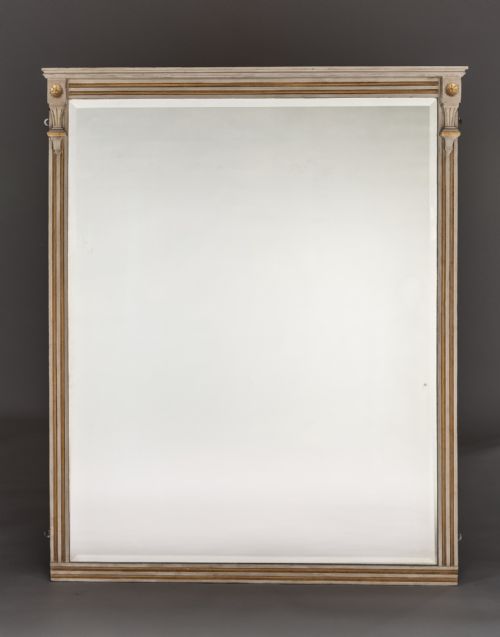
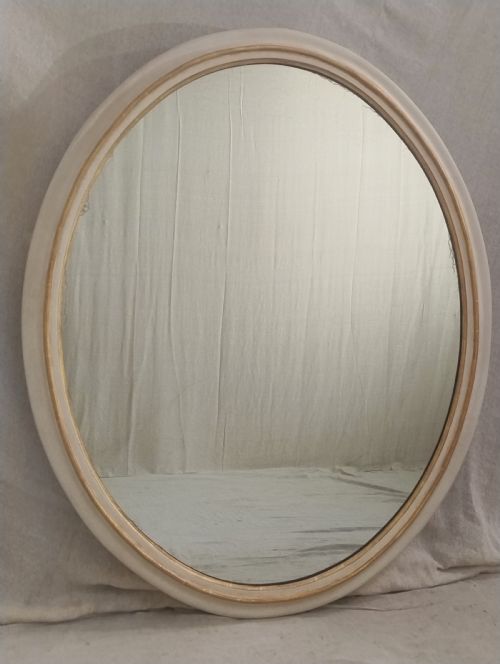


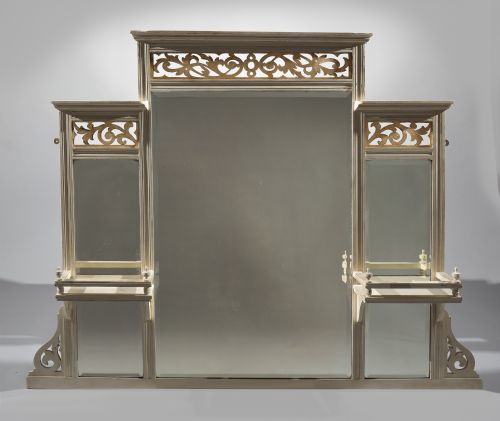


White Parcel Gilt Mirror
A white parcel gilt mirror brings bright painted surfaces and gleaming gold leaf together to lift a room.
White Parcel Gilt Mirror
A white parcel gilt mirror combines painted white woodwork with selectively applied gold leaf or gilding to highlight carved details. When you search for a white parcel gilt mirror, you find large wall and overmantel forms designed to reflect light and anchor a room.
The pieces on this page span the nineteenth and early twentieth centuries, running from the Regency period through Victorian revivals and into the Edwardian era. Overmantel mirrors dominate the selection, shaped for placement above a fireplace.
Victorian neoclassical and Louis XVI styles appear frequently alongside rococo revival frames. These designs utilise painted white grounds contrasted with parcel gilding to create formal architectural presence.
How they were made
Wood serves as the primary base for these frames, often built up with gesso to receive crisp mouldings and carved ornaments. Craftsmen then applied paint alongside gold leaf to distinct sections of the woodwork.
Parcel gilding involves applying thin sheets of gold leaf strictly to raised details, mouldings or carved motifs against a painted white ground. This technique demands precise brushwork and careful handling of the metallic leaf.
Listings feature pieces spanning the nineteenth and early twentieth centuries, predominantly using wood, gesso, paint and gold leaf.
What varies in quality
Quality rests in the crispness of the gesso mouldings and the precision of the separation between the white paint and the gold leaf. Stronger pieces show deeply defined carved elements rather than soft, flat ornament.
The integrity of the frame construction and the depth of the original gilding separate standard examples from finer works. Original mirror glass with appropriate ageing also adds character to the piece.
The White Parcel Gilt Mirror Glossary
- Parcel Gilt
- Gilding applied to only a portion of an object, usually to highlight specific carved details against a painted or contrasting background.
- Gesso
- A plaster mixture applied to wood frames to create a smooth surface for carving, moulding and subsequent gilding.
- Overmantel Mirror
- A large mirror specifically proportioned to hang on the wall directly above a fireplace mantelpiece.
- Trumeau Mirror
- A wall mirror featuring a painted panel or artwork incorporated into the upper section of the frame structure.
White Parcel Gilt Mirror: Frequently Asked Questions
Where should I hang a large overmantel mirror?
These mirrors work best mounted securely on the chimney breast directly above a fireplace mantel. Their scale allows them to draw natural light across the room.
Ensure the wall fixings match the substantial weight of these wooden and gesso frames. Positioning them opposite a window maximises the reflected light in your space.
How do I clean a painted and gilt frame?
Dust the frame gently using a soft, dry brush to protect the delicate gold leaf and painted surfaces. Avoid all liquid cleaners and chemical sprays.
Moisture can damage both the gesso and the historic gilding over time. Regular dry dusting is all that is required for maintenance.
Are these mirrors original to the nineteenth century?
The selection includes pieces originating from the nineteenth and early twentieth centuries. Styles span Regency, Victorian and Edwardian revival periods.
Materials such as gesso, wood and gold leaf reflect the manufacturing techniques of these eras. Construction methods and framing styles help date each individual item.
What is the difference between an overmantel and a wall mirror?
Overmantel mirrors are traditionally wider and proportioned to sit above fireplaces in formal reception rooms. Standard wall mirrors suit general room placement.
Trumeau variants include integrated painted panels above the glass. Both forms utilise white paint and parcel gilding to create architectural focal points.