



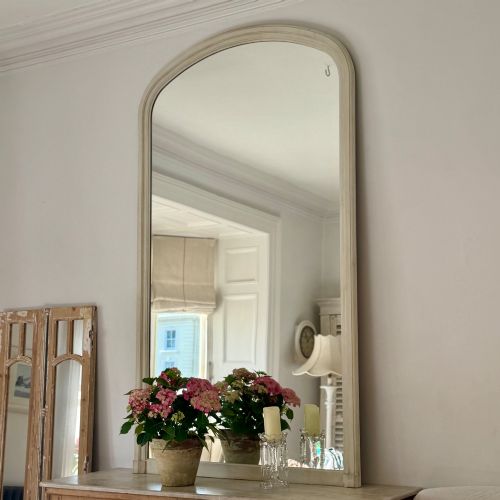


White Painted Overmantel
A white painted overmantel sits above a fireplace to lift a room with reflected light and grand scale.
White Painted Overmantel
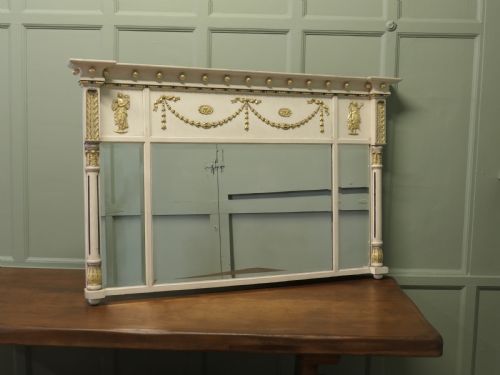
A white painted overmantel is a large mirror designed to mount directly above a mantelpiece, drawing the eye upwards and anchoring the hearth. These pieces span the Victorian, Edwardian, and Regency periods alongside French Chateau and Neoclassical styles.
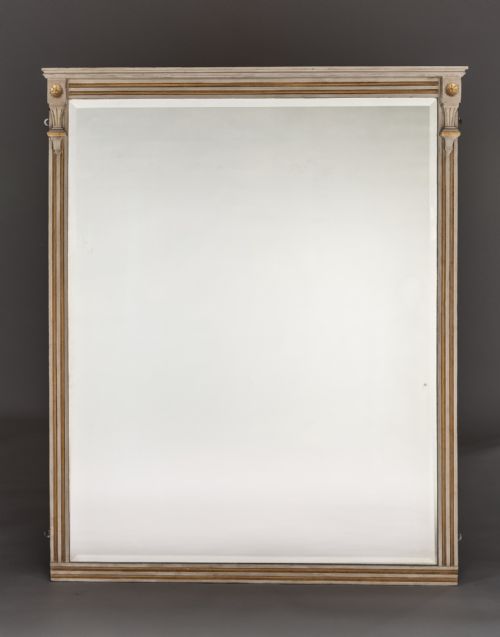
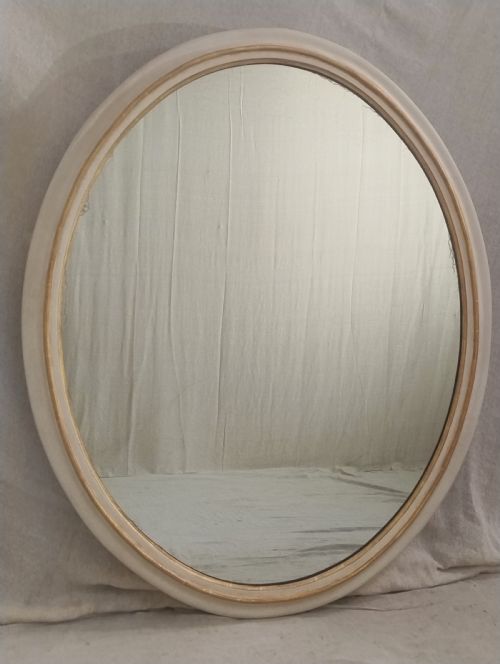
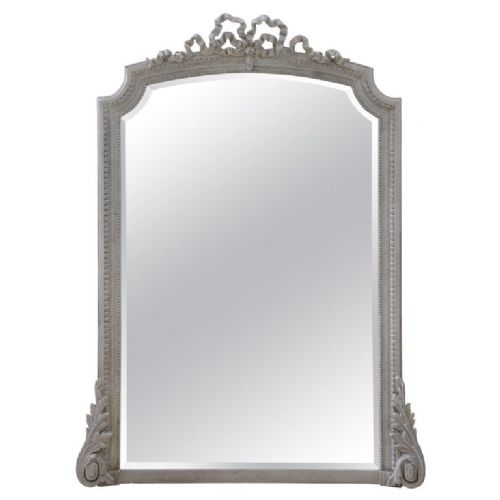
Most examples found here date from the nineteenth century, often taking the form of large arch frames, triple plates, or rectangular formats. They combine painted surfaces with parcel gilt details, carved wood, and gesso to bring architectural presence to a chimney breast.
How They Were Made
Carved wood and gesso form the structural base of these frames, allowing artisans to build up crisp mouldings, columns, and shaped tops before applying finish. Layers of paint and gold leaf provide the characteristic parcel-gilt contrast seen across the period.
Silvered mirror glass, sometimes in triptych or marginal configurations, is fitted into the heavy wooden chassis to create deep reflection across the room.
Listings feature nineteenth-century pieces alongside French Chateau and Regency styles, utilising carved wood, gesso, and mirror glass.
What Varies in Quality
The crispness of the carved wood and gesso ornamentation dictates the refinement of the frame, distinguishing deeply hand-modelled foliage from simpler moulded plaster work. Original mercury or vintage mirror plates retain authentic foxing and depth that mass-produced modern replacements lack.
The harmony of the proportions and the integrity of the original paint layers, whether distressed or cleanly gilt, determine the visual weight and historical authenticity of the piece.
The White Painted Overmantel Glossary
- Overmantel
- A large mirror or panel constructed specifically to hang on the wall directly above a fireplace mantel. They were traditionally proportioned to mirror the opening of the hearth below.
- Gesso
- A plaster mixture applied to carved wooden frames to provide a smooth surface for gilding and painting. It allows intricate relief details to be worked onto the wood.
- Parcel Gilt
- A surface finish where parts of an object are covered in gold leaf while other areas remain painted or exposed. This technique highlights specific architectural mouldings and carvings.
- Tryptych
- A mirror plate divided into three distinct vertical sections, often seen in Regency designs. It widens the field of reflection across a chimney breast.
- Trumeau
- A decorative wall mirror or panel featuring painted scenes or carved woodwork above the glass. French examples frequently incorporate classical motifs.
White Painted Overmantel: Frequently Asked Questions
How do I hang a heavy overmantel mirror?
These large frames require secure fixings anchored directly into the masonry or heavy studs of the chimney breast. Professional installation ensures the substantial weight of the wood and glass is safely supported.
Weight distribution brackets and mirror plates screwed into the frame back provide the necessary stability for secure wall mounting.
What is the difference between an overmantel and a wall mirror?
An overmantel is specifically proportioned in width and height to sit comfortably above a fireplace surround. Standard wall mirrors lack this horizontal emphasis and often do not account for the visual balance required by a hearth.
They also tend to feature lower framing designed to rest close to the mantel shelf itself.
Can I place these mirrors in rooms without a fireplace?
While designed for the chimney breast, these large pieces function effectively on any expansive wall space to amplify light. Placing one opposite a window will significantly brighten a dark interior.
Their architectural frames allow them to act as focal points in hallways or reception rooms just as well as above a mantel.
How do I clean antique mirror glass?
Use a soft microfibre cloth with a mild, non-ammonia cleaner applied to the cloth rather than directly onto the glass. This prevents moisture from seeping behind the silvering or damaging the surrounding paint and gesso.
Take care around the edges of the plate where historical silvering is often fragile and prone to flaking.