





White Painted Doors
White painted doors bring architectural character and useful division to rooms, uniting sturdy timber construction with softened decorative surfaces.
White Painted Doors
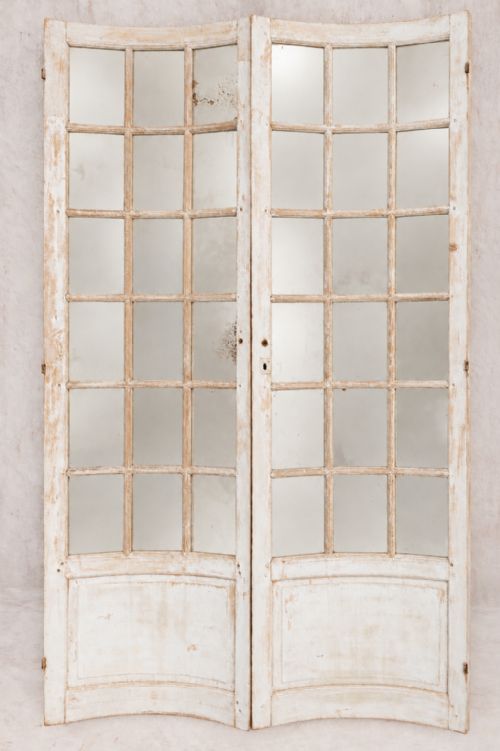
White painted doors encompass large architectural fittings such as chapel entrances and sets of French chateau doors, alongside smaller functional pieces like shutters. Buyers seeking white painted doors encounter substantial pine structures and timber panels carrying aged layers of paint.
The selection ranges from mid nineteenth century pine chapel doors fitted with wrought ironwork down to exterior shutters dating from around eighteen hundred. These items originate primarily from domestic, ecclesiastical and provincial settings across England, France and Sweden.
Most examples rely on traditional timber construction methods, utilising pine and hardwood frames designed to endure decades of practical use. Their surfaces display the patination accumulated through generations of interior or exterior placement.
Materials and construction
Pine and solid wood form the primary structural body of these architectural pieces, providing stable panels and sturdy frames. Craftsmen shaped these timbers using hand tools, joining boards to create heavy partitions capable of swinging on robust iron hinges.
Wrought iron and brass hardware frequently accompany the woodwork, appearing as strap hinges, handles and decorative grilles. These metal elements were forged or cast to reinforce high use areas and secure heavy entryways.
Paint finishes applied over the timber created protective and decorative surfaces that define the visual weight of each piece. Multiple coats of white or cream pigment weathered over time to reveal complex textures underneath.
White Painted Doors Retail Price Guide 2026
Typical asking prices for white painted doors among the pieces listed under this phrase on Sellingantiques today, from the lower quarter to the upper quarter. They describe what is for sale here now, not the wider market.
Listings feature items spanning the eighteenth century through to nineteen twenty, incorporating pine, glass, brass and wrought iron.
Distinctions in quality
The integrity of the underlying timber and the survival of original blacksmith ironwork separate superior architectural salvage from standard joinery. Heavier gauges of pine and intact structural joinery indicate higher original status, often found in chapel and chateau installations.
The character of the surface finish dictates much of the visual appeal, where undisturbed historic paint layers hold greater interest than modern refinishing. Subtle crazing and natural wear across the painted wood reflect genuine age and continuous use.
Melissa White
The White Painted Doors Glossary
- Architectural salvage
- Salvaged building elements removed from historic structures for reuse in interior design or restoration projects. These items include large doors, panels and ironwork.
- Wrought iron
- Iron beaten into shape by hand while hot, commonly utilised for hinges, latches and structural reinforcement on heavy doors. It displays slight surface irregularities from the forging process.
- Pine
- A softwood commonly employed in vernacular furniture and architectural joinery throughout the eighteenth and nineteenth centuries. It takes paint well and provides a stable base for large panels.
- Shutter
- A solid or louvred wooden panel hinged to an opening, designed to control light and air. Pairs of shutters frequently share construction techniques with full sized doors.
White Painted Doors: Frequently Asked Questions
How do I install heavy antique doors?
Hanging substantial timber doors requires rebated frames and reinforced iron hinges capable of supporting significant weight without sagging.
Professional joiners usually notch frames to match the original hanging style and ensure alignment with existing wall structures.
Can exterior doors be used indoors?
Large architectural doors function effectively as interior room dividers, sliding partitions or decorative wall panels within spacious homes.
Their substantial dimensions create striking focal points while repurposing historic materials for modern living spaces.
How do I clean painted wood surfaces?
Maintain historic painted finishes by dusting gently with a dry, soft cloth and avoiding harsh chemical cleaning agents.
Moisture should be kept away from flaking areas to preserve the integrity of the underlying layers.
What periods do these pieces represent?
The available architectural elements span from the early nineteenth century through to the Edwardian era, alongside eighteenth century examples.
Distinct regional traits from French, English and Scandinavian traditions appear across the various items.