





White Opaline Pendant Shade
A white opaline pendant shade brings a soft, diffused glow to a room through milky glass that suits period and industrial interiors alike.
White Opaline Pendant Shade
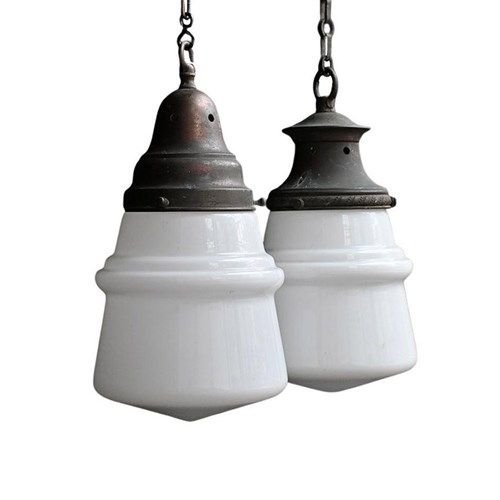
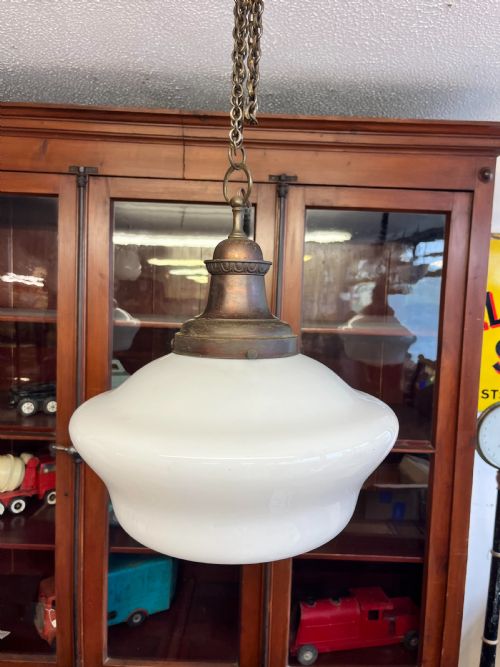
A white opaline pendant shade is a ceiling-hung lighting fixture formed from translucent white glass that softens light evenly across a space. The pieces found here span the early twentieth century, originating from periods such as 1910, 1920, and 1930.
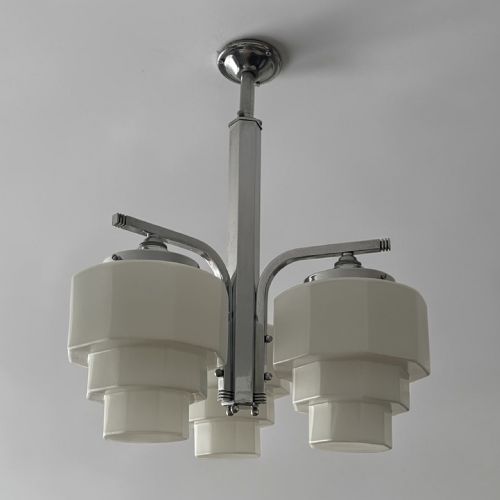
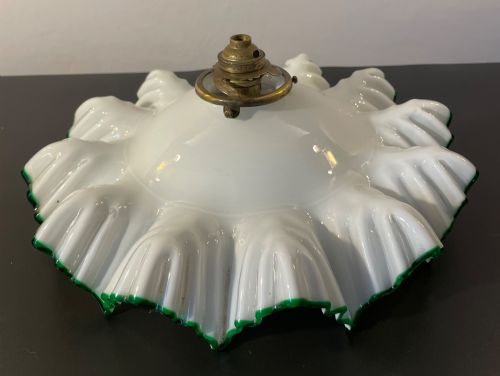
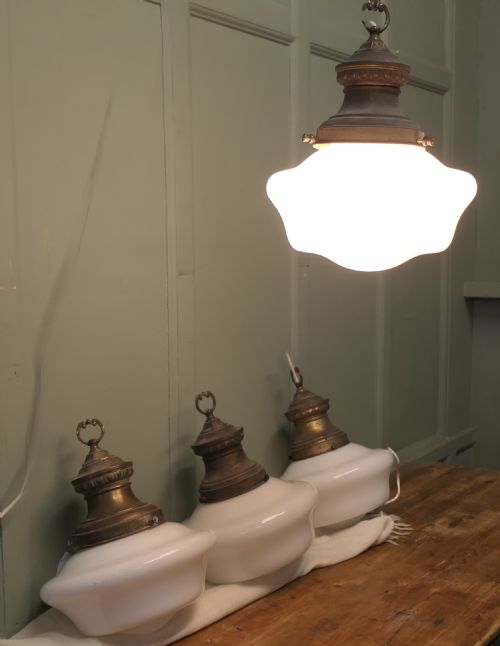
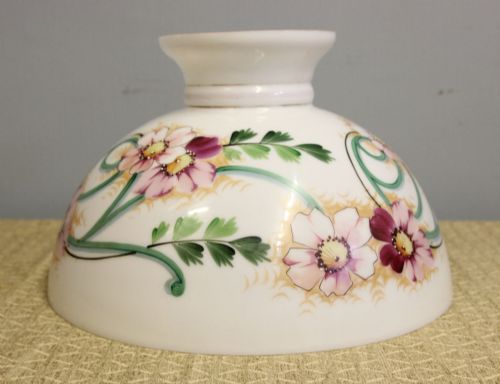
Forms vary from pear-shaped and conical profiles to reeded designs, frilled edges, fish scale patterns, and simple dish lights. Buyers frequently encounter French and industrial examples, alongside painted variants and large chapel lights designed for utilitarian or domestic spaces.
Materials and construction
These shades are constructed primarily from opaline glass, a dense, milky material that diffuses glare while retaining a luminous appearance when lit. Metal fittings in brass, bronze, chrome, and enamel often accompany the glass elements to form complete pendant assemblies.
Moulding and blowing techniques shape the glass into distinct silhouettes, such as conical or pear forms, while decorative painted details or reeded textures appear on specific styles.
White Opaline Pendant Shade Retail Price Guide 2026
Typical asking prices for white opaline pendant shade among the pieces listed under this phrase on Sellingantiques today, from the lower quarter to the upper quarter. They describe what is for sale here now, not the wider market.
Materials paired with the glass across these listings include brass, bronze, chrome, enamel, crystal, and standard metal.
Assessing quality and character
Quality in these shades rests upon the purity of the opaline glass and the crispness of its moulded form, whether in a delicate frill or a sharp conical drop. Subtleties in glass thickness and the evenness of the milky translucency distinguish finer examples from standard utility pieces.
The integrity of associated metalwork, including original brass or enamel galleries, contributes significantly to the overall presence of a pendant light.
The White Opaline Pendant Shade Glossary
- Opaline glass
- A translucent, milky-white glass developed to diffuse light gently without harsh glare. It was widely used for lighting and decorative objects during the nineteenth and twentieth centuries.
- Pendant light
- A hanging light fixture suspended from the ceiling by a cord, chain, or metal rod. This form directs illumination downward into a room or workspace.
- Plafonnier
- A ceiling-mounted light fixture where the shade sits flush against or very close to the ceiling surface. These often feature painted or moulded glass bowls.
- Reeded
- A decorative surface treatment consisting of parallel, rounded ridges running along the body of the glass or metal. This texture adds visual interest and catches the light.
White Opaline Pendant Shade: Frequently Asked Questions
What is opaline glass?
Opaline glass is a semi-translucent material with a milky appearance that diffuses harsh light into a soft glow. It gained popularity in lighting and tableware for its ability to brighten a room comfortably.
The density of the glass varies, creating different levels of opacity and light transmission across various twentieth-century pieces.
How do I hang a pendant shade?
These shades are suspended from the ceiling using a compatible electrical cord, chain, or metal rod secured with a proper gallery fitter. Professional installation by an electrician ensures the weight is supported safely.
Consider the ceiling height and the intended purpose of the room when deciding on the drop length for your pendant.
Are these shades from the art deco period?
Some of the pieces date from the 1930s and exhibit clean geometric lines typical of the Art Deco style, while others reflect earlier Victorian, Edwardian, or industrial designs.
Stylistic markers like reeded details or specific conical silhouettes help indicate which design movement influenced a particular light.
How do I clean an antique glass shade?
Dust the shade regularly with a soft, dry cloth to prevent buildup on the opaline surface. For a deeper clean, wash gently in lukewarm water with mild soap and dry thoroughly.
Avoid harsh abrasives or strong chemical cleaners that might damage painted details or delicate glass surfaces.