



Antique Dish Ceiling Light
An antique dish ceiling light brings overhead illumination with the sculptural weight of cut glass, alabaster, and bronze.
Antique Dish Ceiling Light
An antique dish ceiling light is an overhead hanging fixture taking the form of a shallow bowl, shade, or plafonnier suspended by chains or mounted directly. These pieces emerge from periods spanning the nineteenth century through the Art Deco era of the 1930s.
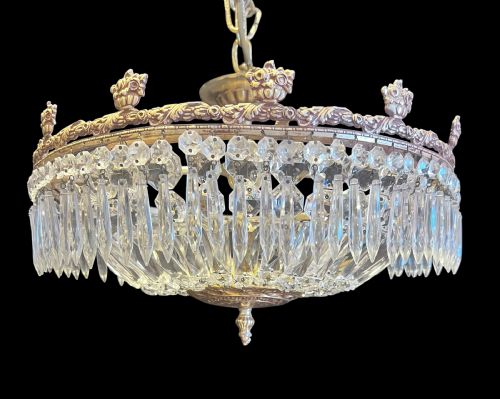
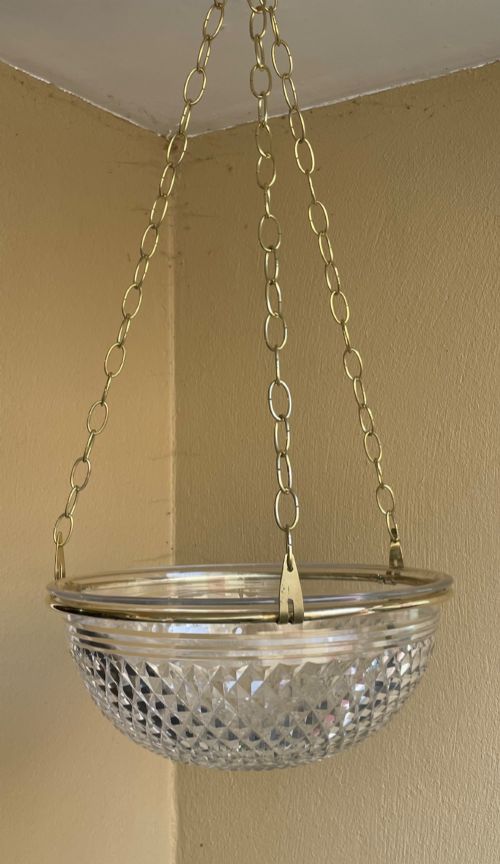
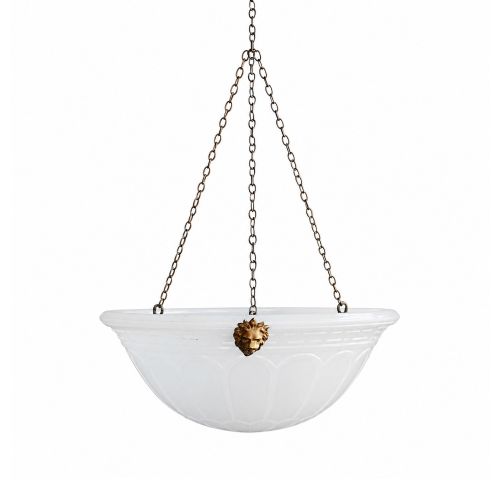
The most common forms on this page include cut glass bowls, carved alabaster dishes, and opalescent glass pendants. English and French origins dominate the selection, alongside Swedish and general continental pieces.
Makers and designers worked within distinct design languages, moving from Victorian and Edwardian cut glass to Arts and Crafts bowl chandeliers and streamlined Art Deco geometric forms. Buyers encounter fixtures ranging from simple opaline glass shades to elaborate ormolu and crystal assemblies.
How they were made
Materials combine heavy structural metals with translucent glass and stone, uniting brass, bronze, ormolu, and silver plating with cut glass, crystal, moonstone, and white alabaster. Metal mounts secure the shallow glass or stone bowls that diffuse light downward.
Craftsmen shaped alabaster by hand carving and turned glass through cutting, moulding, and pressing to achieve opalescent and frosted textures. Bronze and brass components were cast and chased, while crystal elements required precise facet cutting to catch and refract light.
Antique Dish Ceiling Light Retail Price Guide 2026
Typical asking prices for dish ceiling light among the pieces listed under this phrase on Sellingantiques today, from the lower quarter to the upper quarter. They describe what is for sale here now, not the wider market.
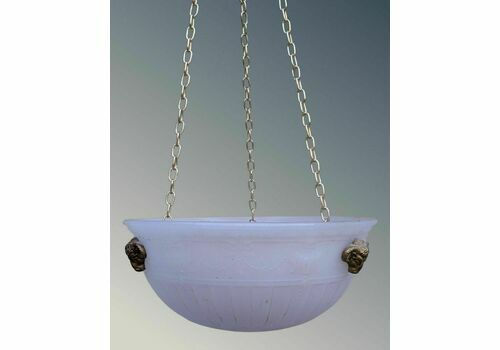
Some nineteenth-century brass light shades incorporate cast bronze rams heads peering out from the rim to watch over the room.
What varies in quality
Quality rests in the depth of hand work on the metal mounts and the clarity of the glass or stone. Finely cast ormolu, detailed bronze rams head mounts, and crisp hand-cut crystal facets separate the finest examples from standard production.
The choice of material dictates the character of the fixture, with dense carved alabaster and heavy lead crystal representing the upper tier of construction. Subtleties in glass coloration, such as opalescent or moonstone finishes, show greater nuance in superior studio pieces.
The Antique Dish Ceiling Light Glossary
- Plafonnier
- A ceiling light fixture featuring a bowl or dish shape mounted close to the ceiling or suspended by short chains. This French term translates literally to ceiling light.
- Alabaster
- A fine-grained, translucent variety of gypsum or calcite used for carved bowl shades. Its natural veining diffuses light softly across a room.
- Ormolu
- Gilded bronze produced by applying a mercury-gilding process to cast bronze mounts. It provides a rich gold-coloured surface finish on period light fittings.
- Opalescent glass
- Glass containing ingredients that cause it to diffuse light with a milky, iridescent glow. It gained widespread popularity during the Art Deco period.
Antique Dish Ceiling Light: Frequently Asked Questions
How do I hang a heavy dish light?
These fixtures require secure ceiling fixings tied directly to structural joists due to the substantial weight of glass, stone, and metal.
Professional electrical installation is necessary to support the hanging chains and safely manage period wiring.
What is the difference between a plafonnier and a pendant?
A plafonnier sits much closer to the ceiling as a shallow bowl, whereas a pendant light hangs lower on longer suspension chains or cords.
Both styles utilise dish-shaped shades to cast ambient illumination downward into the space.
How do I clean an antique alabaster dish?
Alabaster is porous and sensitive to moisture, so cleaning requires a dry microfibre cloth or a very slightly damp sponge with mild soap.
Harsh chemical cleaners will damage the stone surface and strip away its natural matte finish.
How do I date an antique ceiling light?
Dating relies on stylistic markers, such as the geometric symmetry of 1930s Art Deco pieces versus the ornate casting of Victorian or Edwardian brass and bronze.
Material choices, including opalescent glass and carved alabaster, also align with specific decades from the late nineteenth century onward.