


White Opaline Glass
White opaline glass brings a milky luminescence and dense, porcelain-like body to nineteenth-century lighting, vases, and decorative objects.
White Opaline Glass
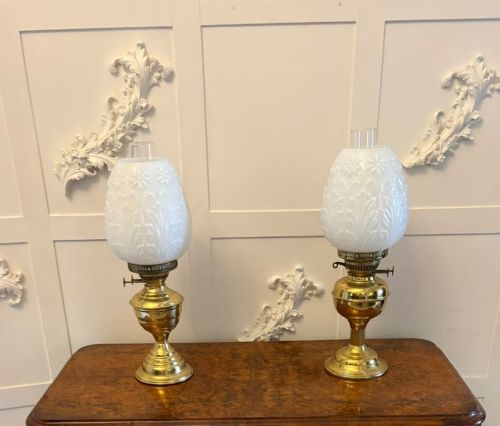
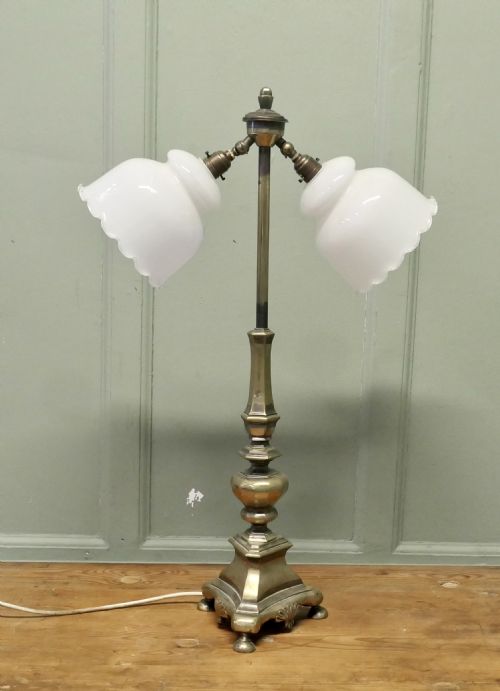
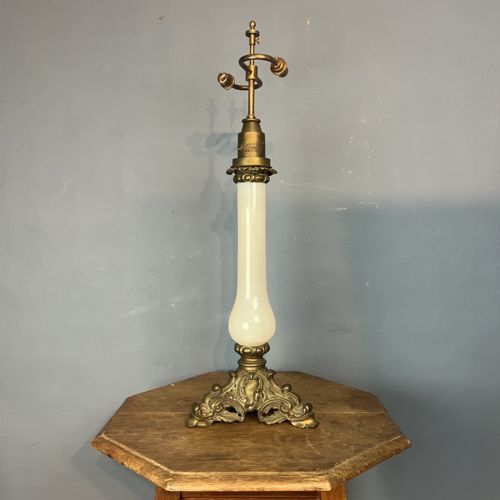
When searching for white opaline glass, collectors encounter a diverse array of nineteenth-century decorative wares, table lamps, and hanging pendant lights spanning Victorian, Edwardian, and Art Deco periods. These pieces range from delicate scent bottles and tableware to robust industrial ceiling lighting and oil lamps mounted in brass, ormolu, and bronze.
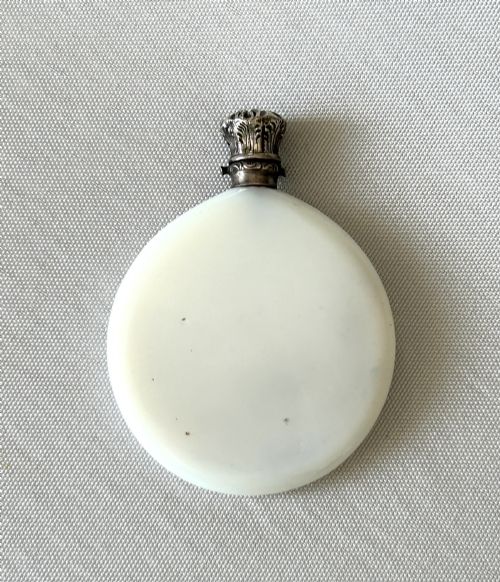
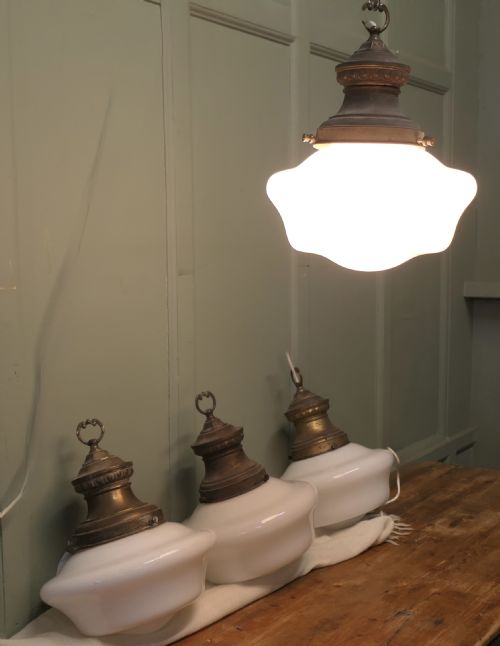
The most common forms met on this page are French and English lighting fixtures, including pendant lights, table lamps, and oil lamp shades dating from the mid-nineteenth century through the 1930s. Smaller decorative objects, such as vases, scent bottles, and egg trinket boxes, also appear frequently alongside larger architectural chapel and ceiling lights.
How they were made
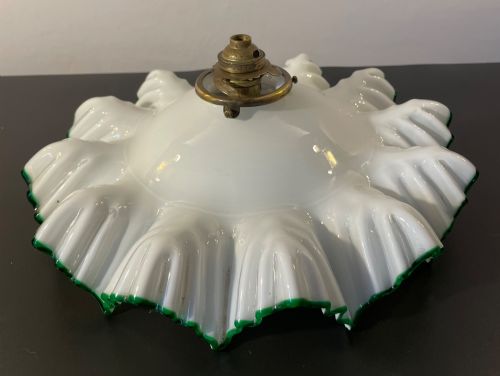
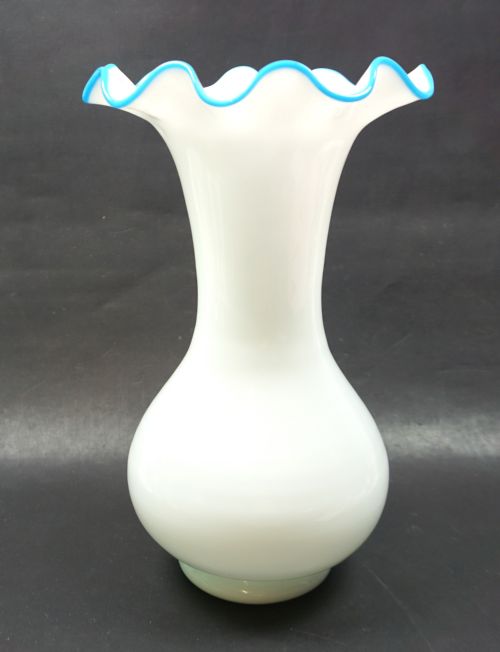
Opaline glass achieved its characteristic opaque, milk-white appearance through the addition of bone ash, tin oxide, or arsenic to the molten batch. Artisans shaped these pieces using mouth-blowing techniques, often working the glass into moulds or manipulating the hot metal by hand to create frilled rims, reeded bodies, and distinct vessel forms.
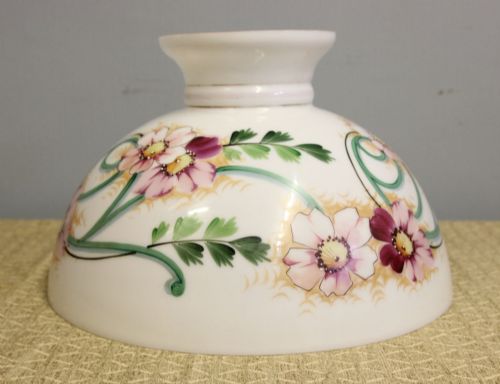
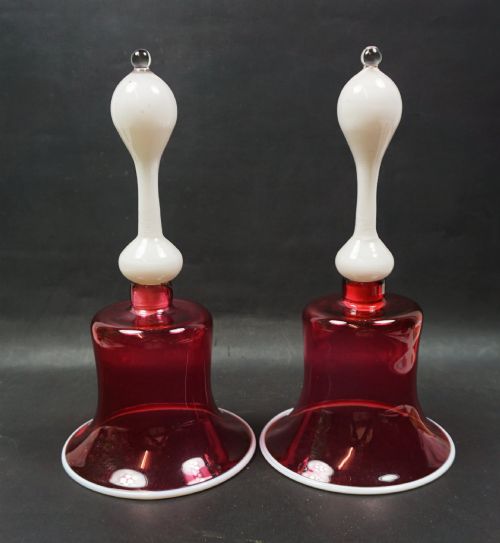
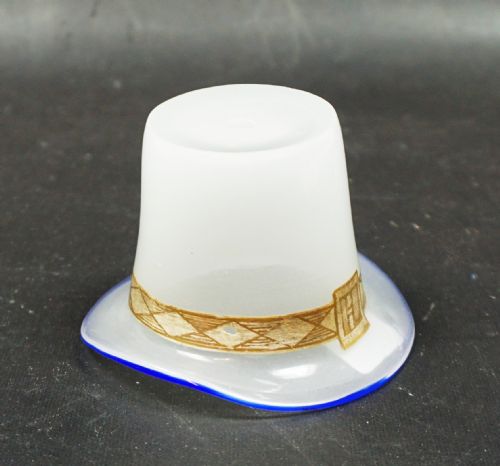
Many objects were further embellished with hand-painted enamel details, gilt bands, or applied glass canes in contrasting colours like blue or cranberry. Metal mounts in brass, bronze, and gilt ormolu were then fitted to lamps, decanters, and scent bottles, frequently incorporating silver or chrome hardware.
Materials paired with opaline glass across the archive include brass, ormolu, bronze, gilt, silver, and enamel.
What varies in quality
Quality in white opaline glass rests upon the purity of the milk-white body, the evenness of the glass walls, and the refinement of any mouth-blown shaping. Superior examples display a smooth, dense opacity without excessive bubbling or striation in the glass material.
Baccarat·Jean Francois Robert·Mc Gary·Wild and Wessel·Joseph Hinks·Harrach·Richardsons of Stourbridge
The White Opaline Glass Glossary
- Opaline glass
- An opaque or translucent glass first popular in nineteenth-century France and England, coloured with bone ash or metal oxides to resemble porcelain. It was widely utilised for decorative vases, tableware, and lighting shades.
- Plafonnier
- A ceiling light fixture where the shade sits flush or close against the ceiling surface. These are frequently found in moulded or opaline glass forms dating from the early twentieth century.
- Ormolu
- Gilded bronze mounts and decorative hardware applied to nineteenth-century lighting and glass objects. It provides a bright golden contrast to the milky white glass.
- Lustre
- A decorative glass vase or mantel garnishment featuring hanging glass prisms. These pieces often incorporate hand-painted panels or gilt detailing.
- Cane
- A rod of coloured glass fused into the hot vessel body during manufacturing to create contrasting rims or decorative trails.
White Opaline Glass: Frequently Asked Questions
How do I clean white opaline glass?
Wash the glass gently in warm, soapy water using a soft cloth, avoiding abrasive pads that can damage painted or gilt surfaces. Dry thoroughly with a lint-free towel.
Take extra care around applied metal mounts, brass, or ormolu to keep moisture away from joints and historical adhesives.
Are these glass items mouth-blown?
Many nineteenth-century and early twentieth-century pieces were mouth-blown by skilled artisans using traditional glassblowing irons and moulds. This technique creates subtle variations in thickness and shape.
Later industrial and commercial ceiling lights often show more uniform machine-pressed characteristics.
How can I date opaline glass pieces?
Dating relies on combining the object form, the style of any metal mounts, and manufacturing methods. Mid-nineteenth-century examples often feature hand-painted enamel and heavy ormolu, while 1930s pieces lean towards geometric pendant shapes.
Maker stamps and patent marks on attached brass fittings also provide reliable chronological markers.
Can antique opaline lamps be rewired?
Most antique lamps and pendant lights can be safely adapted for modern electrical standards by a qualified electrician. Retaining the original brass or bronze housing preserves the historical character of the fixture.
Rewiring ensures the piece functions reliably while keeping the vintage aesthetic intact.