

White Marble Top
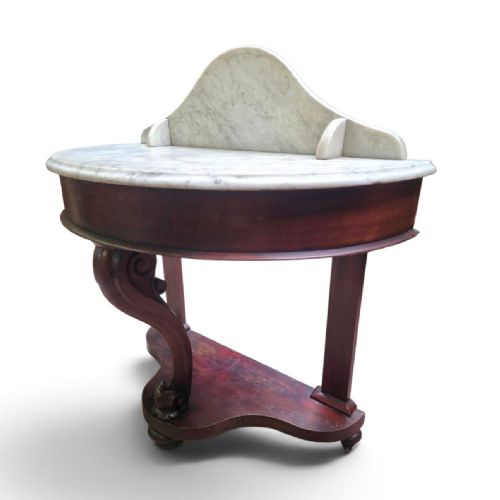
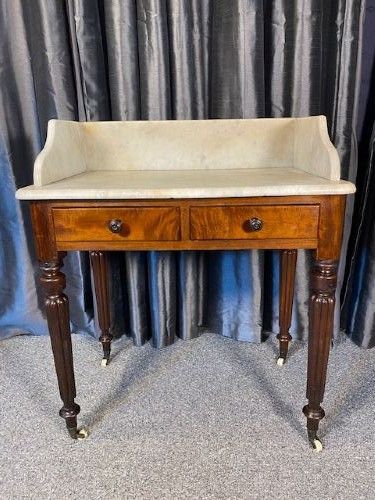
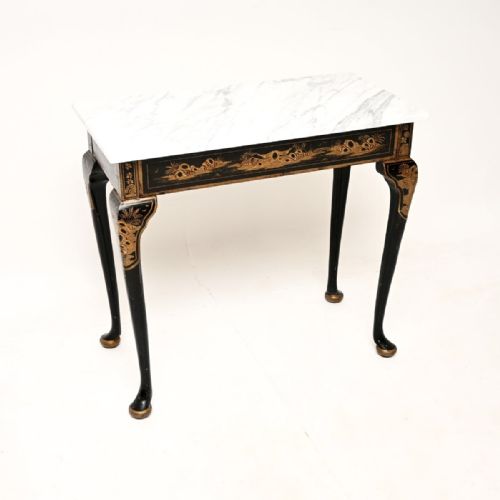
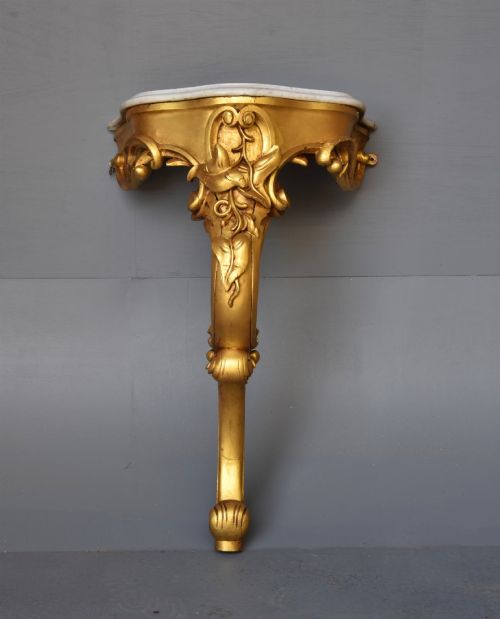
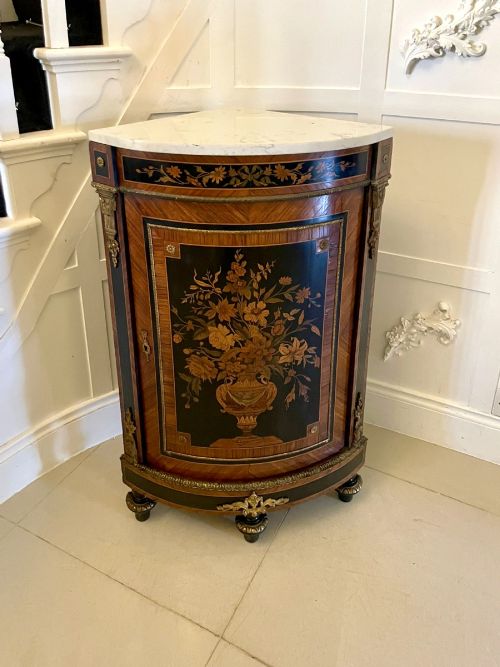
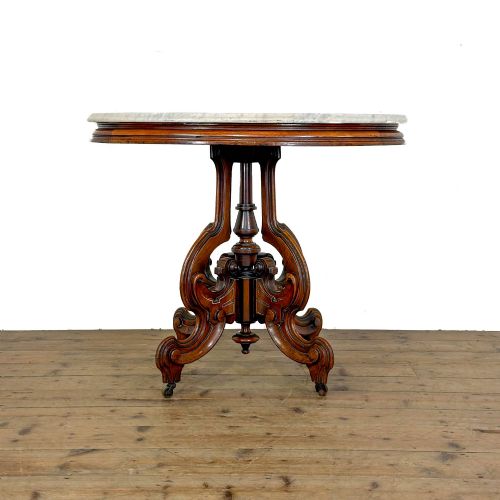
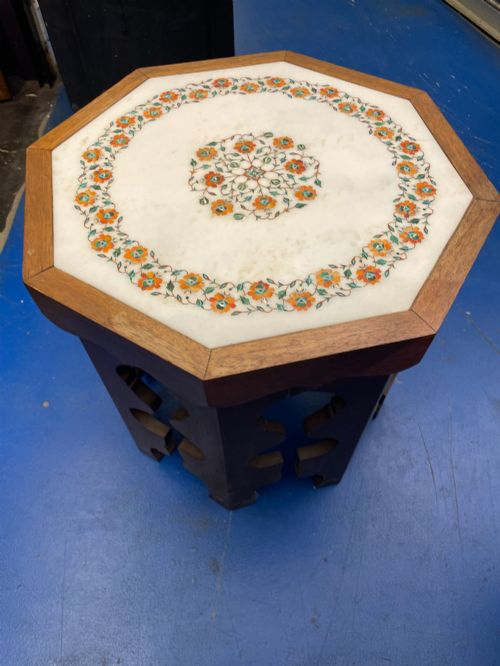
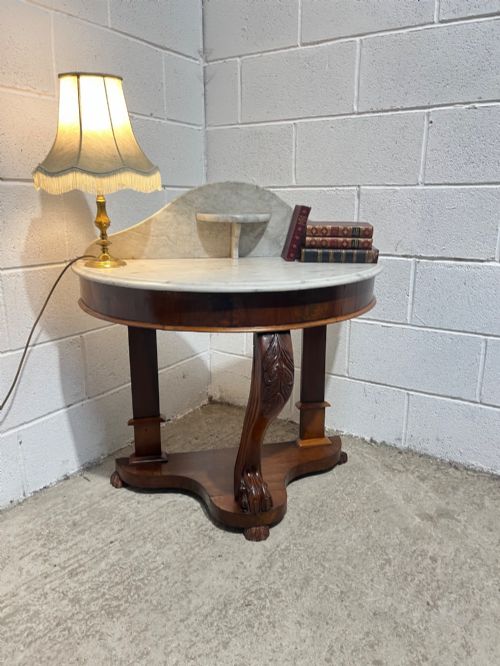
When you search for a white marble top, you are looking at substantial stone surfaces set onto nineteenth-century console tables, washstands, and French bistro furniture.
White Marble Top
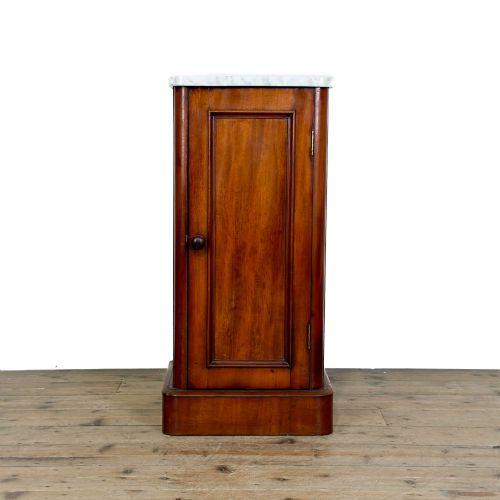
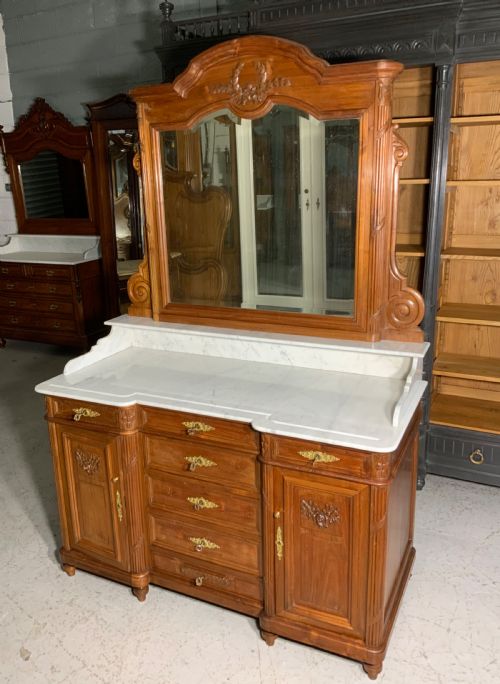
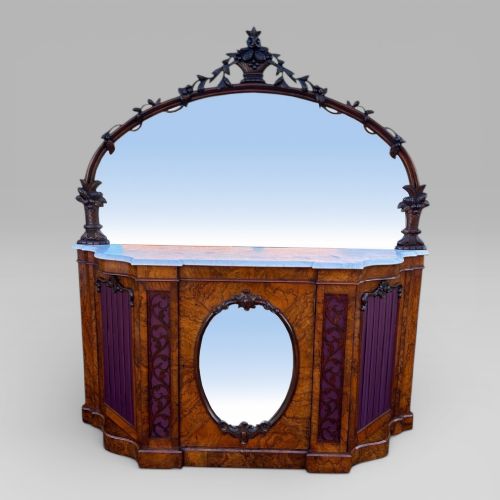
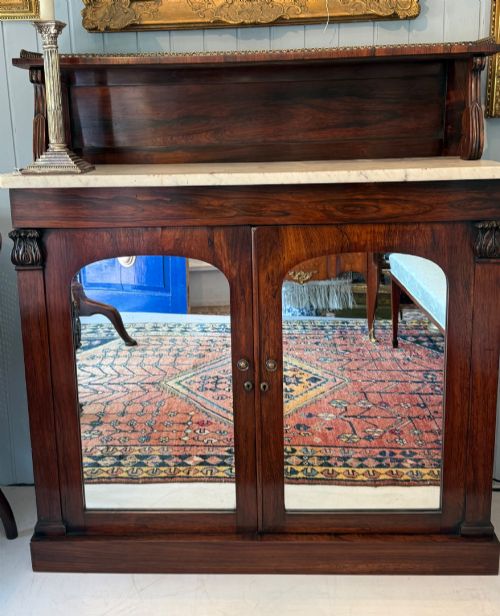
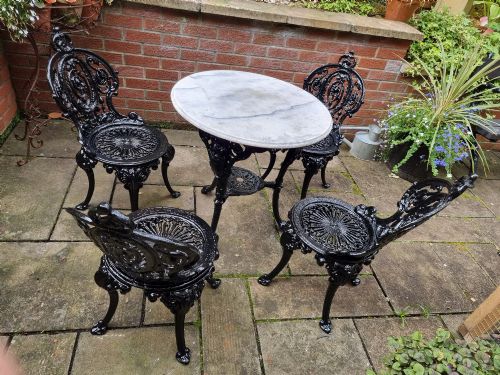
A white marble top most frequently appears on nineteenth-century console tables, washstands, and bedside cabinets sourced from England and France. These pieces range from formal Victorian mahogany sideboards and walnut credenzas to cast-iron garden tables and café furnishings.
The stone provides a hard, cool surface that originally served practical functions in washstands and charcuterie prep tables while adding a distinct neoclassical formality to sitting rooms and entrance halls.
Buyers will encounter both British cabinet furniture fitted with heavy stone slabs and lighter French or Italian occasional tables designed around the marble surface.
How they were made
Makers combined dense native and imported timbers such as mahogany, walnut, oak, and rosewood with heavy slabs of quarried marble, securing the stone within wooden frames or resting it directly on moulded wooden bases and cast-iron frames.
Fine cabinetmaking involved precision joinery to support the substantial weight of the stone, occasionally incorporating brass galleries, ormolu mounts, and carved giltwood details around the frieze and legs.
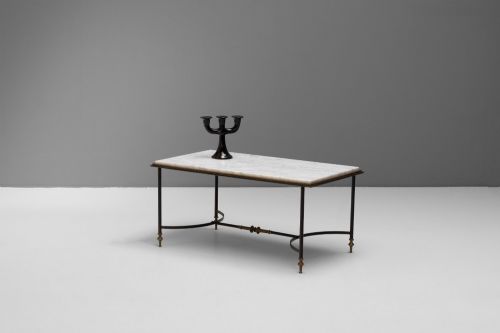
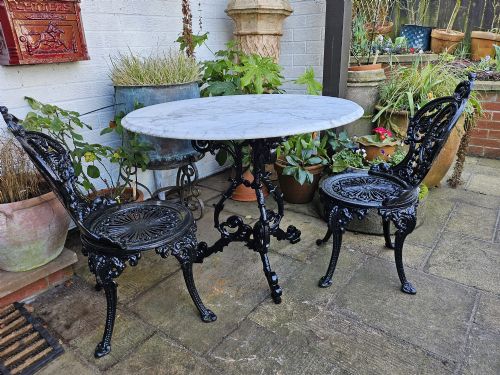
Cast-iron versions relied on industrial foundry techniques, pairing robust metal tripod and four-legged bases with thick circular or rectangular marble tops intended for interior and conservatory use.
French bistro and charcuterie prep tables demonstrate how utility furniture was built around durable stone surfaces.
What varies in quality
The grade of the marble slab sets the baseline, with fine-grained statuary white and Carrara varieties demonstrating superior uniformity and depth compared to simpler utility stone.
Cabinetwork quality shows in the choice of secondary timbers, the crispness of hand-carved giltwood or walnut details, and whether the wooden chassis has warped under the immense and continuous weight of the stone top.
Maples·Burrey and White
The White Marble Top Glossary
- Gueridon
- A small French round table, typically supported by a central pillar or three legs, frequently fitted with a stone top.
- Credenza
- A sideboard or display cabinet, often featuring mirrored doors and heavy walnut or mahogany construction beneath a stone slab.
- Console table
- A table designed to stand flat against a wall, frequently secured with brackets and topped with heavy marble.
- Washstand
- A bedroom cabinet or table fitted with a water-resistant stone surface to hold basins and jugs.
- Carrara marble
- A type of white or blue-grey stone quarried in Italy, widely utilised across nineteenth-century European furniture.
White Marble Top: Frequently Asked Questions
How do I clean a white marble top?
Use a damp cloth with mild, neutral soap and dry the stone thoroughly to prevent water marks. Avoid acidic cleaners or vinegar, which etch the polished surface.
Heavier stains require specialised poultices designed for natural stone rather than standard household chemicals.
Were marble tops attached to the furniture?
Most nineteenth-century stone slabs rest entirely under their own considerable weight within a recessed wooden or cast-iron frame. This loose fit allowed for easier transport and repositioning of heavy sideboards and washstands.
Some smaller tables and cabinets utilise discreet wooden battens or pins underneath to prevent lateral shifting.
Can these tables be used outdoors?
Cast-iron garden tables and specific French bistro pieces with marble tops were designed to withstand outdoor or conservatory environments. Wooden console tables and polished indoor credenzas should remain inside to protect the timber and veneer from moisture.
Freezing temperatures can also cause moisture trapped within unsealed stone to crack the marble.
How do I date a marble-topped console table?
Examine the timber construction methods, tool marks on the secondary woods, and the overall stylistic vocabulary such as Regency or Louis XVI revival details. The thickness and edge profiling of the marble slab also provide clues to the manufacturing period.
Comparing the turned legs or ormolu mounts to documented examples helps narrow down the decade of production.