






White Marble Classical Bust
A white marble classical bust brings the quiet gravity of antiquity into a room, carved to capture figures from mythology, literature and history.
White Marble Classical Bust
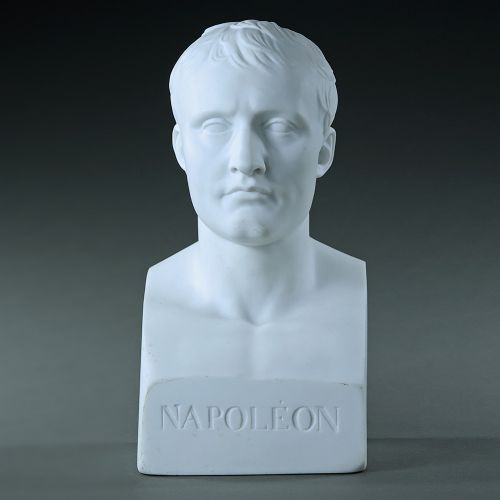
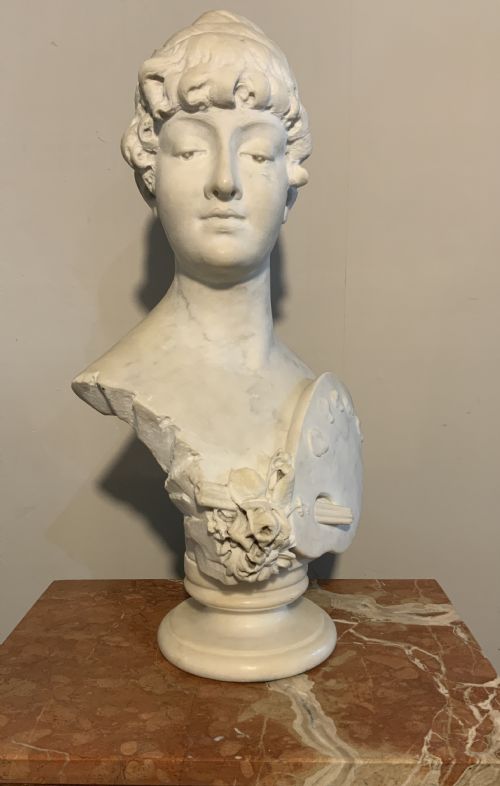
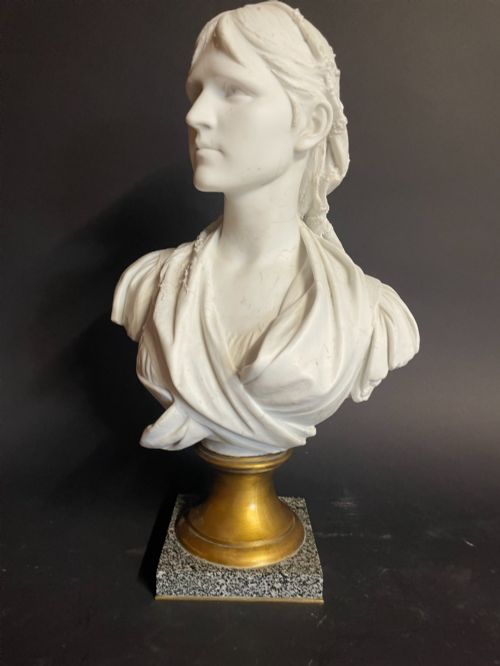
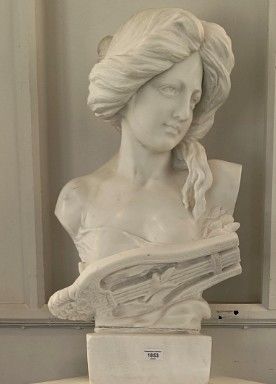
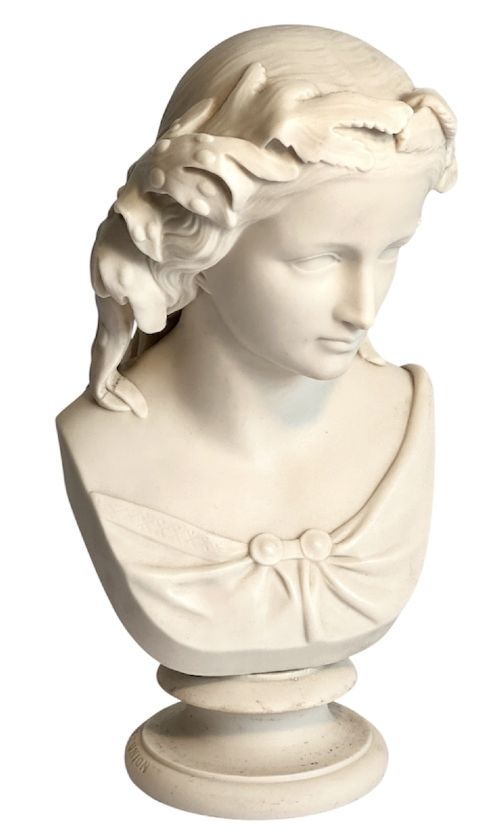
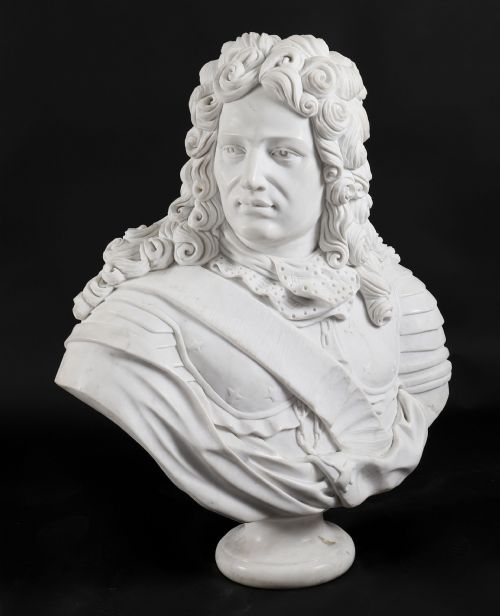
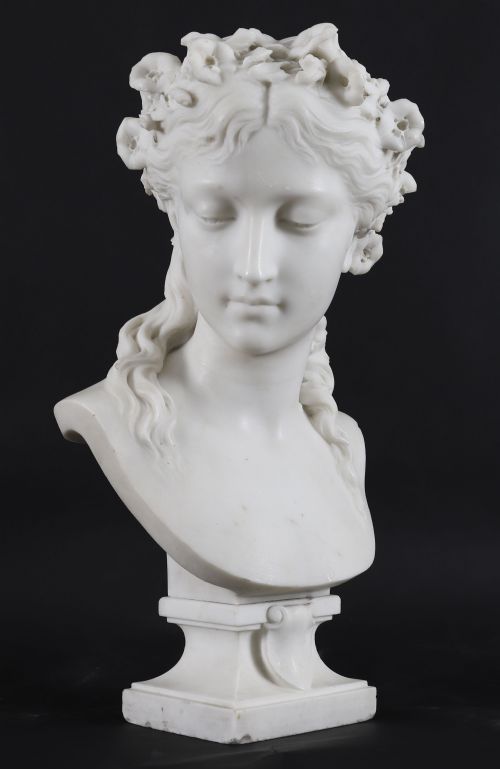
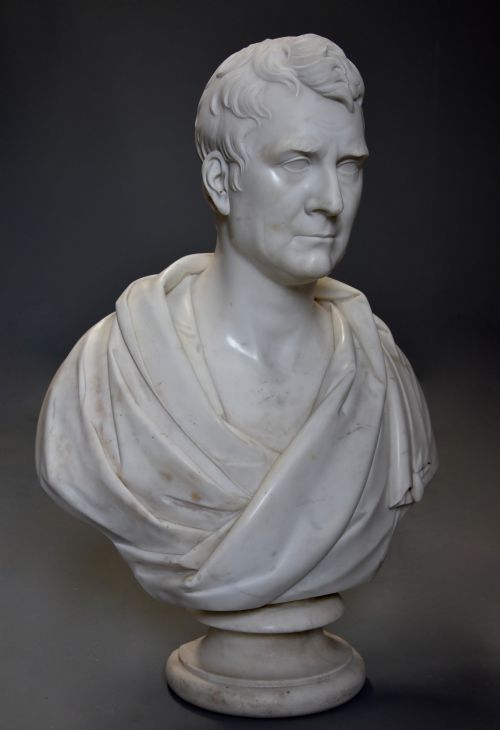
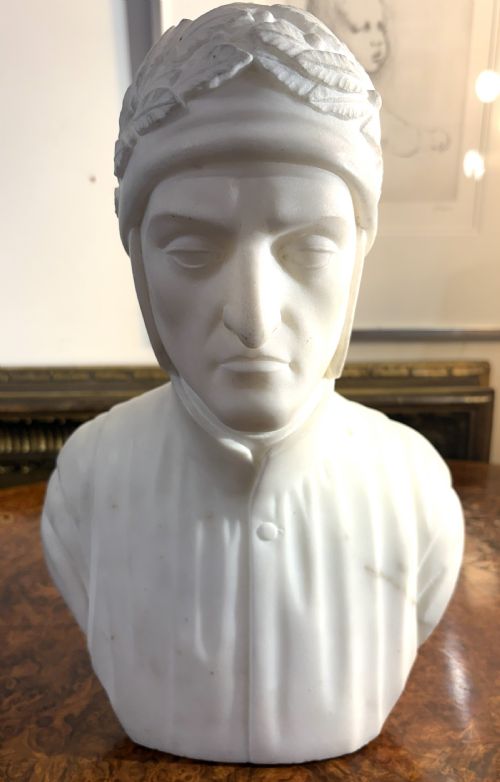
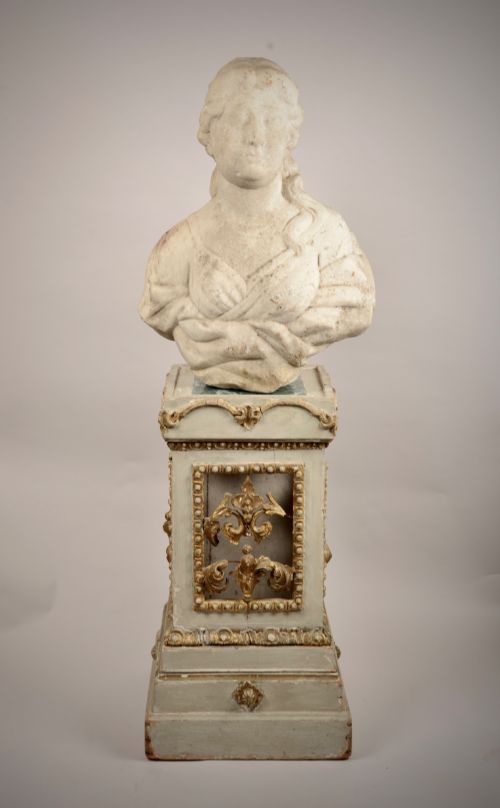
A white marble classical bust takes many forms on this page, ranging from library portraits of Dante and classical muses to monumental depictions of Roman emperors, noblemen and mythological figures like Diana and Juno. These sculptures emerge primarily from nineteenth-century European workshops, often reflecting the classical revival tastes of the Grand Tour alongside earlier seventeenth-century interpretations and later twentieth-century library pieces.
Buyers will most frequently meet nineteenth-century Italian and French carved marble portraits of women and young girls, often rendered in luminous Carrara marble. Alongside solid marble, the selection includes related materials such as alabaster and Parian porcelain, sometimes paired with bronze or ormolu mounts and mounted on contrasting stone bases.
Materials and Carving
The makers of these sculptures relied principally on Carrara marble and alabaster, working the stone with chisels, rasps and hand drills to achieve smooth flesh tones and intricate drapery. Many pieces utilise natural variations within the stone, occasionally combining white marble with mixed coloured bases or incorporating cast bronze and ormolu details.
Makers achieved texture through contrasting finishes, leaving hair and garments with deeper tool marks while polishing the skin to a soft, matte sheen. Signed works demonstrate the steady hand of named sculptors who shaped blocks of stone into distinct portraits of historical and fictional characters.
Several young girls on this page share space with severe Roman emperors and moustachioed noblemen.
Sculptural Execution
The choice of stone also dictates worth, with pure, unblemished Carrara marble or fine translucent alabaster commanding greater admiration than heavily veined or patched stone. Signed pieces by established sculptors elevate the standing of the work significantly above anonymous workshop output.
Eugene Aizelin·J Francis·R Mattei·John Wenlock Rollins·Mieczyslaw Leon Zawiejski·G.V. Vaerenbergh·Joseph Gott·R.LUSILI
The White Marble Classical Bust Glossary
- Carrara marble
- A type of white or blue-grey marble from the city of Carrara in Tuscany, prized by sculptors for its fine grain and uniform texture. It served as the primary medium for monumental sculpture throughout the nineteenth century.
- Parian porcelain
- A fine-grained biscuit porcelain developed in Britain to imitate carved marble. Named after the white marble of Paros, it allowed factories to cast detailed portrait busts in multiple editions.
- Alabaster
- A soft, translucent stone often used for sculptural busts and decorative objects. It absorbs light differently than marble, giving carved drapery and skin a warm glow.
- Neoclassical
- An artistic movement drawing inspiration from the art and culture of classical antiquity. It dominated European sculpture and architecture from the mid-eighteenth through the nineteenth century.
- Grand Tour
- A traditional trip of Europe undertaken by upper-class young European men of means to flourish their cultural education. Travellers frequently returned with classical sculpture and carved portrait busts.
White Marble Classical Bust: Frequently Asked Questions
How do I clean a marble bust?
Dust the sculpture gently with a soft dry brush or microfiber cloth to prevent grit accumulation.
Avoid using water, soap, or chemical cleaners, as porous marble and softer alabaster absorb moisture and stain easily.
Were these carved by hand?
Most nineteenth-century pieces combine mechanical pointing machines to rough out the form with skilled hand-chiseled finishing.
Sculptors employed fine rasps and abrasive powders to achieve the smooth, lifelike skin textures visible across these portraits.
How should I display a heavy marble sculpture?
Place the bust on a sturdy, level surface capable of supporting considerable weight, such as a dedicated column, plinth, or heavy library sideboard.
Ensure the display area remains out of direct sunlight and away from sudden temperature fluctuations that can stress natural stone.
What is the difference between marble and alabaster?
Marble is a hard metamorphic rock formed from limestone, offering high durability and a crystalline structure.
Alabaster is a softer, softer mineral stone that allows for greater translucency when carved thin, though it scratches much more readily than marble.