


White Gold Flower Ring
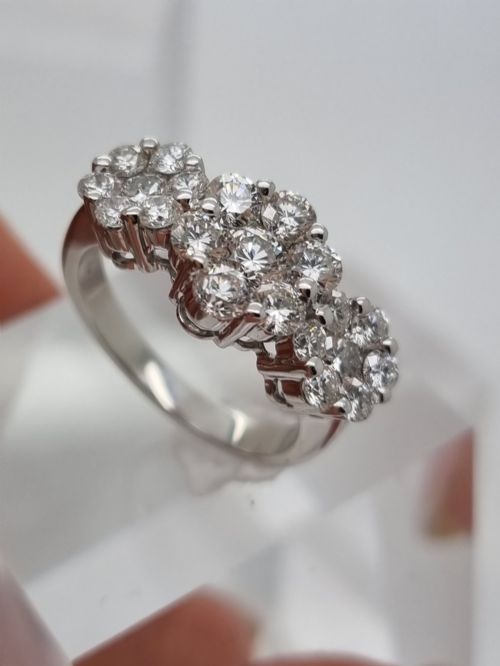
A white gold flower ring brings together precious metal and clustered gems to form a botanical motif that spans the Edwardian era to the mid-century.
White Gold Flower Ring
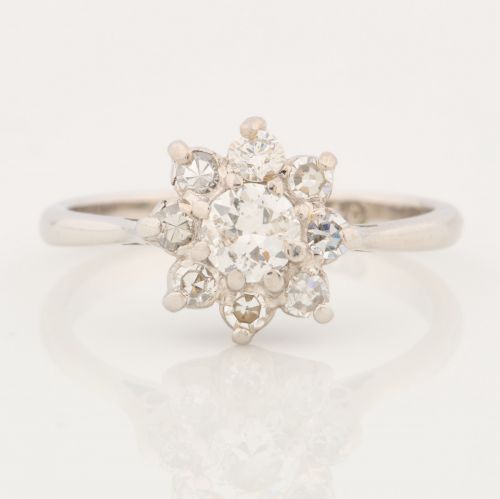
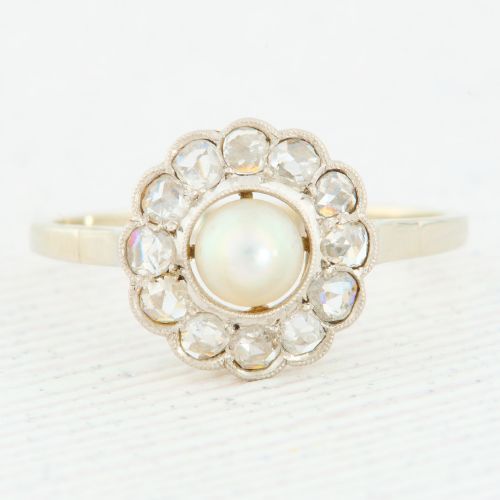
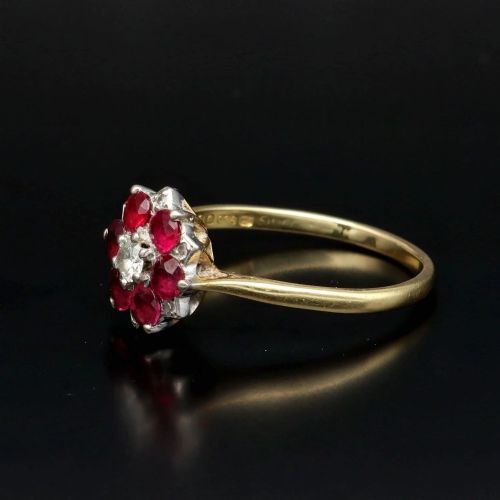
A white gold flower ring takes the form of a cluster or daisy design, arranging precious stones around a central focal point to resemble petals. The selection spans several distinct periods, including Edwardian, Art Deco, 1920, 1930, 1950, 1960, and contemporary fine jewellery.
The most common examples on this page are cluster rings fashioned from 18ct white gold, platinum, or yellow and white gold combinations. Central gems are frequently surrounded by smaller diamonds or coloured stones to create the floral silhouette.
How they were made
Goldsmiths utilised 18ct white gold and platinum to provide a pale, neutral setting that maximised the brilliance of diamonds and coloured gemstones. Stones such as rubies, sapphires, opals, pearls, emeralds, amethyst, citrine, and topaz were secured in cluster formations using traditional claw and bezel settings.
The construction relies on precise metalwork to shape the overlapping petals and tiered mounts characteristic of daisy and cluster motifs from the early twentieth century through to the 1960s.
What varies in quality
Quality rests in the harmony of the cluster and the matching of the stones, where the uniformity of surrounding diamonds enhances the prominence of the central gem. Well-executed pieces show careful proportion between the metal mount and the botanical form.
The choice of materials also defines the tier, with platinum and heavier 18ct white gold settings paired with old cut diamonds or high-grade sapphires representing the finer examples in the range.
The White Gold Flower Ring Glossary
- Cluster ring
- A ring featuring a central gemstone surrounded by a cluster of smaller stones. This arrangement forms the basis of most floral and daisy motifs.
- Daisy cluster
- A specific cluster design where a round central stone is encircled by a single ring of matching round gems, closely resembling a daisy flower.
- Old cut
- A diamond facet style popular in earlier periods, characterised by a smaller table, higher crown, and open culet. These cuts produce a softer, candlelight sparkle compared to modern brilliant cuts.
- Cabochon
- A gemstone shaped and polished with a smooth, rounded surface rather than faceted. This cut is frequently utilised for softer stones such as opals.
White Gold Flower Ring: Frequently Asked Questions
How do I care for my ring?
Clean white gold flower rings gently using warm soapy water and a soft brush to remove everyday debris from beneath the cluster settings.
Avoid harsh chemical dips, particularly if the ring contains softer stones such as opals or pearls, which require careful handling.
Can these rings be resized?
Most 18ct white gold and platinum rings can be adjusted by a skilled jeweller, though the presence of intricate shoulders or continuous cluster work requires careful assessment.
Consult a professional to determine whether the band allows for alteration without compromising the structural integrity of the setting.
How do I identify the period?
Examine the construction methods, hallmark stamps, and gemstone cuts to determine the era, noting that Edwardian and Art Deco pieces often feature fine millegrain work.
Mid-century examples from the 1950 and 1960 periods frequently display bolder cluster arrangements and distinct styling conventions.
Are these rings suitable for daily wear?
Diamonds and sapphires set in 18ct white gold or platinum offer good durability for regular use.
Pieces containing softer gems like opals or pearls demand greater care to protect the stones from knocks during daily activities.