



Opal Engagement Dress Ring
An opal engagement dress ring brings together the shifting fire of natural opal and the bright contrast of diamonds in gold.
Opal Engagement Dress Ring
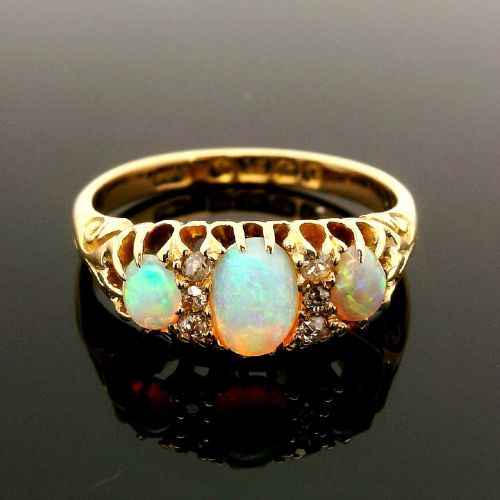
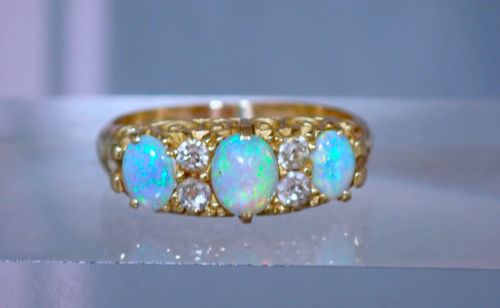
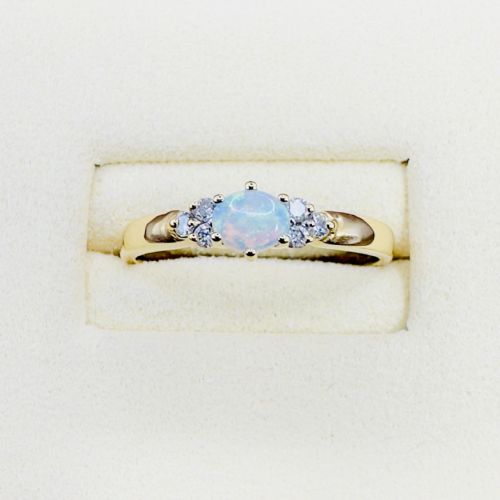
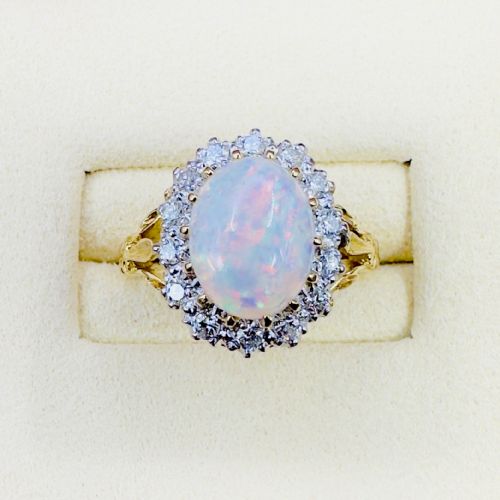
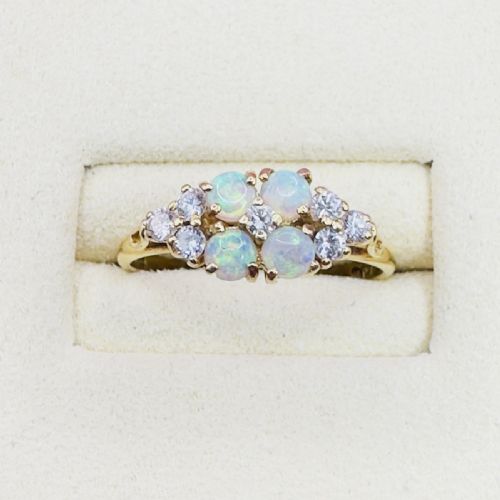
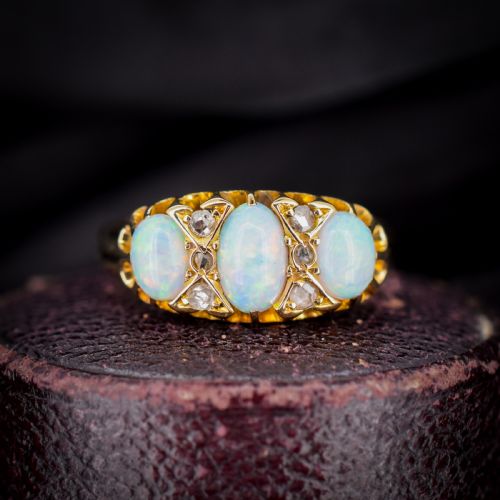
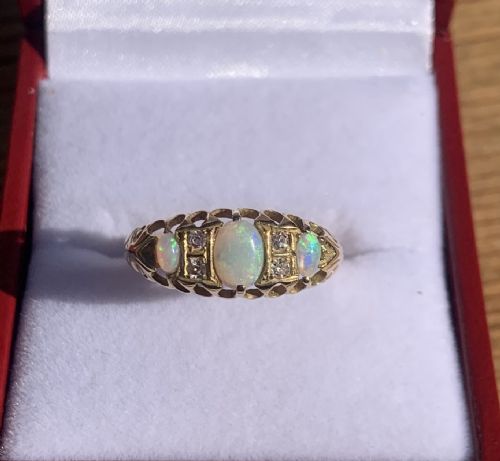
An opal engagement dress ring pairs cabochon opals with diamonds, set in gold or platinum across periods from the Victorian era to the mid-twentieth century. These pieces appear as cluster, trilogy, boat and solitaire rings, holding stones that display shifting plays of colour.
Victorian and Edwardian examples lean towards detailed cluster or multi-stone arrangements, while later twentieth-century pieces often showcase clean oval or round cabochon cuts. The selection bridges nineteenth-century craftsmanship and mid-century design, offering diverse expressions of a classic pairing.
Materials and Making
Makers set natural opals alongside diamonds in Mountings of 18ct yellow gold, 18ct white gold, 9ct gold, and platinum. Cabochon cutting shapes the opals to catch the light, revealing their internal fire without flat facets.
Claw settings, boat mounts, and cluster frameworks secure the softer opal stones beside harder diamonds, protecting the edges while maintaining an open view to the play of colour within.
Distinctions in Quality
Quality rests in the intensity and spread of colour within the opal itself, alongside the matching clarity and brightness of the accompanying diamonds. Stones with vivid, stable play across the whole cabochon separate finer examples from quieter or more uniform stones.
The integrity of the gold or platinum mount and the crispness of the original claw work or cluster setting also define the standard. Well-preserved hallmarks and minimal wear to the high points of the mounting signal superior survival.
The Opal Engagement Dress Ring Glossary
- Cabochon
- A gemstone shaped with a smooth, rounded surface rather than faceted edges. This style highlights the internal play of colour in opals.
- Trilogy ring
- A ring featuring three main stones set in a row. They often pair a central opal flanked by two diamonds.
- Cluster ring
- A design grouping a central stone surrounded by a margin of smaller gems. In these listings, opals frequently sit at the centre encircled by diamonds.
- Boat ring
- A navette-shaped mounting resembling a small boat hull, popular in late Victorian and Edwardian jewellery.
- Rose cut
- An antique diamond cut featuring a flat base and a domed crown of triangular facets. This cut appears frequently in Victorian settings on this page.
Opal Engagement Dress Ring: Frequently Asked Questions
How do I care for an antique opal ring?
Opals contain water and require gentle treatment to avoid drying out or cracking. Remove the ring before washing hands, swimming, or handling harsh household chemicals.
Store the piece away from direct sunlight and extreme temperature changes. Clean the setting softly with a damp cloth rather than ultrasonic jewellery baths.
Are these opals natural?
The listings on this page comprise natural opals, spanning Victorian, Edwardian, and mid-century periods. Natural stones display individual play of colour unique to each gem.
Examining the stone under magnification reveals the natural organic patterns rather than the uniform columns found in synthetic counterparts.
Can I wear an opal ring every day?
Opal rates softer on the Mohs hardness scale than diamond or sapphire, meaning daily wear demands a degree of mindfulness. Choosing a secure bezel or protective cluster setting helps shield the stone from knocks.
Many buyers reserve these rings for special occasions or everyday wear with sensible care against hard impacts.
How do I date a gold opal ring?
Dating relies on hallmarks stamped inside the band, the overall style of the setting, and the cut of the stones. Victorian and Edwardian pieces show specific claw configurations and regional assay marks.
Mid-century examples shift towards simpler yellow or white gold mountings with clean lines around oval cabochons.