



Opal Cabochon Cluster Ring
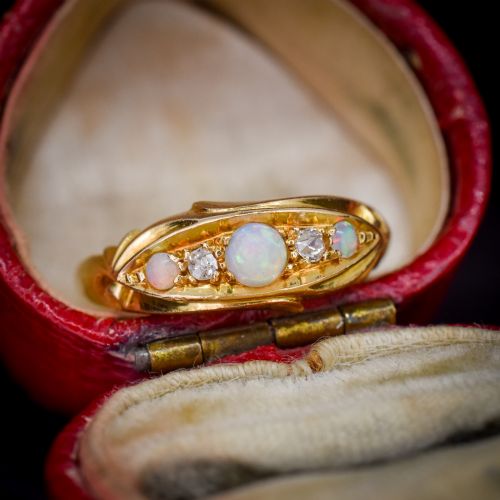
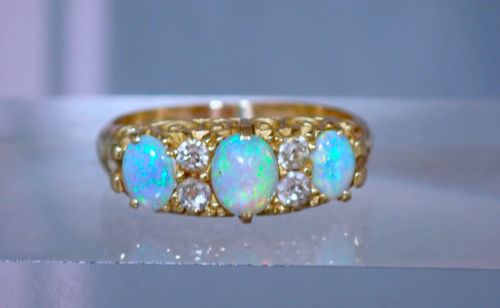
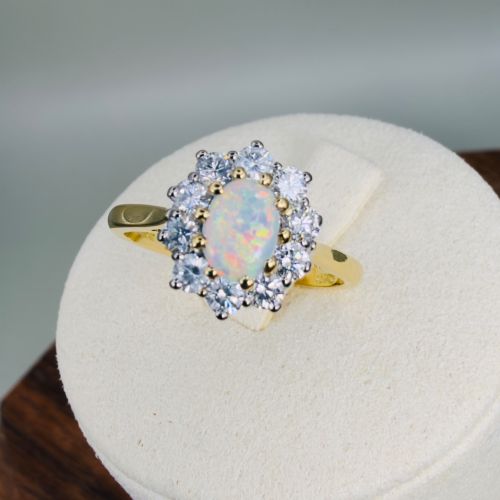
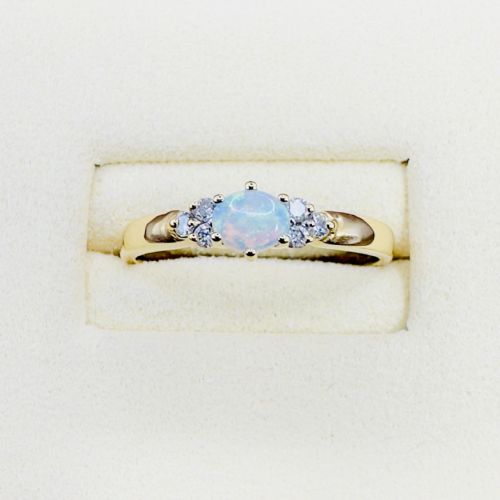
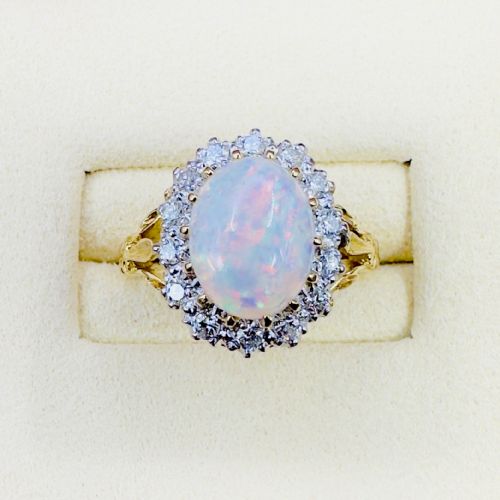
An opal cabochon cluster ring centres a polished stone of shifting play-of-colour within a bright border of diamonds, bringing immediate fire to the hand.
Opal Cabochon Cluster Ring
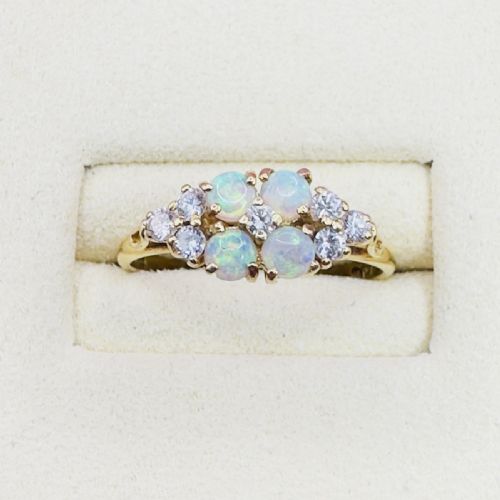
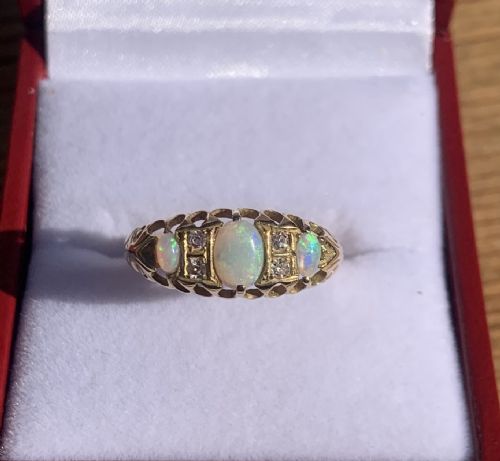
An opal cabochon cluster ring gathers a smooth, rounded domed opal surrounded by smaller stones, most frequently diamonds, set in yellow or white metals. These pieces span from the nineteenth century through the Edwardian era and mid-century decades, offering both traditional cluster arrangements and distinct boat or multi-gem formats.
The most common form encountered here pairs a central cabochon opal with a neat fringe of brilliant-cut diamonds, mounted on bands of eighteen-carat or nine-carat gold. Alongside standard cluster rings, variations incorporate sapphires, rubies, emeralds, or bloodstone alongside the central gem, reflecting the diverse material choices of historical makers.
Originating across Victorian workshops and later twentieth-century decades, these rings demonstrate lasting popularity through enduring styles such as the traditional cluster, the elongated boat shape, and the raised cocktail mounting. Buyers seeking this phrase encounter a rich chronological sweep, from nineteenth-century provincial hallmarks to mid-century platinum and gold iterations.
What varies in quality
The visual strength of an opal cabochon cluster ring depends fundamentally on the play-of-colour within the central stone, where vibrant flashes of spectral light elevate the piece above stones with muted or dead areas. The balance between the central dome and the surrounding diamond border dictates the overall harmony of the design.
Constructional integrity also defines the tier of a piece, visible in the weight of the metal shank, the crispness of the claw work, and the absence of thinning around the gallery. Superior examples display careful matching of accent stones and substantial metal gauge that withstands daily wear over generations.
Listings for this phrase feature pieces spanning from the nineteenth century through to nineteen-sixty, utilising eighteen-carat gold, nine-carat gold, and platinum.
The Opal Cabochon Cluster Ring Glossary
- Cabochon
- A gem cut with a smooth, rounded, convex upper surface and a flat or slightly curved base, rather than faceted edges. This style highlights the internal play-of-colour characteristic of opals.
- Cluster ring
- A ring design featuring a prominent central stone encircled by a tighter border of smaller gems, usually diamonds. This arrangement maximises surface brilliance on the finger.
- Play-of-colour
- The optical phenomenon where internal flashes of shifting spectral hues appear as light moves across the stone. It forms the primary measure of an opal's visual appeal.
- Boat ring
- A piece featuring a horizontally elongated navette-shaped setting that curves gently across the finger. This silhouette was particularly favoured during late nineteenth and early twentieth-century periods.
- Old-cut diamond
- A hand-faceted diamond cut prior to the standardisation of the modern brilliant in the early twentieth century. These stones typically exhibit smaller tables and broader facets.
Opal Cabochon Cluster Ring: Frequently Asked Questions
How do I care for an antique opal ring?
Opals contain natural water content and require gentle handling to prevent drying out or cracking over time. Avoid exposing the stone to harsh chemicals, ultrasonic cleaners, and sudden temperature shifts.
Remove the ring before undertaking vigorous physical work or housework. Store the piece safely in a lined box away from direct heat sources and other hard jewellery.
Are these opals natural or treated?
The pieces recorded here feature natural opals formed over geological time rather than synthetic laboratory substitutes. Each stone displays organic inclusions and unique colour patterns specific to natural formation.
Historical examples rely on the inherent optical properties of the mined gemstone. Examining the stone under magnification reveals the characteristic natural matrix of authentic period material.
How can I tell a Victorian ring from a mid-century piece?
Victorian examples often utilise heavier yellow gold bands, distinct hand-carved shoulders, and old-cut diamonds set in closed or semi-open backs. Hallmarks stamped inside the shank provide precise assay office indicators and date letters.
Mid-century pieces from the nineteen-fifties and sixties frequently introduce platinum or white gold settings, brighter brilliant-cut diamond borders, and lighter, sleeker structural profiles. Examining the internal construction and mount style clarifies the era of manufacture.
Can these rings be resized easily?
Most gold and platinum cluster rings can be adjusted by a skilled jeweller to fit different finger sizes. The feasibility depends on the shank thickness and whether decorative shoulder engraving extends too close to the back.
Consult a specialist workshop to ensure any adjustment preserves historical hallmarks stamped inside the band. Solid metal shanks without complex gallery work resize with minimal structural impact.