
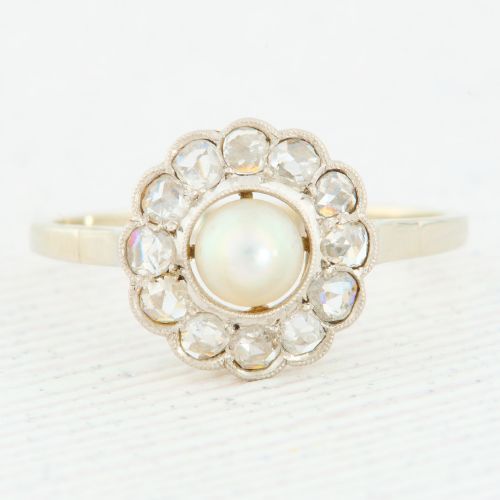
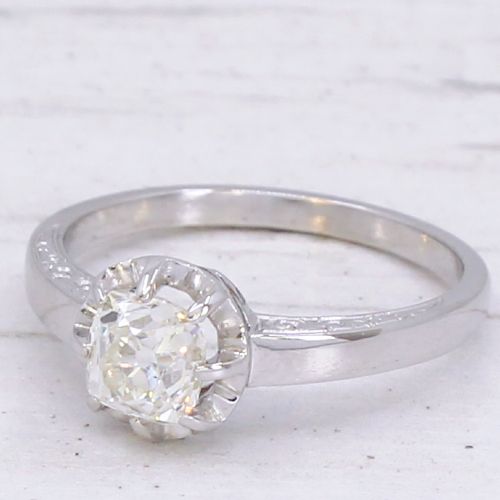
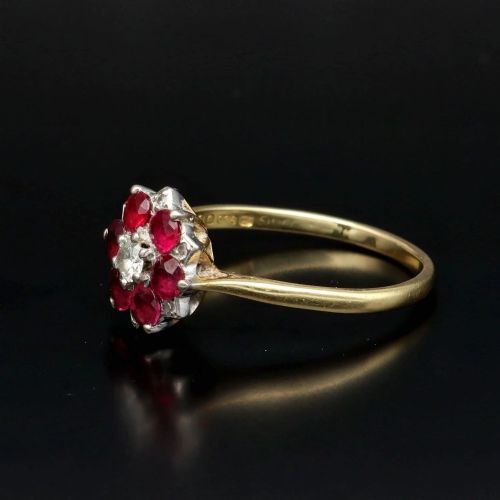
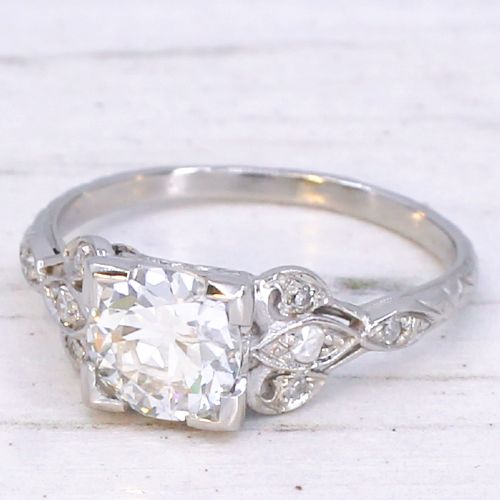
White Gold Diamond Engagement Ring
A white gold diamond engagement ring brings together bright precious metal and lasting stones from across the twentieth century.
White Gold Diamond Engagement Ring
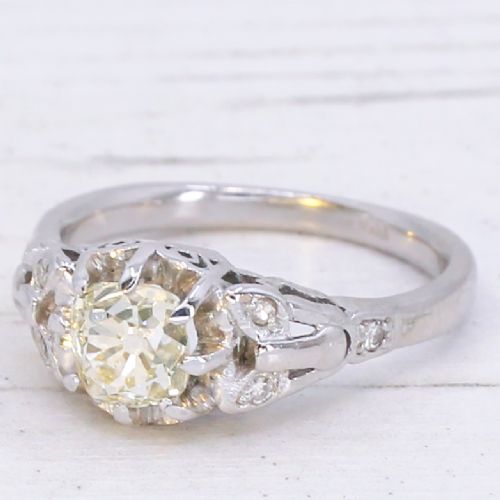
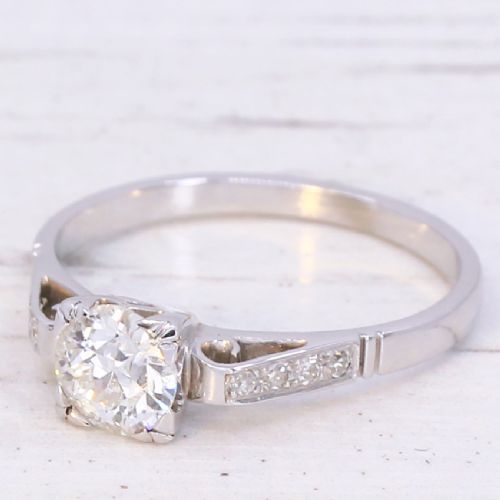
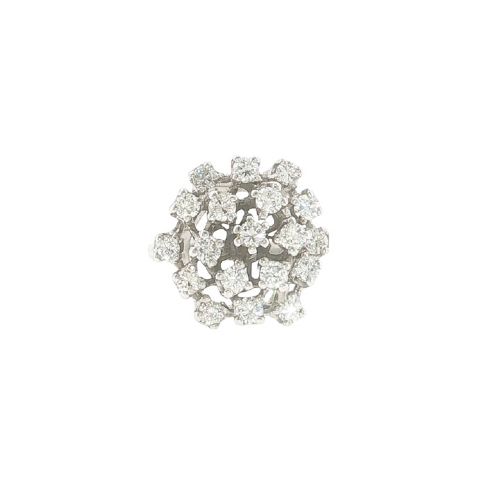
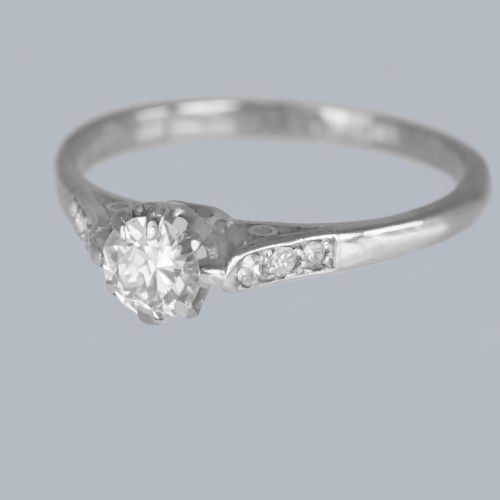
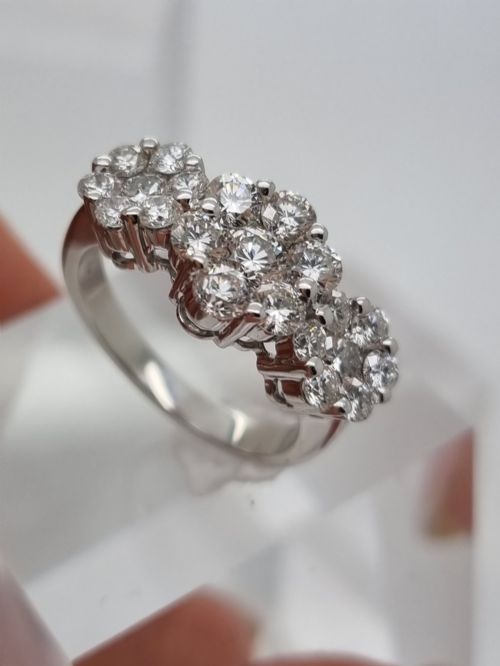
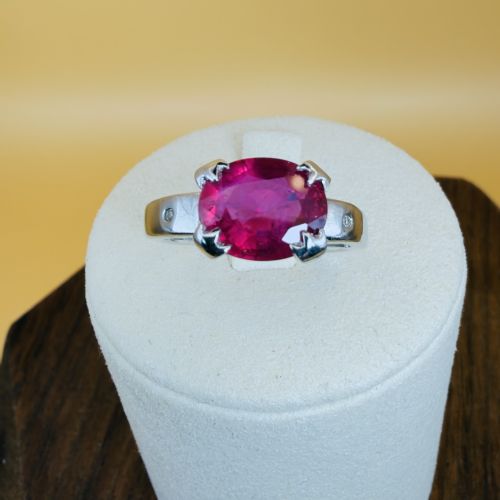
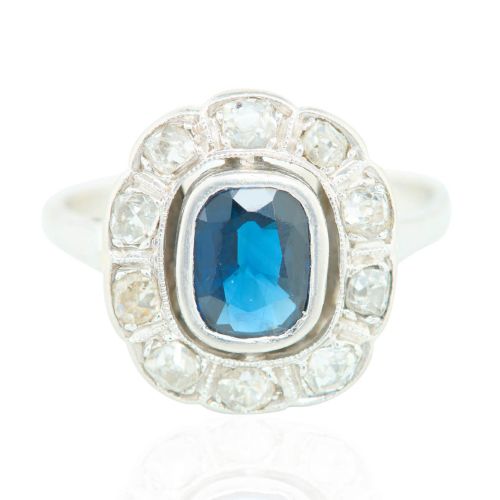
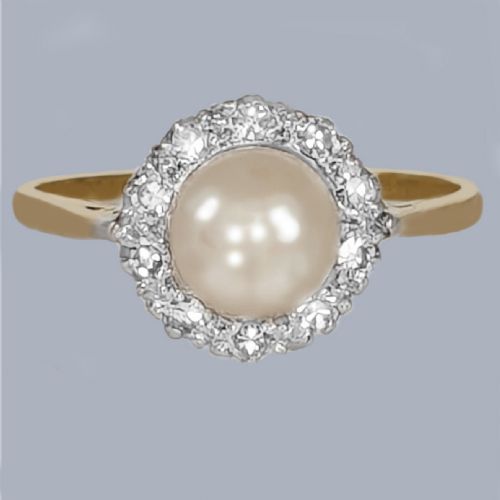
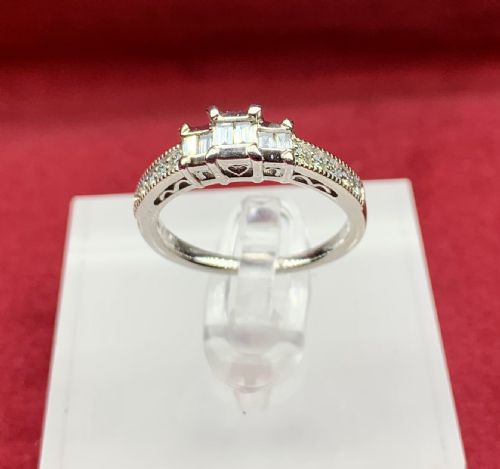
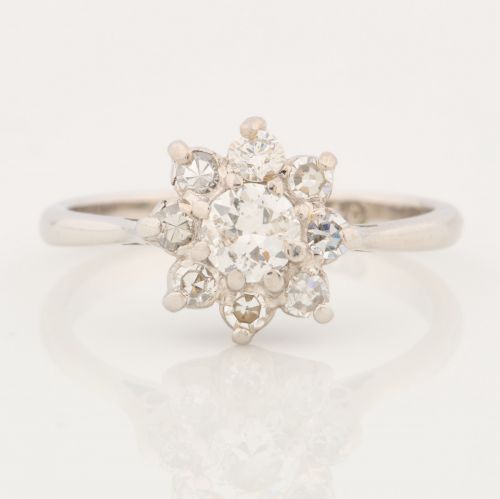
A white gold diamond engagement ring spans multiple decades of jewellery design, from Edwardian beginnings through Art Deco geometry to mid-century classic forms. Buyers examine pieces shaped as solitaires, multi-stone settings, and complex clusters featuring central diamonds accompanied by rubies, sapphires, or opals.
The selection on this page relies heavily on items produced in the 1920s, 1930s, 1940s, and 1950s, alongside Edwardian creations and later twentieth-century examples. Solitaires with diamond-set shoulders and multi-stone cluster designs appear frequently across these decades.
Originating from British workshops, French makers, and other European centres, these rings utilise precious metals shaped into intricate galleries and slim bands. Each piece reflects the aesthetic priorities of its specific decade, maintaining the durable structure required for daily wear.
How they were made
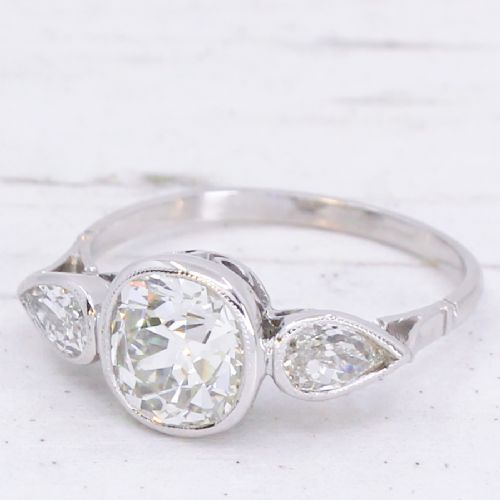
Construction centres on 18ct white gold and platinum settings designed to hold diamonds securely while maximising light entry through open galleries and precise claw or bezel arrangements. Metalworkers combined casting and hand-working techniques to shape delicate shoulders, millegrain edges, and decorative pierce-work.
Stones were selected for their individual cuts, including old cut, cushion, pear, and brilliant shapes, then integrated into multi-stone clusters or streamlined solitaire mountings. Secondary gems like calibre-cut sapphires, rubies, and opals were meticulously fitted alongside the primary diamonds to form cohesive geometric or floral patterns.
Several rings arrange opals from east to west, proving that Victorian and mid-century makers loved giving traditional clusters an unexpected sideways glance.
What varies in quality
Quality rests upon the proportion and brilliance of the central diamonds, the crispness of hand-carved details like millegrain work, and the structural integrity of the white gold setting. Superior examples display harmonious stone sizing, tight claw work, and metalwork that shows minimal wear across the gallery and band.
Design complexity also separates standard productions from finer pieces, particularly where side stones or calibre-cut gems are matched for consistent colour and clear facets. The preservation of original hallmarks and the absence of clumsy resizing reveal the care taken by past makers and subsequent owners.
The White Gold Diamond Engagement Ring Glossary
- Old cut
- A diamond facet arrangement characterised by a smaller table, higher crown, and open culet, commonly seen in pieces dating from the Edwardian era through the mid-twentieth century.
- Millegrain
- A decorative technique featuring a row of tiny raised metal beads along the edges of a setting, frequently utilised in Edwardian and Art Deco jewellery.
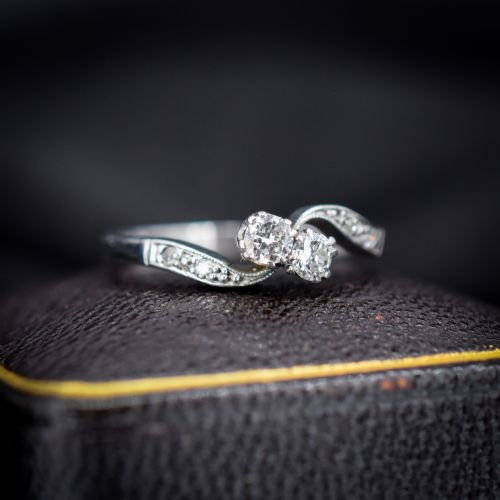
- Toi Et Moi
- A French term meaning you and me, describing a ring featuring two main gemstones set side by side in a twist or parallel arrangement.
- Cluster ring
- A design where a central stone is surrounded by a closely set group of smaller diamonds or coloured gemstones, forming a distinctive floral or geometric shape.
White Gold Diamond Engagement Ring: Frequently Asked Questions
What periods do these rings come from?
The pieces span from the Edwardian era and the 1920s through to the 1960s and later decades, capturing shifting design movements.
Buyers encounter styles ranging from geometric Art Deco clusters to mid-century solitaires and vintage multi-stone arrangements.
Are these rings suitable for daily wear?
These pieces were built using durable precious metals like 18ct white gold and platinum combined with hard gemstones.
Routine checks by a jeweller help maintain the security of older settings and claws over years of continuous use.
How do I identify an Art Deco ring?
Art Deco examples typically display sharp geometric lines, symmetrical patterns, and calibre-cut gemstones arranged in flat or target motifs.
Workmanship often incorporates millegrain borders and platinum or white gold to enhance the stark white contrast against the stones.