

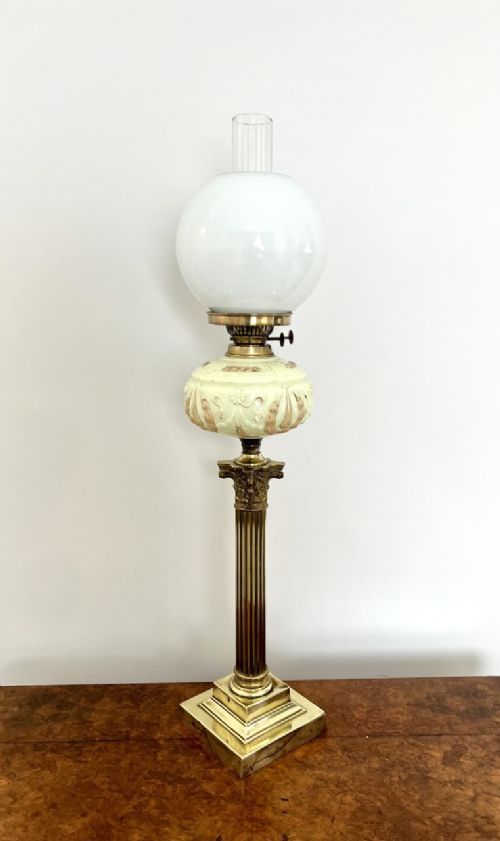


White Globe Table Lamp
White globe table lamp choices bring sculptural form and diffused light to a room, uniting period brass and opaline glass.
White Globe Table Lamp
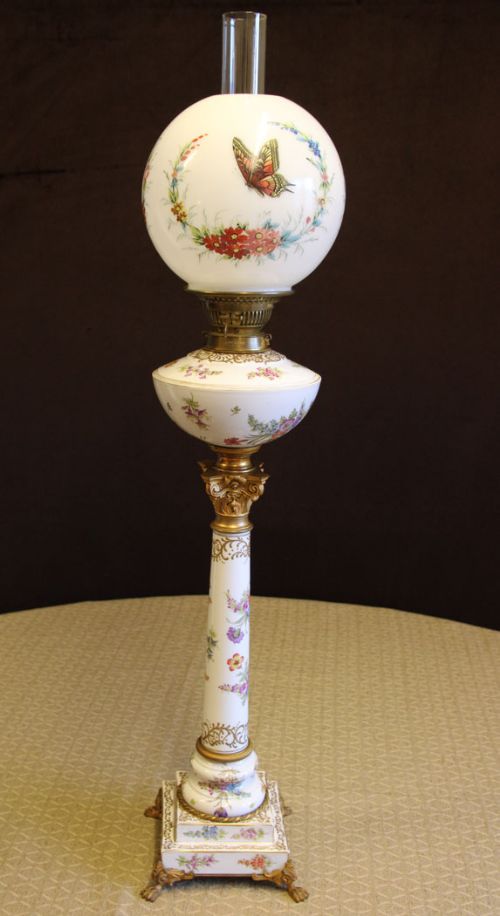
When you search for a white globe table lamp, you are looking at domestic lighting forms that span the nineteenth century, the Edwardian era, and the Art Deco period. These pieces originate primarily as converted oil lamps, electric table lamps, and architectural brass standards fitted with spherical shades.
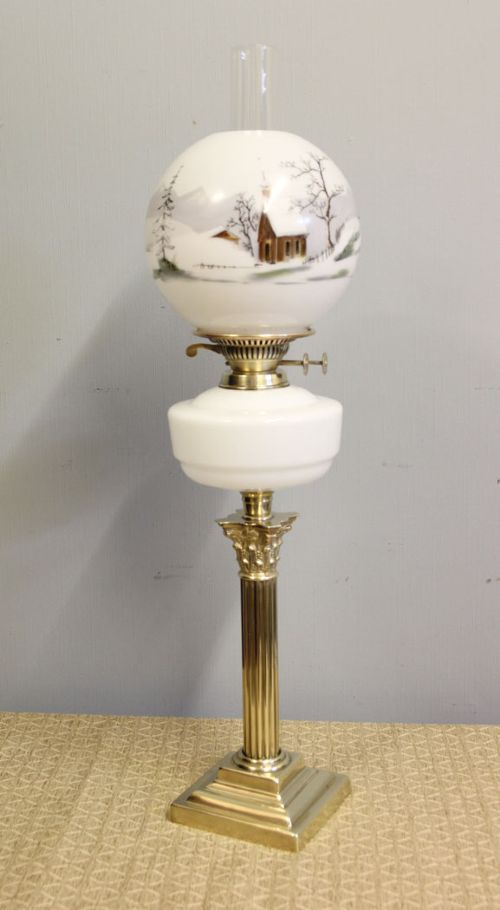
The versions you are most likely to meet on this page pair brass or bronze columns with glass globes, often retaining the proportions of earlier oil-burning fixtures adapted for electricity. They draw on Victorian, Edwardian, and Art Deco styles, ranging from classical Corinthian columns to geometric stepped designs.
How they were made
Makers constructed these lamps using heavy base materials such as brass, bronze, spelter, and marble to anchor the vertical height. Metal components were cast, turned, and polished, while columns frequently incorporated classical orders like the Corinthian style.
The defining spherical shades utilise opaline glass, milk glass, or etched crystal to soften the light source. These glass elements were mouth-blown and sometimes acid-etched or decorated with painted winter scenes before being mounted to the metal galleries.
White Globe Table Lamp Retail Price Guide 2026
Typical asking prices for white globe table lamp among the pieces listed under this phrase on Sellingantiques today, from the lower quarter to the upper quarter. They describe what is for sale here now, not the wider market.
A solitary Pierrot plays the accordion beneath the glow of a night light.
What varies in quality
The distinction between standard and superior pieces rests on the weight of the metal castings and the crispness of the chasing on brass and bronze components. Finer examples display deeper relief work on column capitals and heavier gauge mounts that secure the glass firmly.
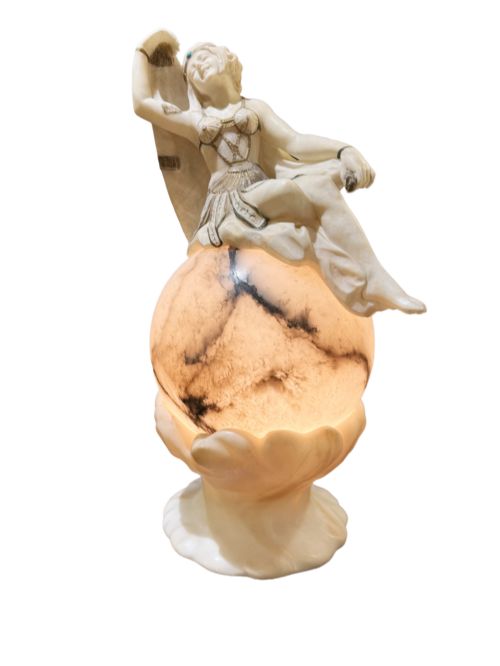
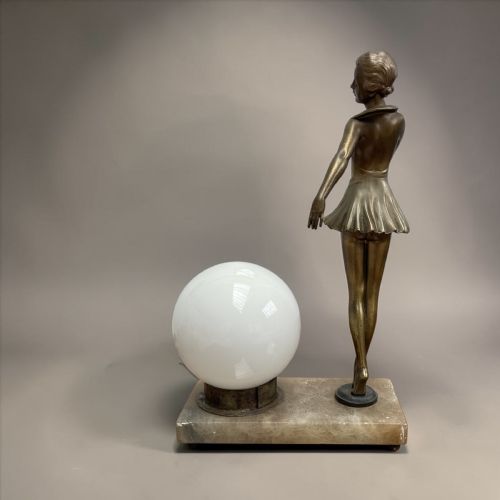
Quality also shows in the density and tone of the glass globes, where uniform milk glass or fine opaline diffuses light evenly without thin spots. The integration of materials, such as solid marble bases paired with spelter figures or brass, dictates the overall integrity of the piece.
The White Globe Table Lamp Glossary
- Opaline glass
- A type of semi-translucent white glass developed in the nineteenth century to soften illumination. It produces a milky appearance when lit from within.
- Spelter
- An alloy of zinc and lead used as a cheaper alternative to bronze for sculptural figures. It accepts patination well and appears frequently on twentieth-century figural bases.
- Pricket lamp
- A form featuring a sharp metal spike designed to hold a candle or support a specific fitting. In later adaptations, the term describes tall, slender table lamp standards.
- Corinthian column
- An architectural order featuring ornate capitals decorated with acanthus leaves. Makers utilised this classical motif frequently on nineteenth-century brass oil lamp bases.
White Globe Table Lamp: Frequently Asked Questions
What is a white globe table lamp?
These pieces are domestic light fittings that combine a heavy metal or marble base with a spherical glass shade. They originate from various periods including the Victorian era and the Art Deco movement.
Many examples on this page began as oil lamps before being converted to electricity. Their primary function remains providing soft, diffused illumination while serving as sculptural decorative objects.
How do I date a lamp?
Dating relies on identifying the stylistic markers of the base and the manufacturing technique of the glass shade. Victorian pieces often feature heavy brass Corinthian columns, whereas Art Deco models display geometric motifs.
Material combinations also help establish age, such as spelter figures mounted on marble from the early twentieth century. Examining the construction of internal wiring channels and fittings provides further clues to the period of conversion.
Are opaline and milk glass different?
Opaline glass is a semi-translucent white material that diffuses light with a soft, glowing halo effect. Milk glass tends to be more opaque and dense, developed in the nineteenth century as a pressed or blown alternative to porcelain.
Both materials appear commonly on spherical lamp shades from different eras. The choice of glass significantly affects how the lamp casts light across a room.
How do I place one in a room?
These lamps function well on side tables, desks, or mantelpieces where their sculptural bases and glowing globes act as focal points. Their height makes them suitable for reading corners or spaces requiring ambient rather than direct task lighting.
Keep the scale of the room in mind when selecting larger brass standards or figural pieces. They pair naturally with both period interiors and modern minimalist spaces seeking a touch of texture.