

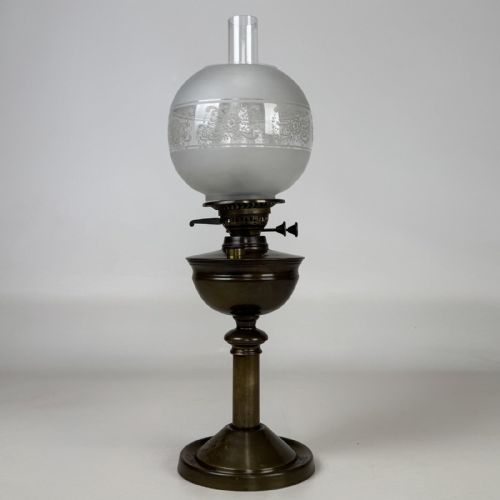
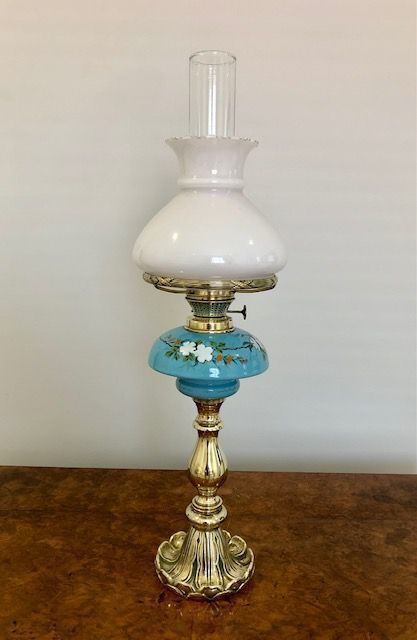
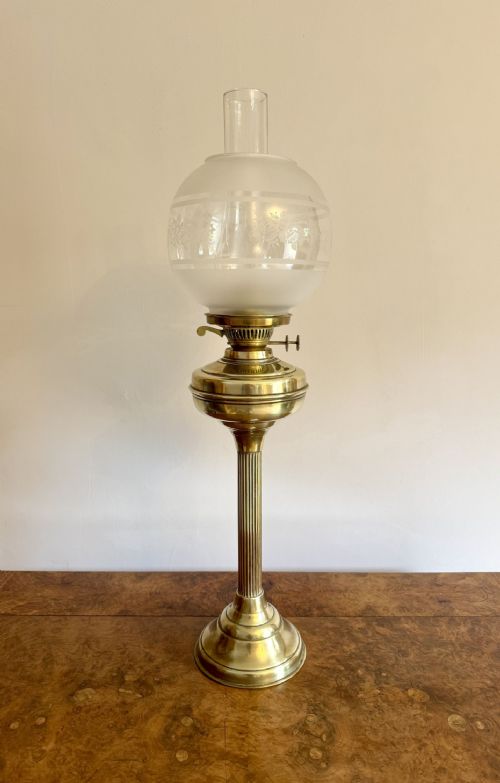


Traditional Glass Chimney Lamp
A traditional glass chimney lamp brings period warmth and genuine brass weight to a room, offering functional lighting anchored in nineteenth and early twentieth century design.
Traditional Glass Chimney Lamp
A traditional glass chimney lamp is an oil lamp designed for domestic illumination, combining metal bases with glass reservoirs and protective vertical flues. These pieces date across the nineteenth and early twentieth centuries, spanning Victorian, Edwardian, and Victorian Art Nouveau periods.
The versions most commonly met on this page are table lamps constructed from solid brass and paired with glass components. They range from plain brass columns to more decorative examples featuring opaline glass, milk glass, or cut glass elements.
Makers such as Messengers and retailers like Harrods contributed to this tradition, producing standard oil lamps and fitted shades intended for everyday interior use. Surviving examples reflect the lighting technology of the 1860s through to the 1930s.
How traditional glass chimney lamps were made
Brass serves as the primary structural metal for the bases and burners, providing weight and stability for the tall glass components above. This metalwork is often combined with turned ebonised wood to create contrast in the stands.
The glass elements are manufactured using distinct techniques, including mould-blown opaline glass, milk glass, and heavy lead crystal that is cut by hand. These transparent and translucent sections house the fuel and direct the light safely upwards.
Traditional Glass Chimney Lamp Retail Price Guide 2026
Typical asking prices for traditional glass chimney lamp among the pieces listed under this phrase on Sellingantiques today, from the lower quarter to the upper quarter. They describe what is for sale here now, not the wider market.
Listings feature table lamps spanning the 1860s to 1930, constructed from brass, cut glass, opaline glass, and ebonised wood across Victorian and Edwardian styles.
What varies in quality
Quality rests in the weight of the brass casting and the crispness of any cut glass facets on the reservoir. Heavier metal bases and thicker glass chimneys demonstrate superior workshop standards from the period.
Design ambition separates standard domestic lighting from higher tier production, particularly where Art Nouveau brass shaping or specialised opaline shades are employed. Maker attribution, such as the involvement of Messengers, further distinguishes the finer pieces in this range.
Messengers·Harrods
The Traditional Glass Chimney Lamp Glossary
- Chimney
- The tall, narrow glass tube fitted over the burner to steady the flame and draw air upwards. This delicate component is essential for proper combustion.
- Opaline glass
- An opaque or translucent pale glass used for shades and reservoirs, popular in Victorian lighting. It softens the light emitted from the oil flame.
- Ebonised wood
- Timber treated to imitate ebony, frequently used for the stepped or rounded bases of these lamps. It provides a dark contrast to the polished brass columns.
- Burner
- The metal mechanism at the top of the oil reservoir that controls the wick and flame. These parts were often manufactured by specialised firms.
Traditional Glass Chimney Lamp: Frequently Asked Questions
What periods do these lamps come from?
The pieces span from the mid nineteenth century through to the early twentieth century, taking in Victorian, Edwardian, and Art Nouveau periods.
Most examples date between 1860 and 1930, reflecting the peak era of domestic oil lighting before electric bulbs took over.
How were these lamps used originally?
They served as dependable table lamps for reading and general room illumination in homes before electricity reached most properties.
Paraffin or other burning oils were held in the glass or metal reservoir and drawn up through a wick into the burner.
How do I tell Victorian lamps from Edwardian ones?
Victorian lamps often feature heavier brass castings and ornate cut glass, while Edwardian examples can display lighter proportions or softer opaline shades.
Art Nouveau pieces from the nineteenth century introduce more fluid, organic brass shaping around the base and burner collar.
Can I still burn oil in these lamps?
While many retain their original burners and chimneys, most buyers today use them primarily as decorative interior objects.
If you choose to burn oil, burners and wicks require careful checking to ensure they are safe and fully operational.