

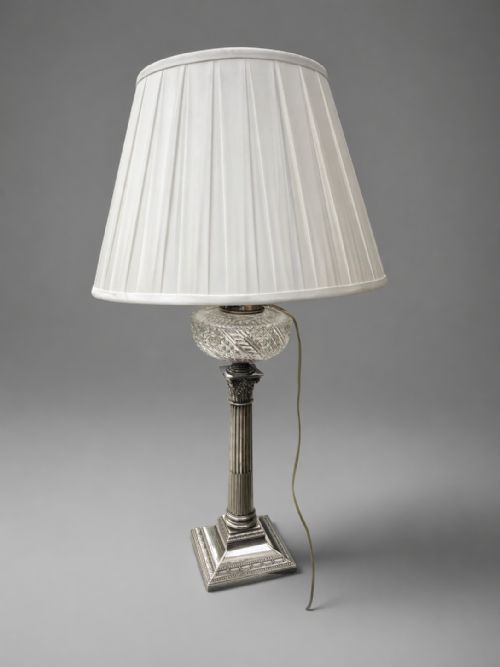


White Glass Desk Light
A white glass desk light delivers focused task illumination through translucent shades paired with metal or ceramic bases.
White Glass Desk Light
A white glass desk light encompasses functional task lamps, converted oil lamps, and decorative table pieces dating from the Victorian and Edwardian eras through to the Art Deco period.
The versions most commonly met on this page combine brass, bronze, or chrome fittings with opaline glass shades, offering both direct and diffused lighting.
Forms range from adjustable twin-angled reading lamps and columnar oil lamps to stylized figural designs in metal and ceramic.
Materials and construction
Construction relies heavily on structural metals such as brass, bronze, and chrome to form the weighted bases, stems, and articulated arms.
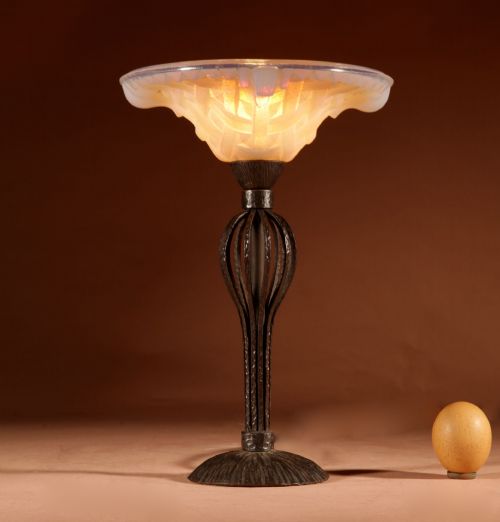
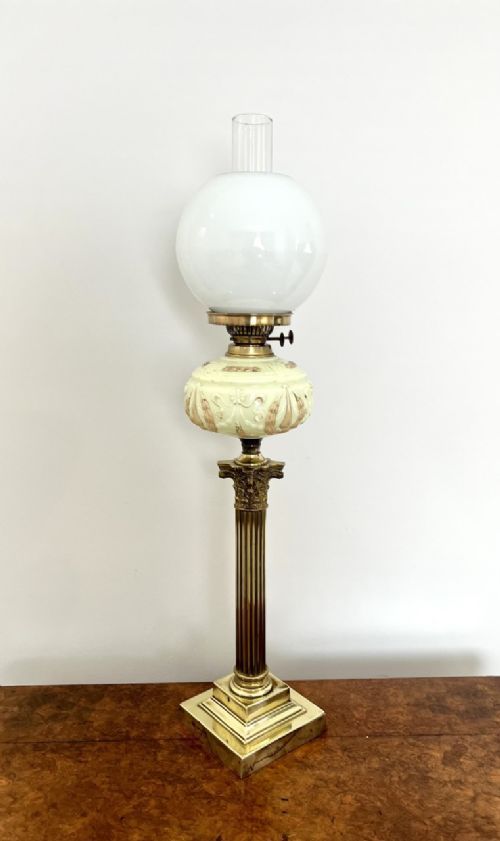
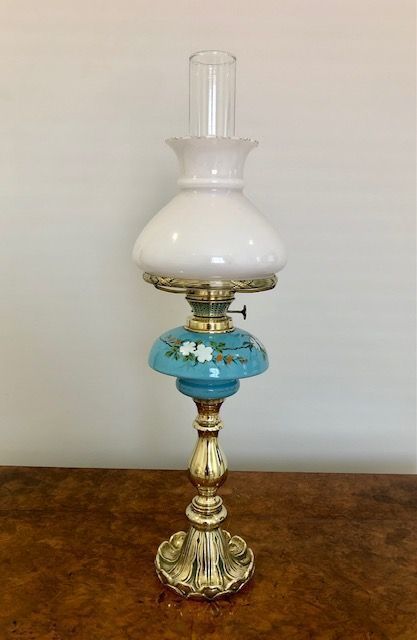
Shades and bodies utilise white opaline, opalescent, and cut glass blown or moulded into globes, fluted forms, and specialised diffusers.
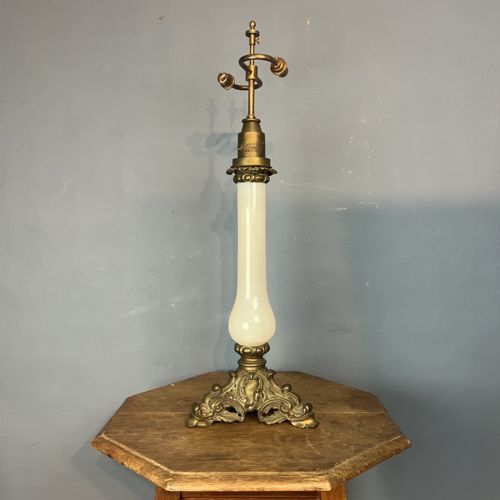
Secondary materials including marble, black glass, and porcelain appear frequently in the bases to provide stability and decorative contrast.
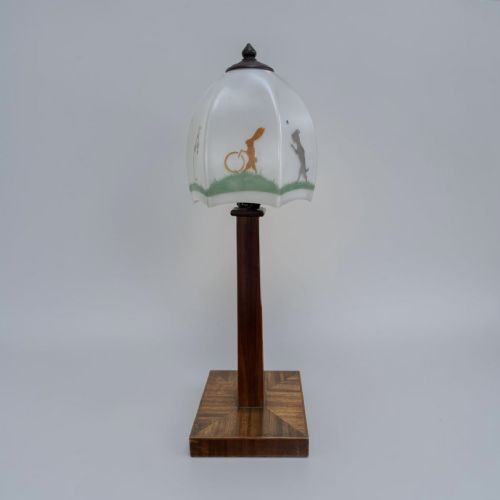
German porcelain Spitz dogs and French lightning flashes keep guard over the desk.
Assessing the craftsmanship
Quality reveals itself in the weight and gauge of the metal components, from heavy cast brass and bronze to lighter plated steel.
The refinement of the glasswork distinguishes superior examples, particularly in the evenness of opaline coloration and the crispness of hand-cut crystal details.
Lacroix Lalique·Eileen Grey·Karl Ens·Anton Buschelberger·Joseph Hinks·Wild Wessel
The White Glass Desk Light Glossary
- Opaline glass
- A milky-white translucent glass frequently blown into shades and body reservoirs for nineteenth-century lamps. It softens glare while transmitting a warm glow.
- Oil lamp
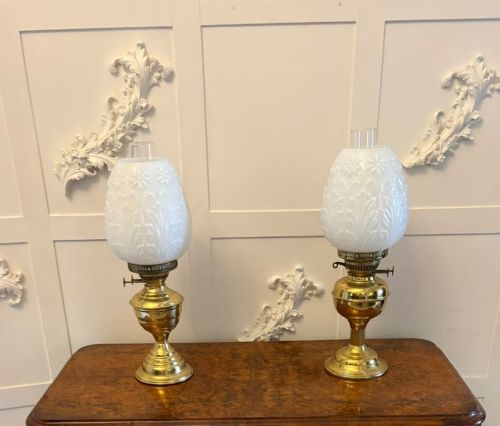
- A lighting device utilising a wick and reservoir for burning oil or paraffin, often subsequently converted to electricity. Many surviving examples retain their original brass collars and burners.
- Art Deco
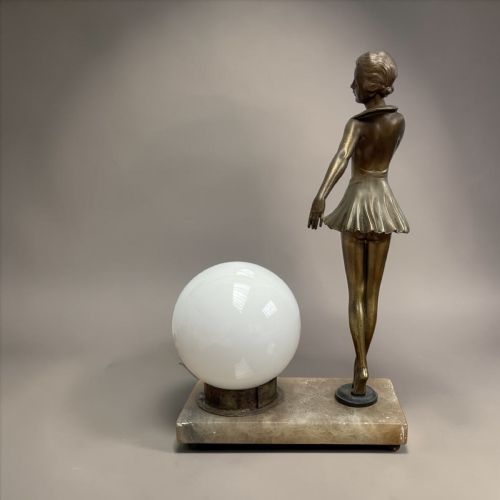
- A design style prominent in the 1920s and 1930s characterised by geometric shapes, streamlined chrome elements, and stylized figures. It marks a shift toward modern industrial aesthetics.
- Neoclassical
- A style drawing inspiration from classical antiquity, featuring formal columns, urn motifs, and symmetrical brass or bronze mounts. These lamps convey architectural dignity.
- Twin angled
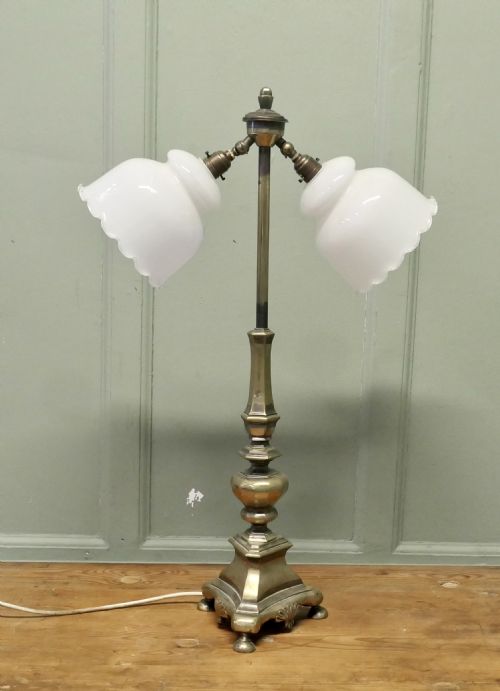
- A configuration utilising two jointed metal arms to direct light precisely across a desk surface. This mechanical articulation is typical of early twentieth-century reading lamps.
White Glass Desk Light: Frequently Asked Questions
How do I wire a Victorian oil lamp?
Conversion typically involves running a concealed cord through the central burner collar without damaging the original metal threading or reservoir.
Most modern electricians can adapt these fittings to accept standard bulbs while preserving the exterior patina.
Are these lamps safe for daily desk use?
Period lamps function reliably on modern circuits provided the internal wiring and bulb holders meet current safety standards.
It is advisable to have older brass and chrome fixtures checked by a professional before regular plug-in use.
How do I identify an opaline shade?
Opaline glass exhibits a dense, milky-white opacity that diffuses light evenly without complete transparency.
When held to a light source, it often displays a subtle amber or bluish tinge through the body.
What is the difference between Edwardian and Art Deco lamps?
Edwardian designs favor traditional brass columns, opaline shades, and neoclassical motifs derived from nineteenth-century forms.
Art Deco pieces introduce geometric chrome work, Bakelite accents, and stylized figural bases characteristic of the interwar years.