
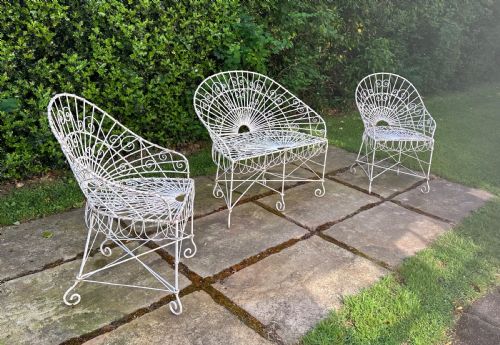


White Garden Bench
A white garden bench brings architectural line and a quiet place to sit among the borders.
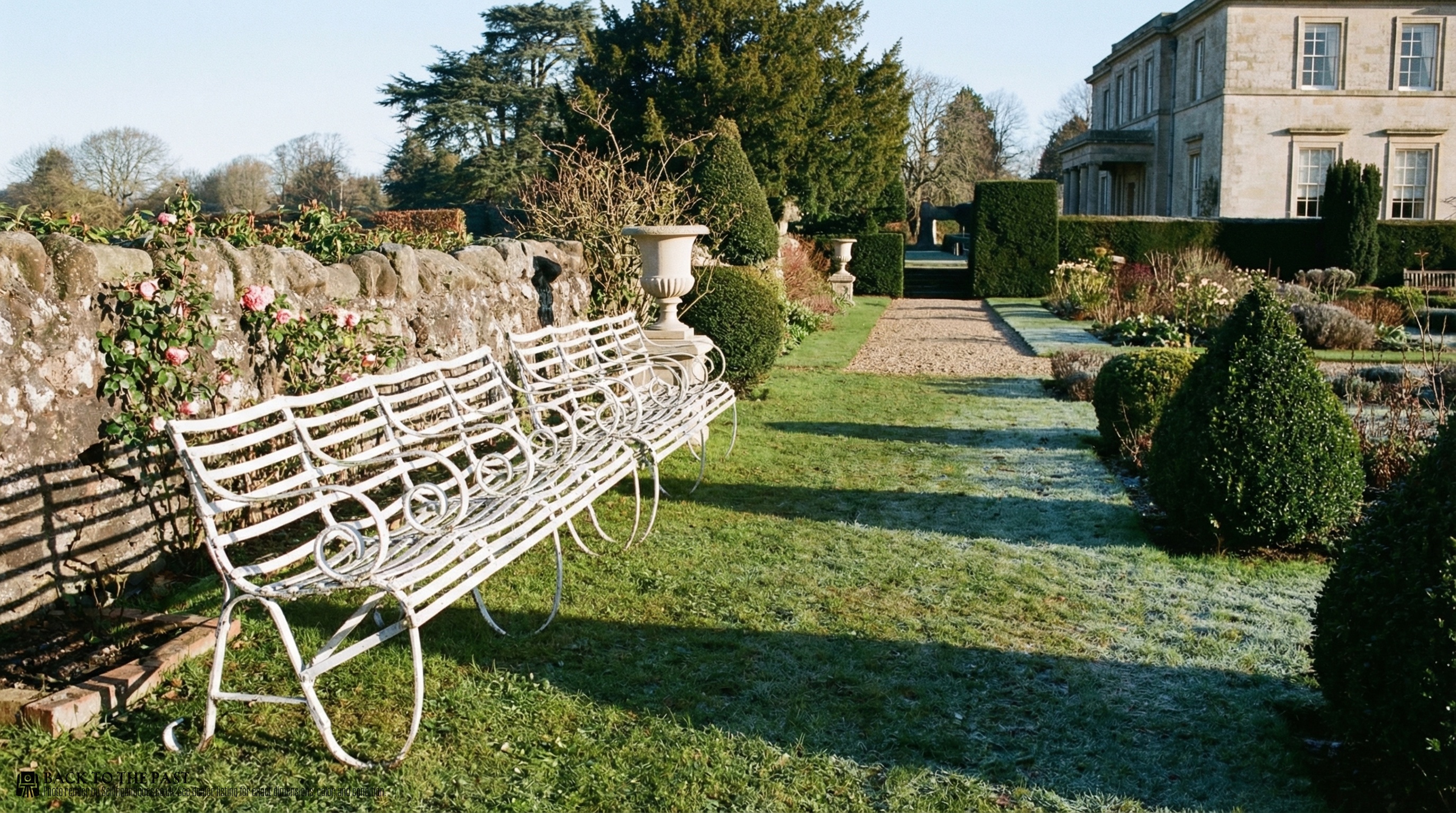
White Garden Bench
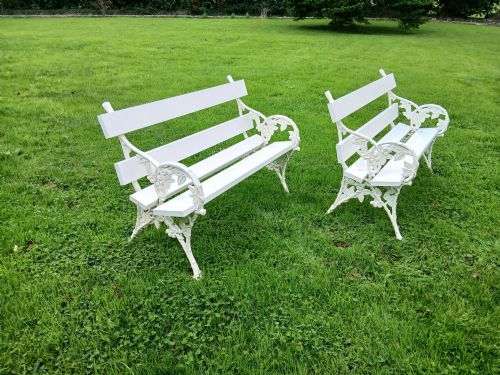
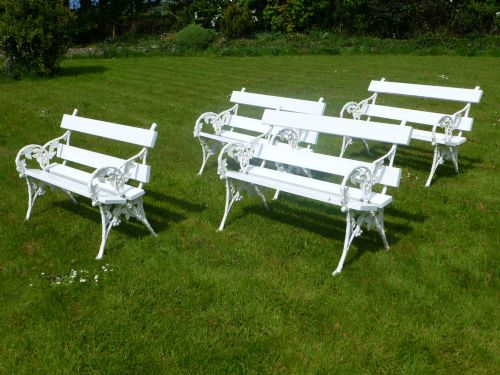
A white garden bench serves as a focal point on a lawn or terrace, offering a resting place framed by foliage. When you search for a white garden bench, you encounter sturdy pieces shaped from cast iron, wrought iron, and timber, often finished in pale paint.
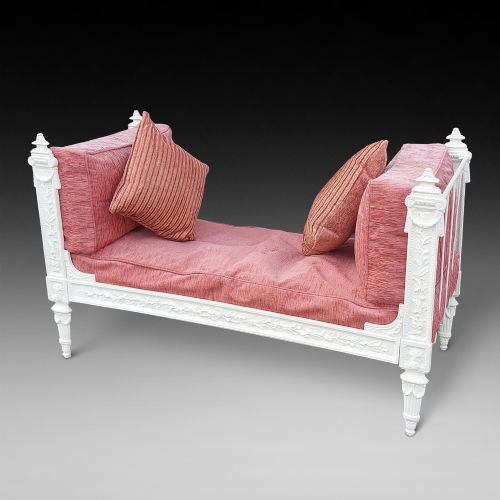
The pieces on this page span several eras, stretching from the Regency period and the nineteenth century through the Victorian era and into the interwar years of the twentieth century. Forms range from two-seater garden seats and rustic patterns to daybeds, wirework arbours, and bench ends.
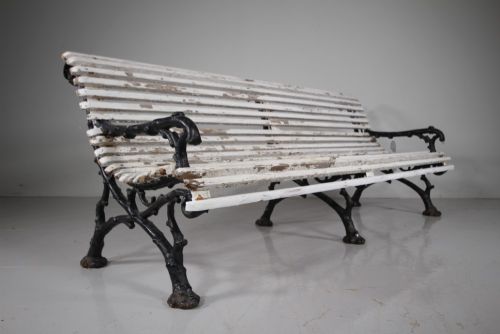
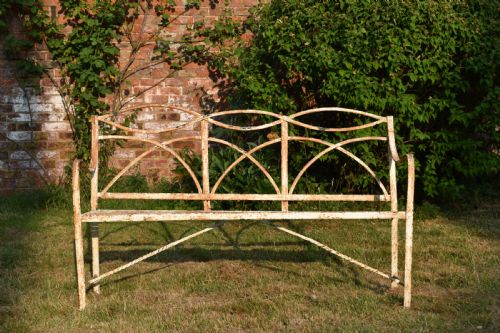
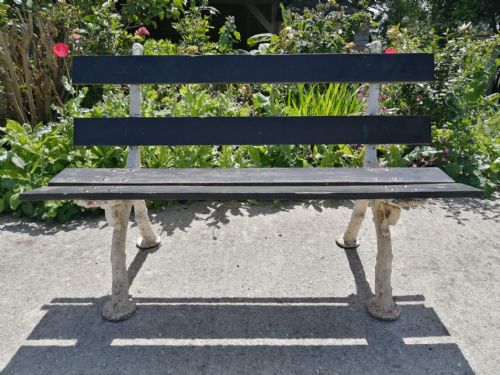
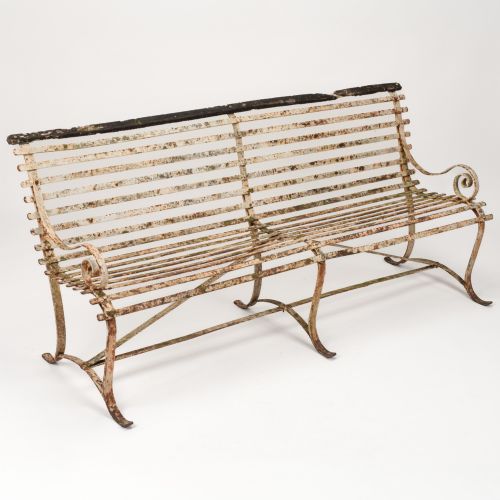
Victorian cast iron examples featuring botanical motifs like blackberry and leaf designs sit alongside clean Regency strapwork ironwork and timber combinations. French Gothic influences and early twentieth-century interpretations also appear among the selections.
How they were made
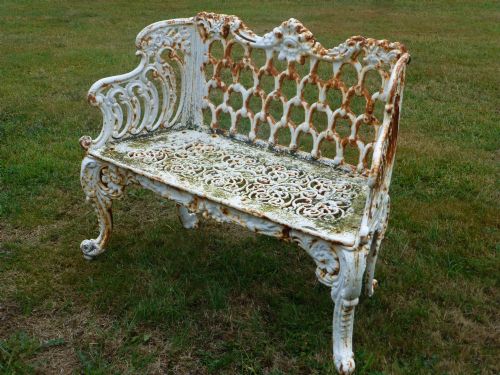
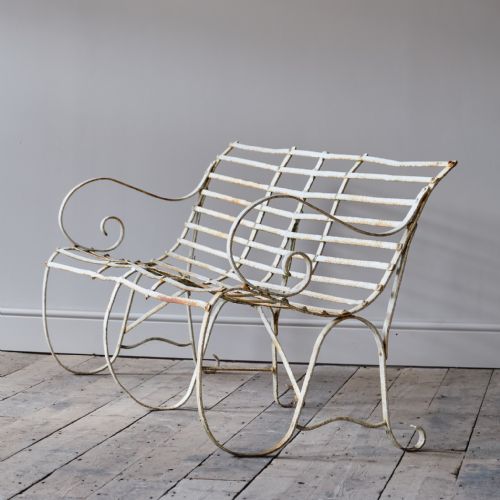
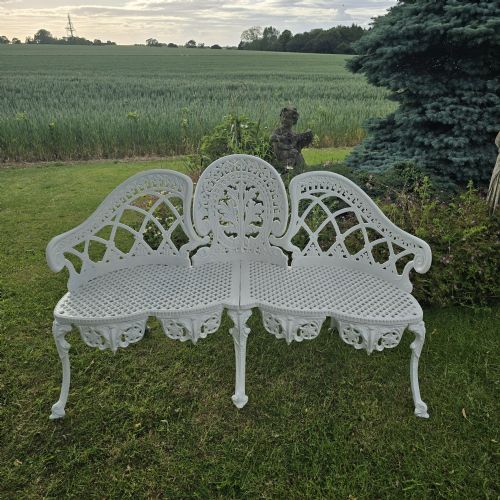
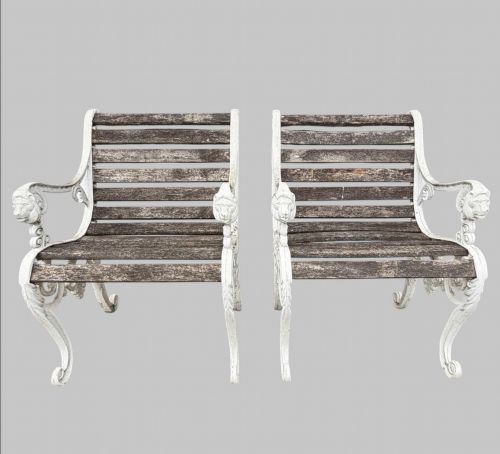
Foundries forged and cast heavy metals, pouring molten iron into moulds to create intricate openwork patterns such as faux bois, rose designs, and lion masks. Wrought iron was shaped by hand into geometric strapwork and scroll motifs.
Carpenters and joiners worked with timber, wood, and teak for slatted seats and frames, frequently pairing wooden slats with cast iron ends. Protective layers of paint sealed the surfaces against outdoor weather.
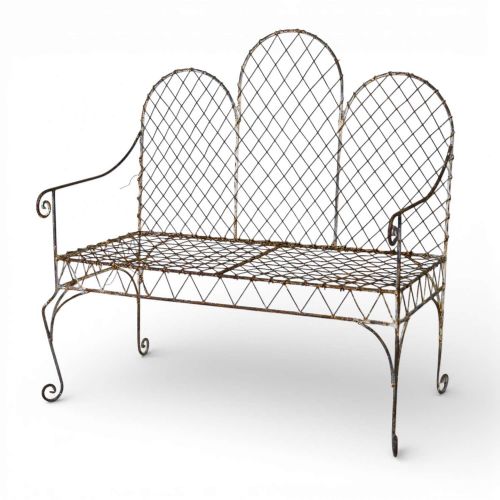
Wirework constructions involved bending and welding wire into open arbours and frameworks for climbing plants.
Some nineteenth-century Victorians sat upon cast iron benches shaped to mimic woven tree branches.
What varies in quality
The crispness of the casting defines ironwork quality, where sharper relief in botanical motifs like leaves and berries shows superior foundry work. Heavy, dense metal frames indicate substantial construction compared to lighter commercial alternatives.
The integration of materials determines the structural integrity of mixed-media pieces, such as how cleanly timber slats meet cast iron bench ends. Original painted surfaces and patination reflect the age and care a piece has accumulated.
Falkirk Carron Foundry·Coalbrookdale·J.P. White
The White Garden Bench Glossary
- Cast iron
- A strong, heavy alloy poured into moulds to create decorative garden furniture. It allows for detailed patterns such as leaves, branches, and figurative masks.
- Wrought iron
- Iron heated and hammered into shape by hand, producing flexible, linear designs like strapwork and scrolls. It offers a lighter visual weight than cast iron.
- Strapwork
- A decorative pattern composed of flat, interlaced bands resembling leather straps. It is characteristic of Regency and later iron garden seats.
- Faux bois
- An artistic imitation of wood grain rendered in another material, most commonly cast iron. It became popular during the Victorian era for rustic garden seats.
- Bench ends
- The structural side supports of a bench, usually cast in iron, designed to hold wooden slats for the seat and back.
White Garden Bench: Frequently Asked Questions
How do I care for a cast iron garden bench?
Cast iron garden benches require periodic cleaning and fresh coats of paint to prevent rust from forming on exposed metal surfaces. Keeping the feet elevated slightly off damp soil during winter months helps preserve the base.
Regular inspections let you spot small areas of wear before moisture causes pitting in the iron.
Can these benches stay outside all year?
Metal and teak benches tolerate outdoor exposure well, though severe winter weather can test painted finishes and wooden components. Moving wooden elements under cover or using breathable protective covers extends their working life.
Freezing water trapped in decorative crevices can expand and stress cast iron over time.
How can I tell a Victorian bench from a Regency one?
Regency garden benches often feature geometric strapwork and lighter wrought iron frames inspired by classical design principles. Victorian examples tend to embrace heavier cast iron, naturalistic forms, and botanical motifs like ferns and branches.
Construction methods and foundry marks also help establish the chronological period of the piece.
What is the difference between cast iron and wrought iron?
Cast iron is poured into moulds while molten, resulting in rigid, heavy components with high detail capacity. Wrought iron is worked manually while hot, yielding tougher, pliable bars shaped into scrolls and strapwork.
Many antique garden seats combine both materials, using cast iron for decorative ends and wrought iron or timber for the seat structure.