
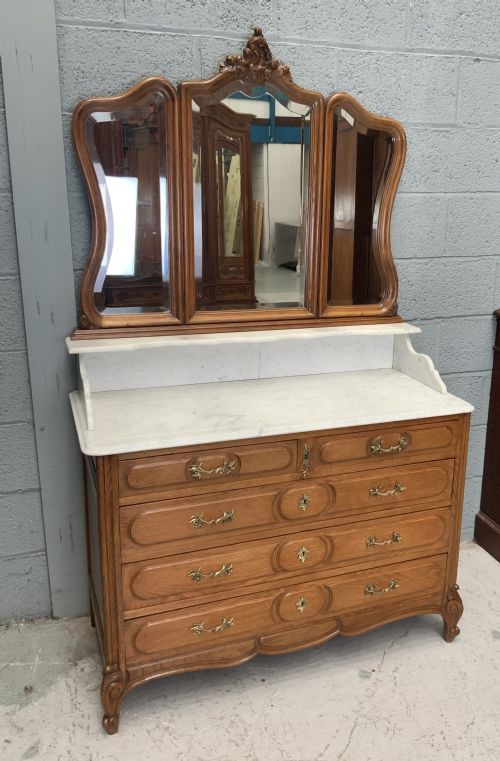


White French Mirror
White french mirror selections bring aged light and carved character into a room, offering nineteenth-century presence through painted wood and gesso frames.
White French Mirror
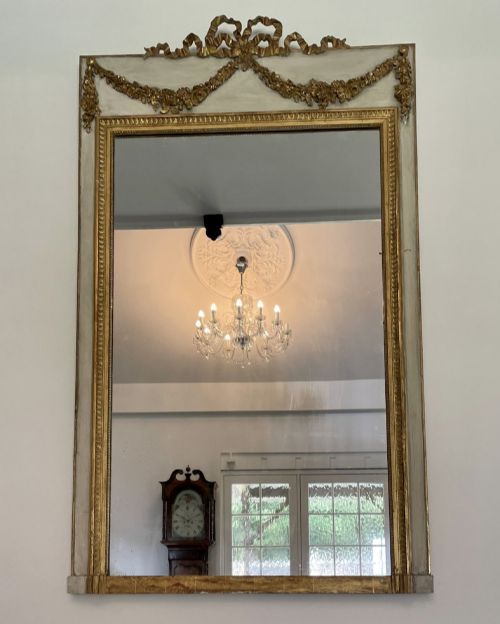
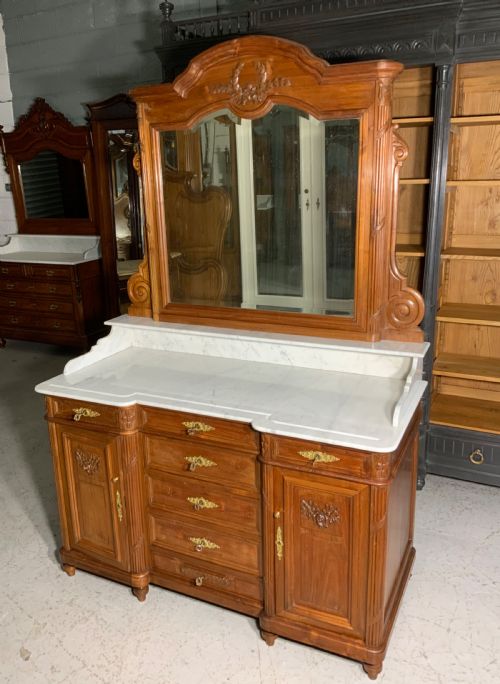
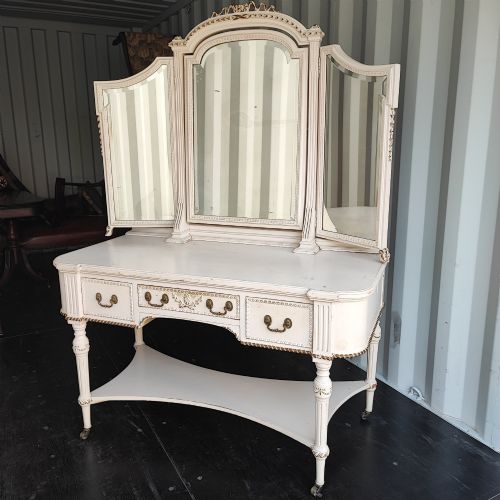
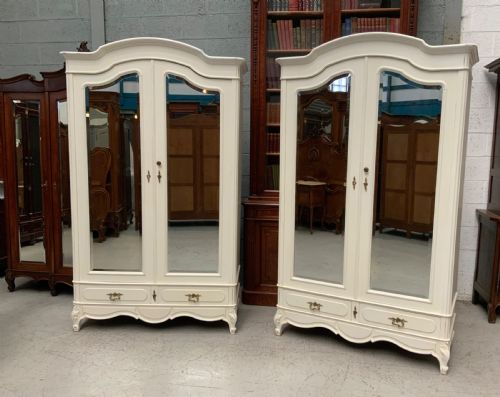
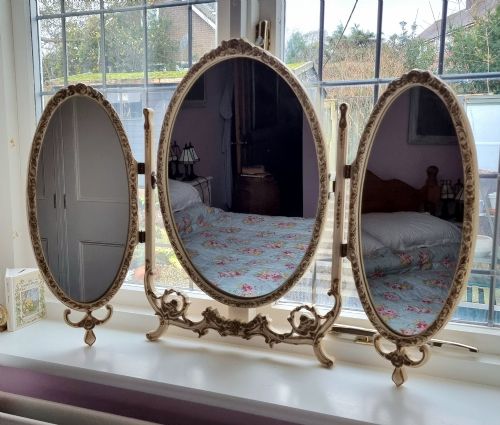
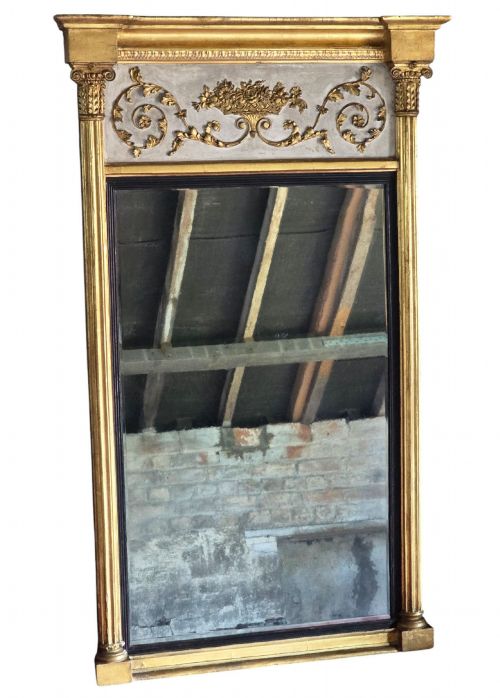
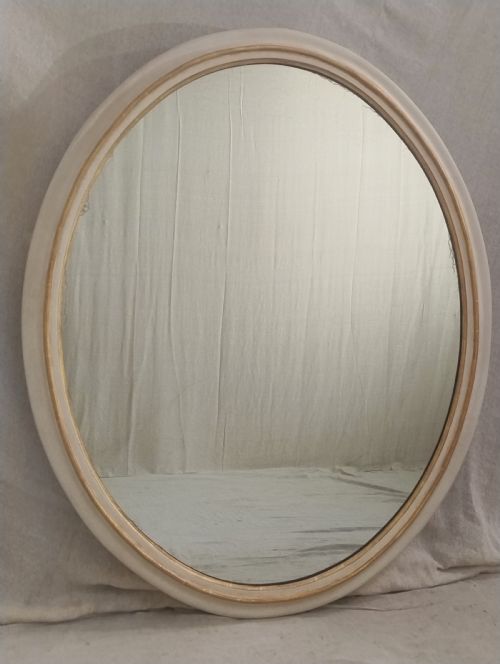
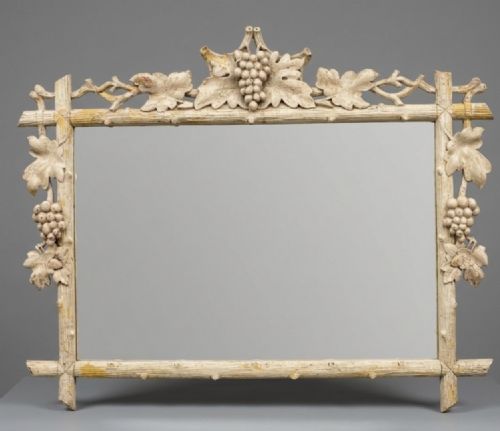
A white french mirror sits above a mantelpiece or hangs upon a wall, bringing proportion and reflective depth to an interior. The pieces gathered under this phrase include large nineteenth-century overmantel mirrors, arched wall glasses, and trumeau panels.
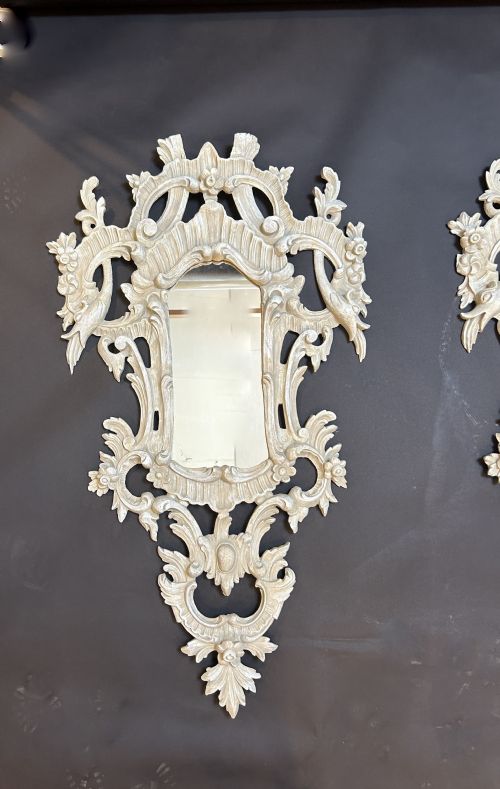
The version most commonly encountered on this page is the nineteenth-century carved wood and gesso overmantel mirror, finished in white or cream paint alongside parcel gilt details. These designs draw from French provincial, Rococo Revival, and Louis Philippe styles.
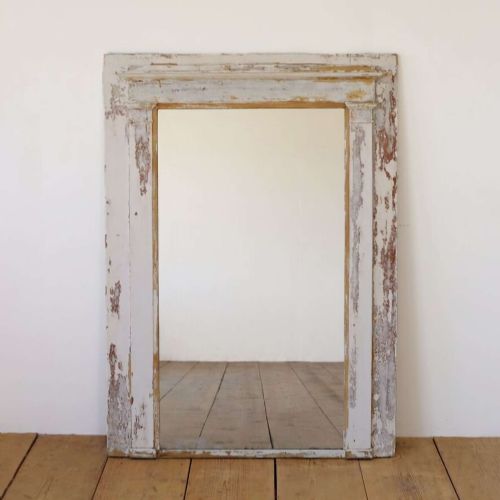
Originating largely from nineteenth-century workshops in France and England, these mirrors often show original painted surfaces with varying degrees of distress accumulated over decades of domestic use.
Materials and construction methods
Makers shaped the frames from solid wood, frequently applying a layer of gesso to build up high-relief scrolls, floral crests, and classical motifs before painting. This composition allowed carvers to achieve crisp architectural lines and organic curves.
Surfaces were finished with layers of white or creamy paint, sometimes combined with gold leaf or dark gilt highlights on raised edges. Overcoat applications of over-paint or ageing techniques developed the weathered patinas seen on surviving examples.
Mirror glass was set into the frame rabbet from the rear, secured with wooden backing boards that protected the silvered reflective plate from moisture and dust.
Some nineteenth-century mirrors retain traces of old household ledgers pasted to their timber backs.
Distinctions in craftsmanship and survival
The distinction between standard execution and finer work lies in the depth and execution of the carved wood and gesso ornament. Superior examples display sharply defined moulding, balanced proportions, and integrated structural joinery that prevents warping.
The integrity of the painted surface significantly influences character, distinguishing unrestored original paint layers with natural craquelure from heavy modern repainting. Original silvered mirror plates with foxing and light oxidation offer greater historical resonance than later replacements.
The White French Mirror Glossary
- Gesso
- A plaster-like mixture applied to wood frames to create a smooth surface for carving and gilding. It allows artisans to shape intricate relief ornamentation.
- Trumeau
- A decorative wall mirror combined with a painted panel or oil painting above the glass. These were designed to fit neatly between windows or above fireplaces.
- Louis Philippe
- A mid-nineteenth-century French style characterised by simple arched tops and restrained neoclassical ornamentation. It avoids the heavy extravagance of earlier Rococo revivals.
- Parcel Gilt
- A finishing technique where portions of an object are highlighted with gold leaf while the main body remains painted. This creates contrast against the white ground.
- Foxing
- The speckled brown spots and age-related oxidation appearing within mirror glass. It marks the gradual degradation of the silver backing over time.
White French Mirror: Frequently Asked Questions
How do I hang a heavy overmantel mirror?
Heavy nineteenth-century mirrors require secure installation directly into wall studs or masonry using heavy-duty brackets suited to the weight of the wood and glass.
Professional hanging ensures the frame load distributes evenly, protecting the structural joints of the antique frame.
Are the mirror plates original?
Many surviving pieces retain their original glass, which often exhibits light foxing, minor pitting, and subtle distortions characteristic of older manufacturing methods.
Replacement glass appears clearer and lacks the characteristic surface variation found on period plates.
How should I clean the painted frame?
Dust the carved gesso and painted wooden surfaces gently with a soft dry brush to avoid disturbing fragile or crackled paint layers.
Avoid liquid cleaners and harsh chemicals, which can strip historic paint finishes or soften the underlying gesso.
What defines a Louis Philippe mirror?
Louis Philippe mirrors feature a distinctive rounded upper arch combined with clean frame borders and minimal decorative carving.
This aesthetic emerged in France during the mid-nineteenth century as a simpler alternative to ornate revival styles.