
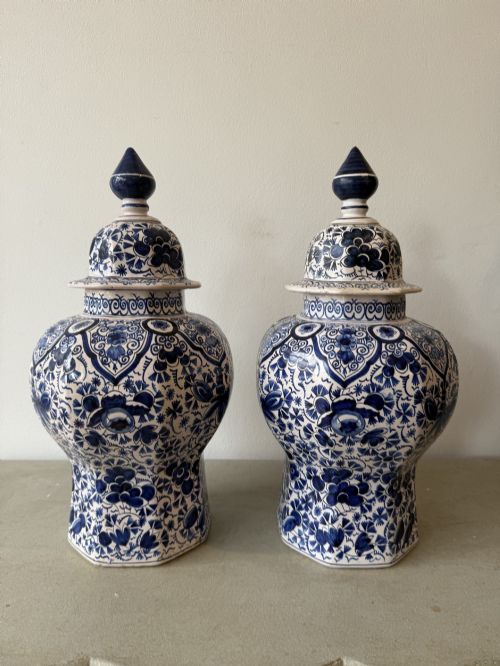


White Earthenware Urns
White earthenware urns are classic ceramic vessels shaped with classical grace, combining utility and ornament to anchor a mantelpiece or cabinet.
White Earthenware Urns
White earthenware urns span periods from the eighteenth century to the early twentieth century, taking the form of lidded jars, garden planters, and decorative vases. These vessels derive largely from traditional European potteries producing tin-glazed earthenware, faience, and delftware in distinct regional styles.
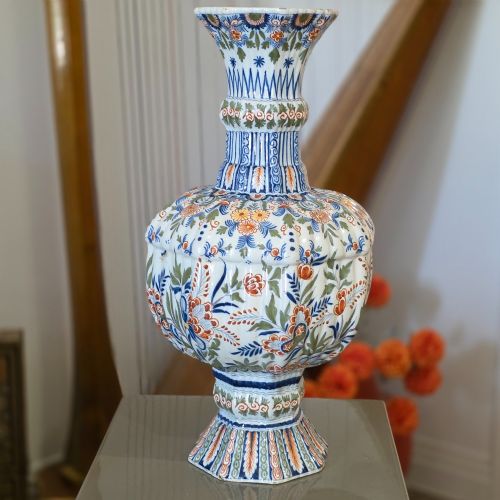
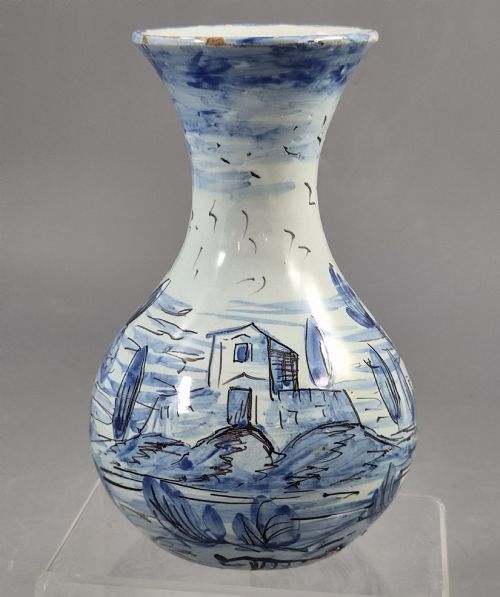
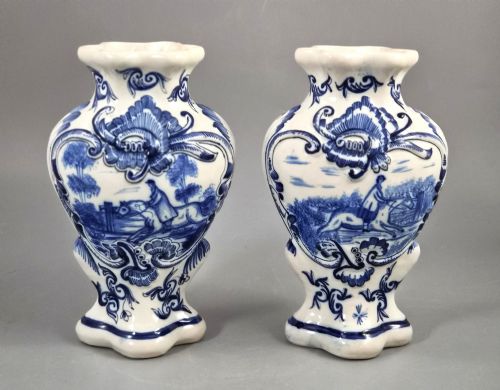
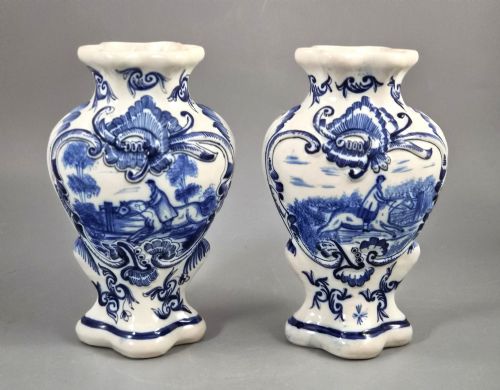
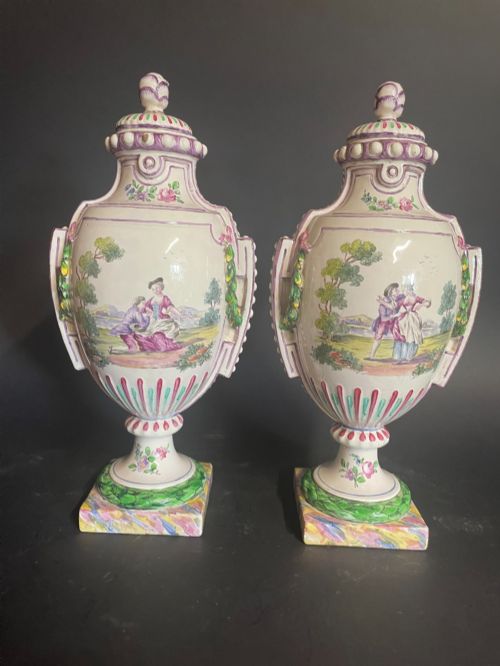
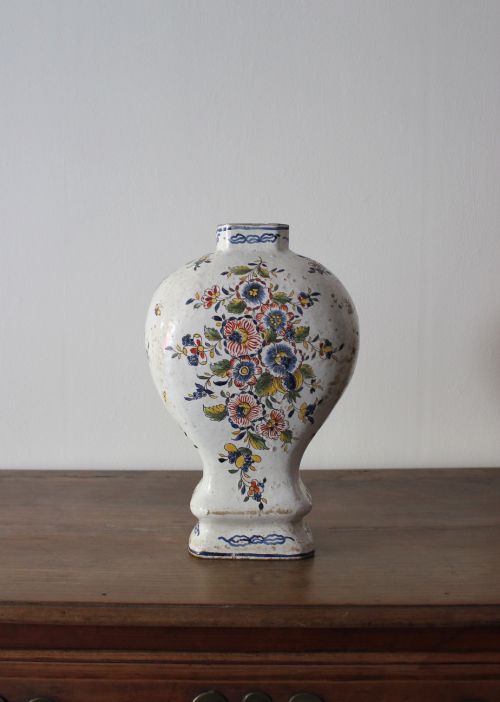
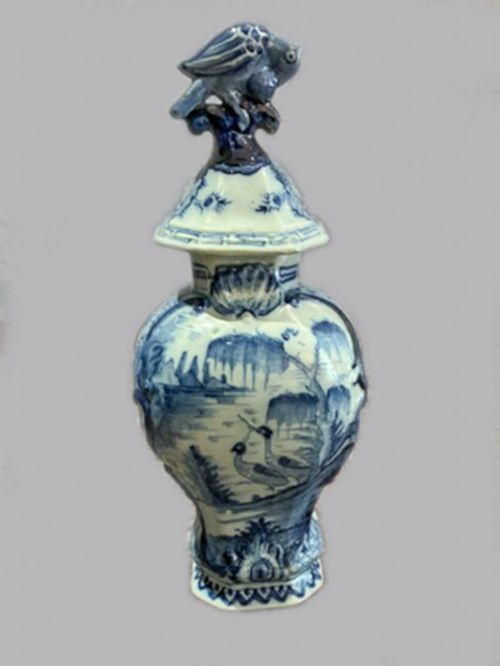
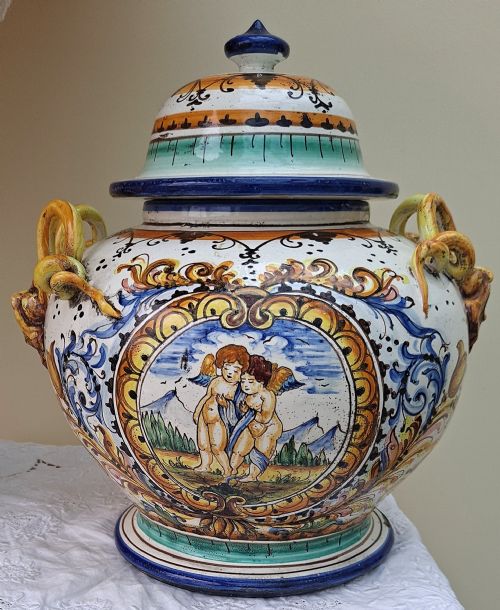
The pieces on this page are most commonly encountered as blue and white delftware or French faience, originating from workshops in Holland, France, and Italy. Collectors find both baluster vases and twin-handled garden urns among the varied forms represented.
Makers ranged from historic Dutch potteries to nineteenth-century French firms like Fourmaintraux-Courquin at Desvres, alongside Italian workshops producing maiolica. Their functions extended from decorative display to practical containers for tobacco and cut flowers.
How they were made
Makers shaped white earthenware bodies on the potter's wheel or cast them in moulds, creating sturdy vessels ready for glazing. Artisans then applied tin-glaze or faience coatings to provide a smooth, opaque white ground for painted decoration.
Painting was executed by hand using cobalt blue, manganese, and polychrome pigments, often depicting floral motifs, birds, and Chinoiserie scenes. Firing in kilns fused the glaze and pigments to the earthenware body, producing a durable finish.
Some lidded jars doubled as tobacco containers, keeping leaf moist while adding a cheerful splash of cobalt blue to the room.
What varies in quality
Quality rests in the crispness of the hand-painted decoration and the evenness of the tin-glaze coating across the earthenware body. Early eighteenth-century examples display fluid brushwork and subtle tonal depth that distinguish them from later industrial output.
The integrity of the form, especially in large pairs with matching lids and handles, determines the distinction of a piece. Well-preserved glazes without extensive restoration retain the visual clarity intended by the original potter.
Cantagalli·Fourmaintraux Courquin·Sceaux·Charlotte Rhead·Poole Pottery
The White Earthenware Urns Glossary
- Earthenware
- Porous pottery fired at relatively low temperatures, requiring a glaze to hold liquids. It forms the structural base for traditional delft and faience vessels.
- Tin-Glaze
- An opaque white glaze containing tin oxide applied to earthenware before firing. It creates the characteristic pale background used for hand-painted blue and white decoration.
- Faience
- European tin-glazed earthenware, particularly associated with French and Italian production. The term encompasses decorative vases, urns, and jars finished with painted tin glazes.
- Maiolica
- Italian tin-glazed pottery noted for bright colours and intricate narrative or ornamental painting. Pieces often emulate Renaissance styles or regional traditions.
- Baluster
- A tapering vase form with a rounded body and a narrow neck resembling an architectural column support. This shape appears frequently among large decorative urns.
White Earthenware Urns: Frequently Asked Questions
How do I care for my white earthenware urns?
Keep these ceramic vessels away from direct, prolonged sunlight to protect painted pigments from fading. Dust them gently with a dry, soft cloth and avoid submerging older pieces in water.
Place urns on stable surfaces away from high-traffic edges where lids or handles might suffer accidental impacts. If using them for fresh flowers, insert a small glass container inside rather than pouring water directly into antique earthenware.
Were these urns used outdoors?
While garden urns and planters were designed to withstand outdoor conditions in sheltered courtyards, tin-glazed earthenware remains susceptible to frost damage. Freezing temperatures can cause porous earthenware bodies and glazes to crack.
Most decorative vases and lidded jars served strictly as interior display items for parlours and cabinets. Owners typically kept them on mantelpieces, side tables, or within glazed furniture.
How do I distinguish eighteenth-century pieces?
Eighteenth-century examples generally exhibit hand-thrown potting marks, slight asymmetries, and subtle variations in the tin-glaze surface. The cobalt painting tends to show soft edges where pigments sink slightly into the unfired glaze layer.
Later nineteenth-century revivals often feature more uniform moulding and standardised dimensions. Examining the base and interior reveals manufacturing techniques typical of specific historical periods.
What is the difference between delft and faience?
Delft specifically refers to tin-glazed earthenware produced in the Netherlands, famous for imitating Chinese porcelain during the seventeenth and eighteenth centuries. The term embraces both blue and white and polychrome colour palettes.
Faience is the broader French and European term for similar tin-glazed pottery traditions. French workshops at places like Desvres adopted these techniques to create large decorative urns and pairs of vases.