


White Delftware Plates
White delftware plates are tin-glazed earthenware dishes spanning the seventeenth and eighteenth centuries, valued for their painted surfaces and historic domestic forms.
White Delftware Plates
White delftware plates encompass chargers, shallow bowls and dishes produced across England, Holland and continental Europe during the seventeenth and eighteenth centuries.
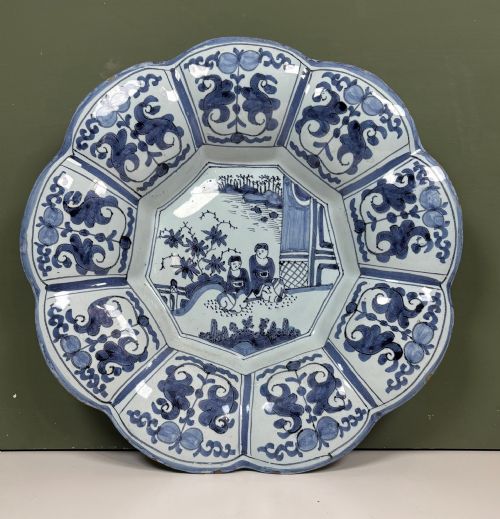
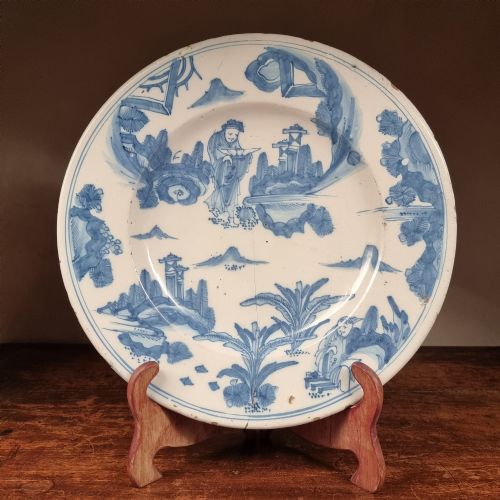
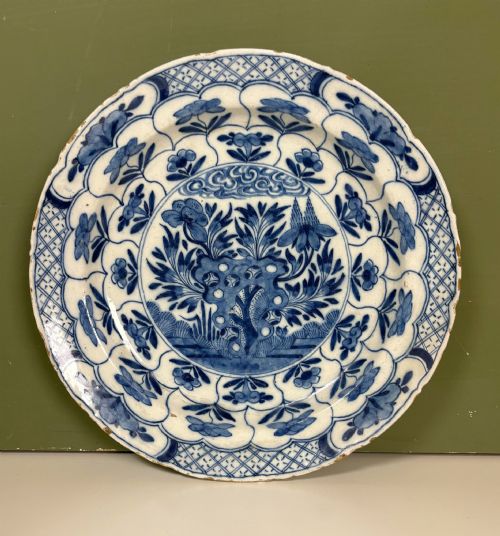
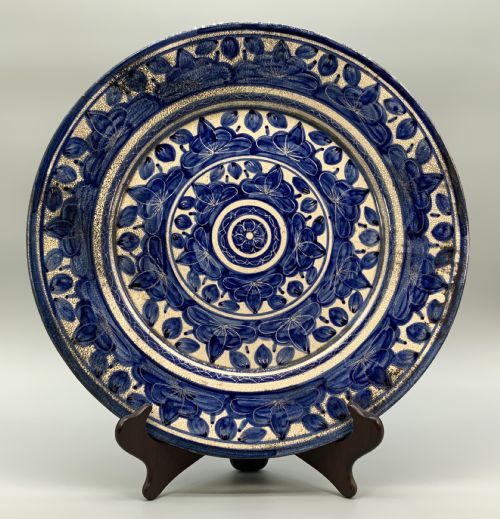
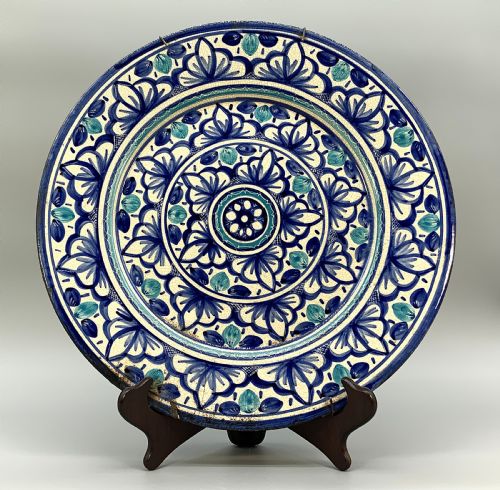
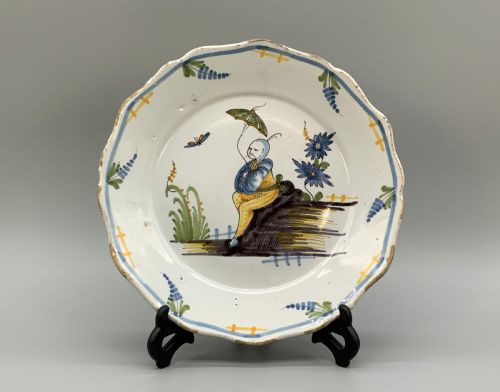
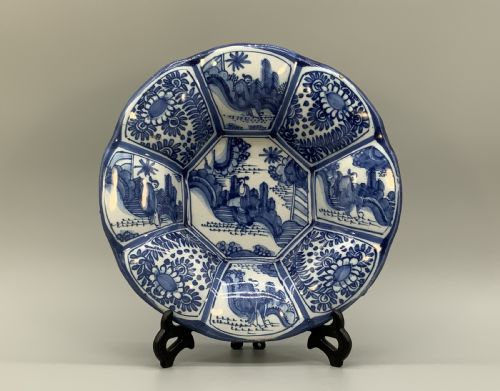
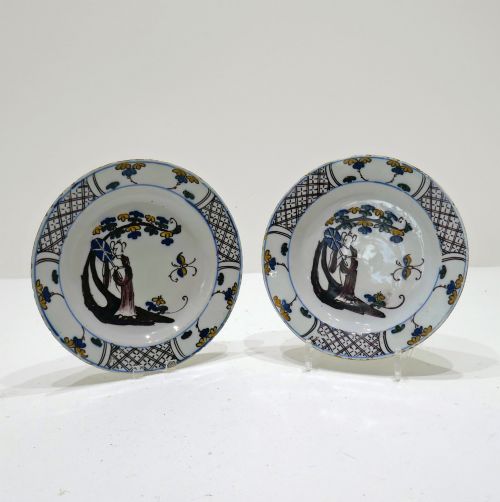
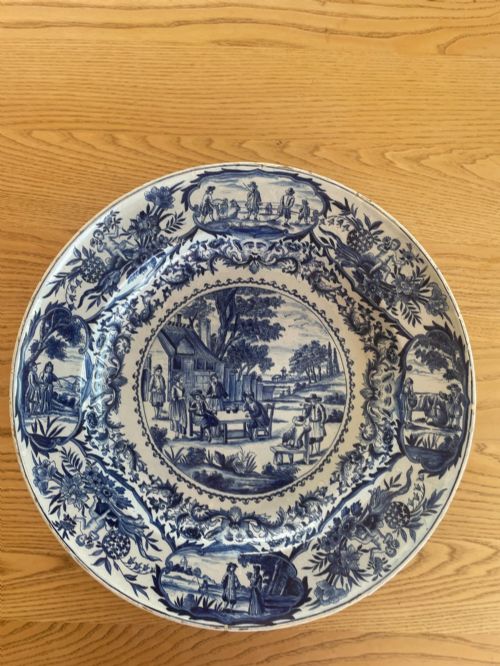
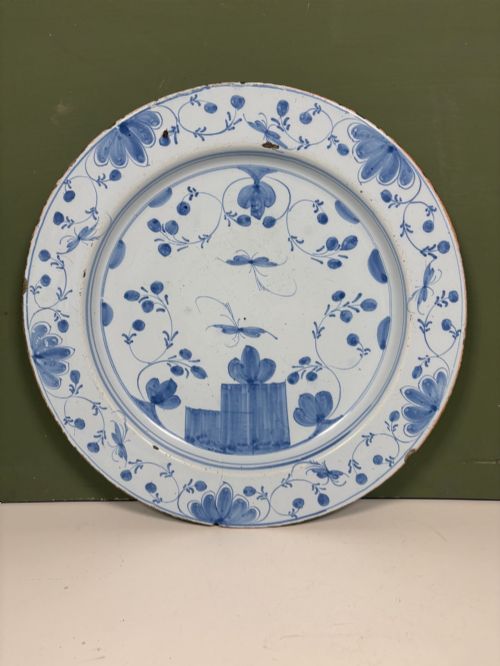
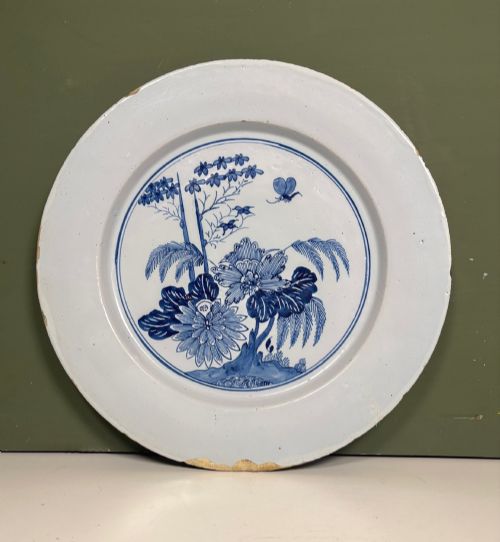
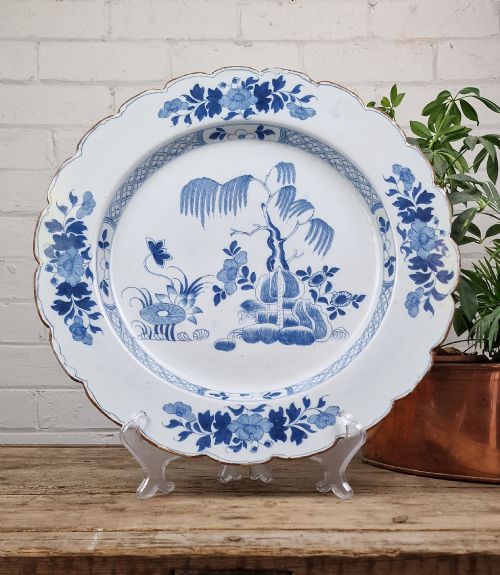
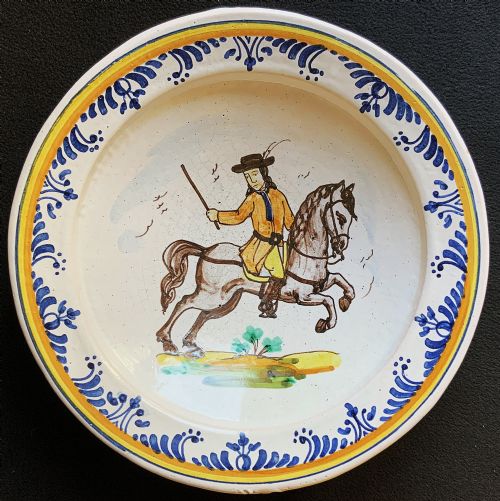
The most common examples on this page are eighteenth-century chargers and plates featuring blue and white or polychrome pigments on an opaque tin glaze.
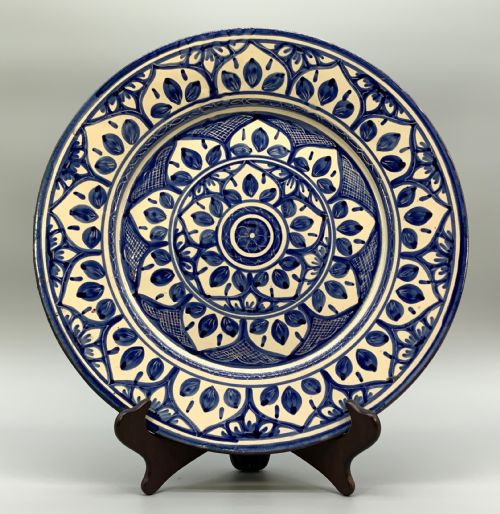
Makers utilised earthenware bodies to shape large decorative plates and platters influenced by styles such as Dutch Baroque, Georgian Chinoiserie and Moorish Revival.
How they were made
Potters formed earthenware clay into plates and chargers before firing the pieces to create a sturdy ceramic base.
Artisans coated the fired earthenware in a white tin glaze, which provided an opaque surface for subsequent painting.
Painters applied cobalt oxide, manganese and yellow pigments directly onto the porous glaze before a final kiln firing fused the colours.
The listings span the seventeenth, eighteenth, nineteenth and twentieth centuries, using earthenware bodies and tin-glaze techniques.
What varies in quality
The precision of the painted decoration separates finer plates from simpler wares, with spirited brushwork in cobalt pigment marking out superior examples.
The smoothness and opacity of the tin glaze determine the visual success of the surface, as uneven coverage alters the background tone.
The scale and weight of the earthenware body dictate the presence of a charger, where larger diameters require greater skill to fire without distortion.
Lambeth·Bristol
The White Delftware Plates Glossary
- Tin-Glaze
- A ceramic glaze made opaque by the addition of tin oxide, creating a white background for painted decoration. This coating defines the primary surface of delftware.
- Charger
- A large decorative plate intended for display on a wall or dresser rather than everyday dining. These sizeable pieces often measure over thirty centimetres in diameter.
- Polychrome
- A style of decoration utilising multiple colours rather than a single pigment. On these plates, colours typically include manganese, yellow and blue.
- Chinoiserie
- European interpretations of Chinese artistic motifs, popular on eighteenth-century ceramic plates. These designs frequently depict imaginative landscapes and figures.
- Earthenware
- Porous pottery fired at lower temperatures than stoneware or porcelain. It serves as the foundational ceramic body for tin-glazed wares.
White Delftware Plates: Frequently Asked Questions
How were delftware chargers used?
These large dishes served primarily as decorative table centrepieces or wall displays in historic domestic interiors.
Their substantial size and painted surfaces made them status objects rather than functional dining plates.
How do I identify eighteenth-century pieces?
Examination of the earthenware body, tin glaze characteristics and painting style helps determine the period of manufacture.
Eighteenth-century examples often display specific regional traits associated with English and Dutch kilns.
Can I hang these plates on the wall?
Many chargers were made with display in mind and feature traditional forms suited to upright placement.
Careful mounting using padded wire hangers ensures the historic ceramic body remains secure.
What is the difference between delft and faience?
Both terms describe tin-glazed earthenware, with delft traditionally applied to Dutch and English wares and faience often used for continental European production.
The underlying ceramic technique and glaze composition remain fundamentally similar across these regional traditions.