
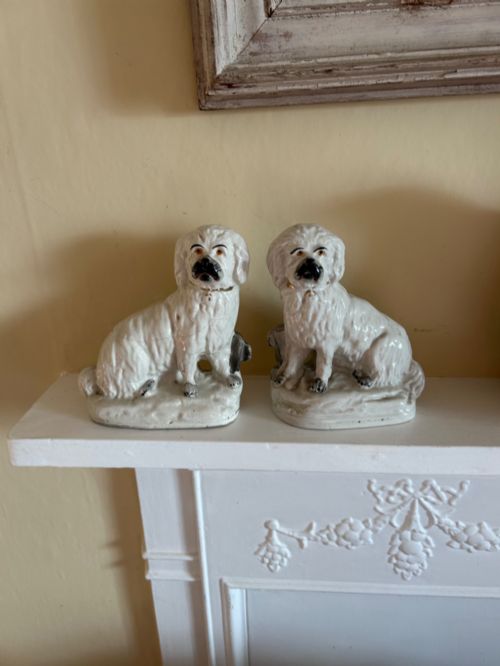


White Ceramic Spaniel Figurines
White ceramic spaniel figurines sit upon mantelpieces as traditional pairs, bringing nineteenth-century hearthside comfort to the room.
White Ceramic Spaniel Figurines
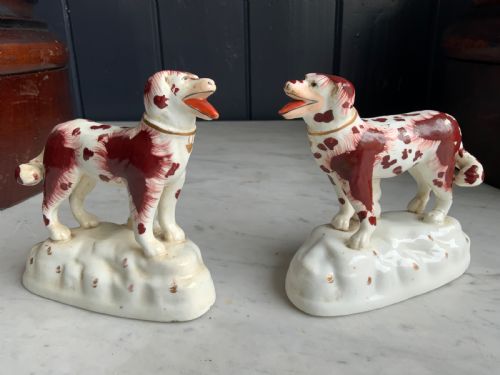
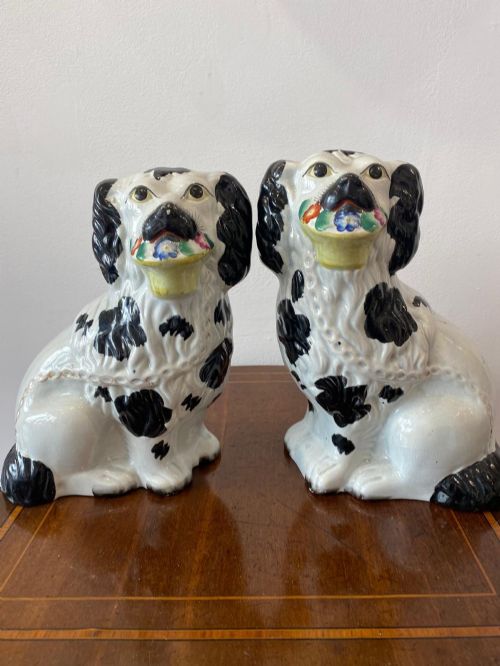
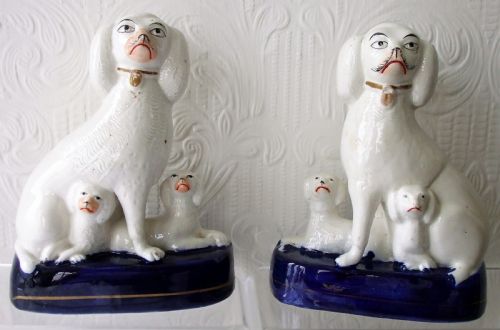
White ceramic spaniel figurines most commonly appear on this page as nineteenth-century pairs, representing the Staffordshire dogs that sat upon Victorian mantelpieces. These figures take the form of seated spaniels, often called comforter spaniels, alongside occasional poodles, Maltese terriers, and dogs with pups.
The objects span periods from the Regency era through to the mid twentieth century, with the Victorian decades supplying the bulk of the earthenware and porcelain examples. Makers also produced variations including clock groups, musician figures with dogs, and pieces decorated with blue cushions and encrusting.
Moulded ceramic figures serve primarily as decorative objects rather than working items, designed to face each other from opposite ends of a fireplace. Their presence marks a continuation of English traditional pottery traditions from Staffordshire potteries and later factories.
How they were made
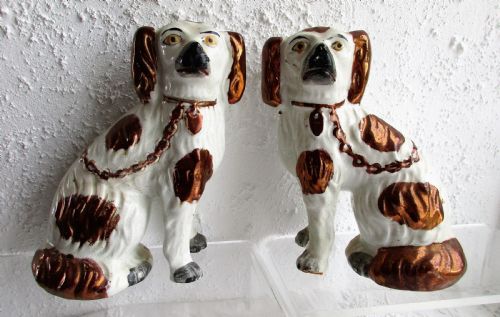
Potters shaped these figures from earthenware and porcelain using moulds, applying lead glaze to seal the body before firing in kilns. Many examples receive hand-painted details in enamel, copper lustre, or black and white pigments.
Painters added finishing touches using gold leaf and gilt highlights, particularly on collars, chains, and lockets. Certain Victorian pieces incorporate applied ceramic encrusting to simulate texture on cushions and fur.
Listings feature Victorian earthenware and Regency porcelain alongside twentieth-century ceramics.
What varies in quality
Quality rests upon the crispness of the moulding and the control evident in the hand-painted facial expressions, eyes, and gilt details. Softer moulding lines and muddy enamel application separate standard decorative production from finer collector pieces.
Scale and completeness influence the standing of a pair, particularly when dealing with large nineteenth-century examples or matched groups complete with puppies and clock housings. The survival of clean white glaze without excessive crazing or firing faults marks the better specimens.
Royal Doulton·Beswick
The White Ceramic Spaniel Figurines Glossary
- Comforter spaniel
- A ceramic figurine modelled on the toy spaniels kept by Victorian nobility, intended to sit on hearths. These dogs traditionally face left and right in pairs.
- Earthenware
- A porous ceramic body fired at lower temperatures, commonly used for nineteenth-century Staffordshire figures before glazing. It forms the base fabric for most pieces on this page.
- Lead glaze
- A glossy coating containing lead oxide applied to ceramics to create a smooth, shiny finish upon firing. It gives these nineteenth-century figures their characteristic reflective sheen.
- Enamel
- Opaque coloured glass fused to the ceramic surface during a secondary low-temperature firing. Painters utilise enamel for the distinct patches, collars, and facial markings on the spaniels.
- Copper lustre
- A metallic glaze application that produces a reflective, coppery sheen across the ceramic surface. This technique appears on specific Staffordshire dog pairs from the mid nineteenth century.
White Ceramic Spaniel Figurines: Frequently Asked Questions
What are comforter spaniels?
Comforter spaniels are nineteenth-century ceramic figures modelled after the small pet dogs favoured in Victorian parlours. Potters designed them to sit on mantelpieces, keeping watch over the hearth.
Pairs of these dogs traditionally face inward toward each other. They earned their name from the comfort the real animals brought to their owners.
Why do they come in pairs?
Staffordshire spaniels were specifically manufactured as left-facing and right-facing pairs to balance a mantelpiece. Placing them at either end of a fireplace was a standard Victorian interior arrangement.
Single dogs occasionally appear due to separation over the decades, but matched pairs remain the traditional format. Each dog mirrors the posture and decorative details of its companion.
How should I clean my figurine?
Dusting with a soft, dry brush removes surface particles safely without risking the antique glaze or enamel painted details. Avoid harsh cleaning solutions or soaking, which can damage nineteenth-century earthenware.
Gentle care preserves the fragile gold leaf and gilt highlights found on collars and lockets. Regular light maintenance keeps the ceramic finish stable over time.