


Staffordshire Pottery Dog
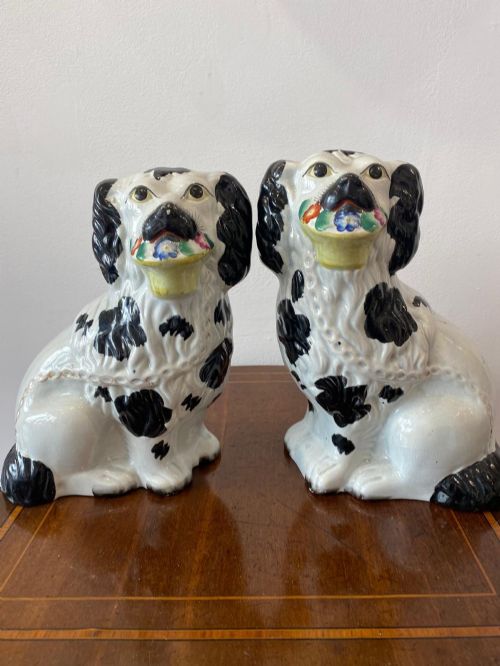
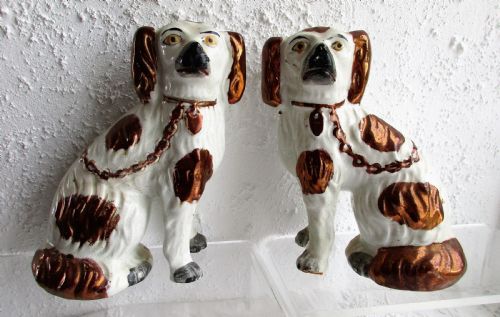
Staffordshire pottery dog figures are quintessential Victorian chimney ornaments modelled as spaniels, poodles and pugs that bring quintessential hearthside character to any room.
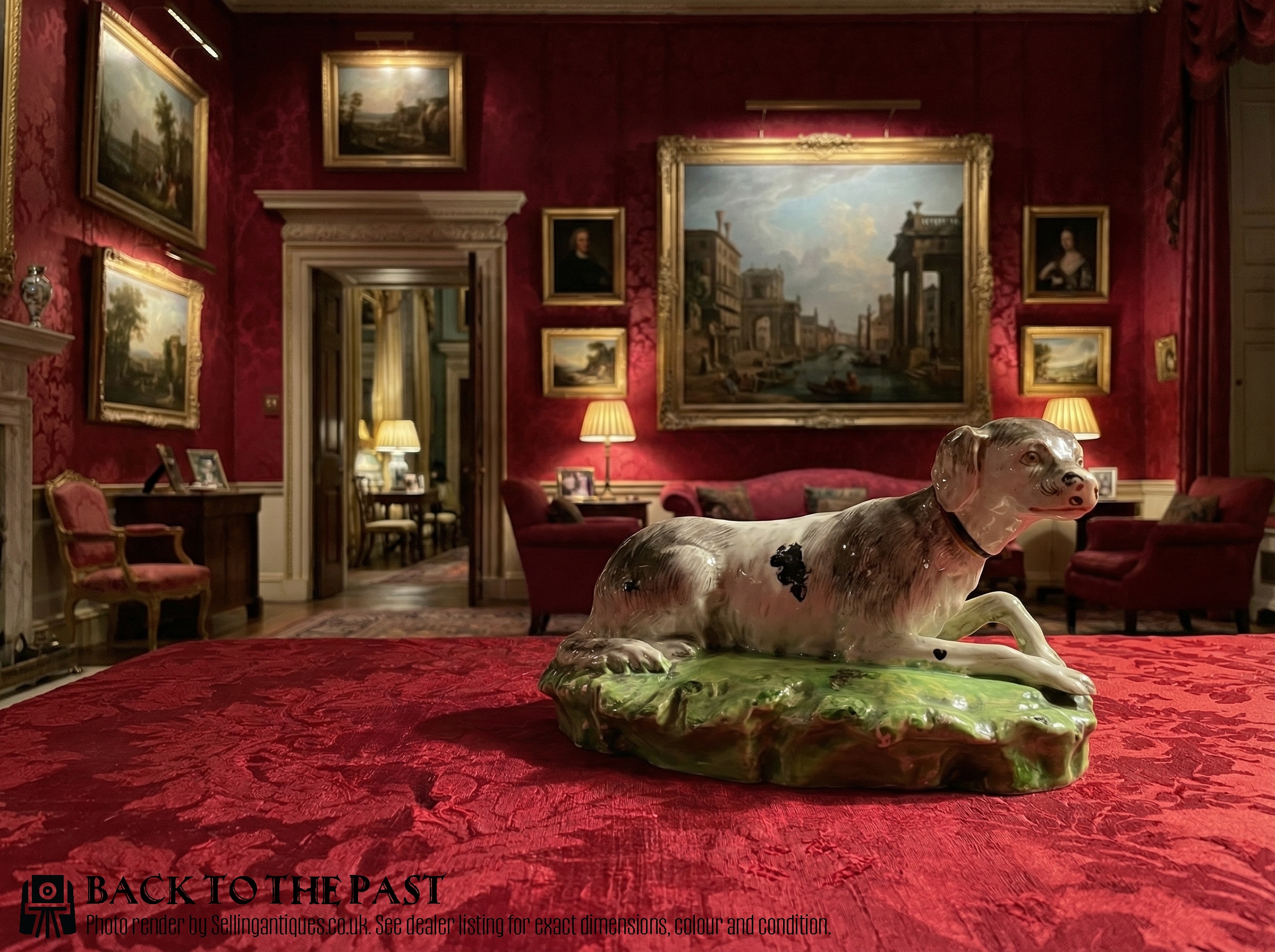
Staffordshire Pottery Dog Types and Forms
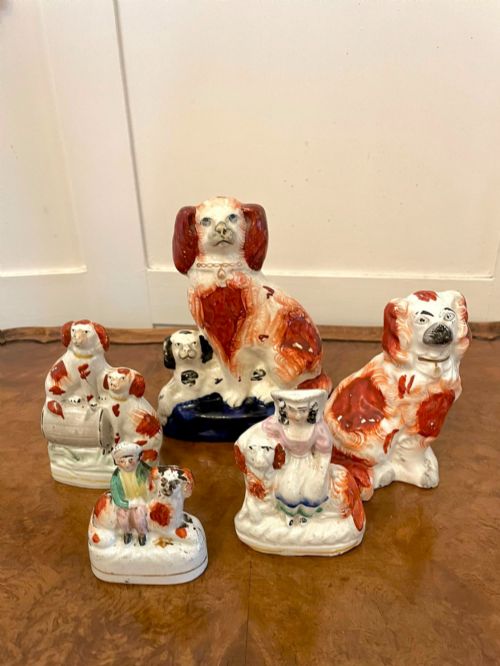
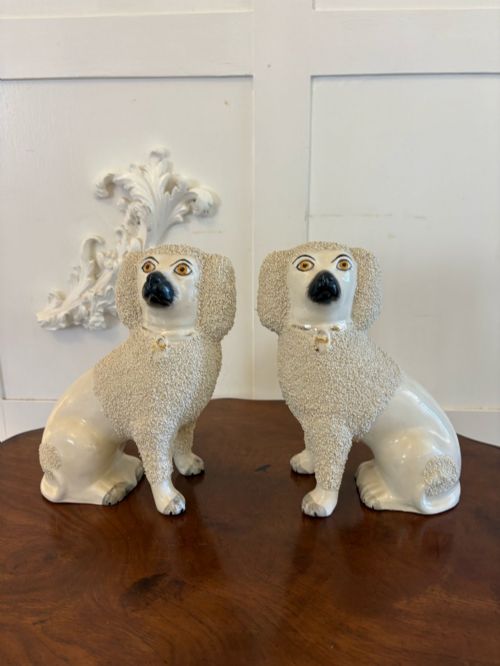
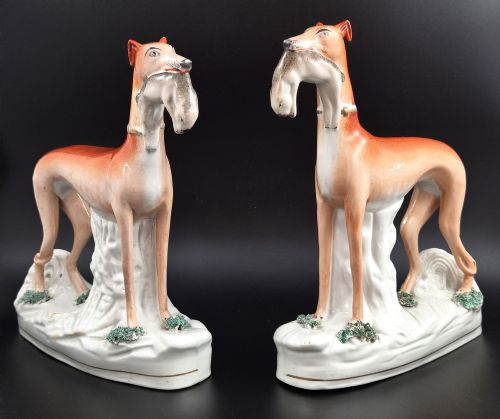
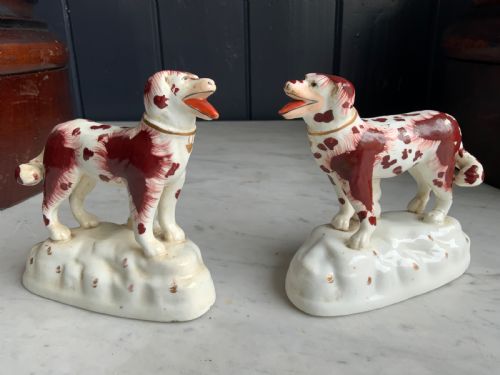
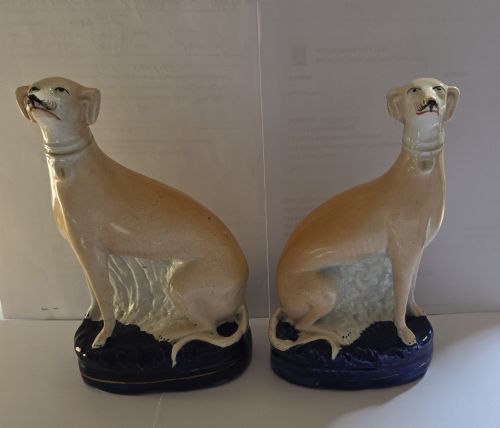
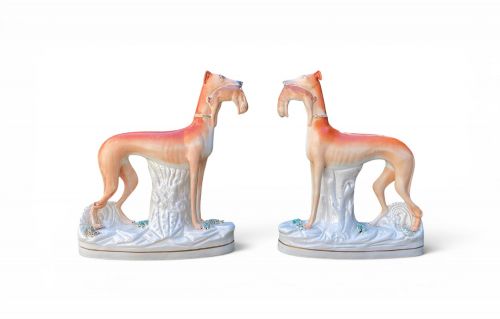
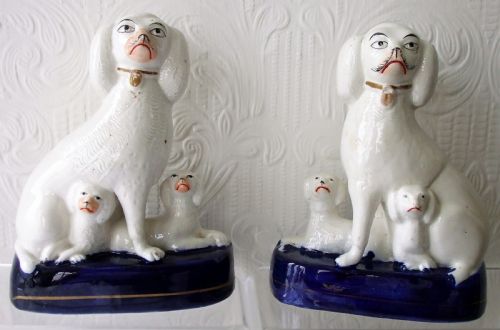
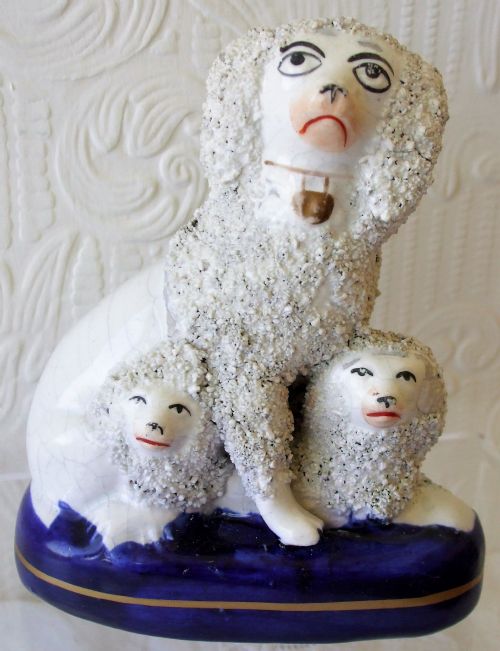
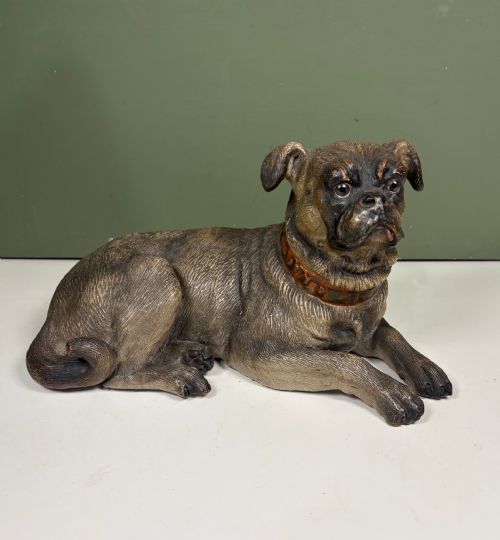
When you search for staffordshire pottery dog, you encounter a varied menagerie of ceramic companions created primarily during the nineteenth century. The selection spans domestic favourites including comforter spaniels, poodles with textured coats, pugs with glass eyes, and hunting dogs such as setters and greyhounds.
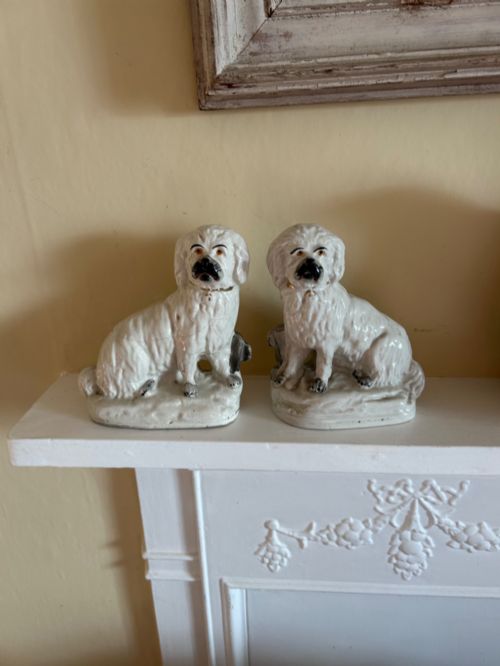
Many examples survive as pairs designed to sit facing one another on either end of a mantelpiece or fireplace. Figures range from small shelf ornaments to large fireside guards, occasionally incorporating spill vases or taking the form of jugs and figural groups.
Assessing Quality and Character
Completeness as an original pair and the survival of secondary elements like separate legs or gilded collars significantly influence the standing of a piece. Early specimens exhibit weight and depth in the ceramic body that reflect skilled nineteenth-century workshop production.
Some poodles sport actual glass eyes to gaze back at you from the mantelpiece.
Enoch Wood factory·Boness Pottery
The Staffordshire Pottery Dog Glossary
- Earthenware
- Porous pottery fired at a lower temperature than stoneware or porcelain. It forms the standard ceramic body for nineteenth-century figures.
- Spill Vase
- A hollow vertical cylinder incorporated behind the figure to hold wooden spills for lighting fires. These combine utility with decorative modelling.
- Confetti
- Crushed or shredded clay applied to the surface of poodle figures to imitate textured fur. It creates a distinct tactile finish.
- Wally Dog
- A traditional colloquial name for Staffordshire pottery spaniels placed on mantelpieces. The term stems from Scottish vernacular for ceramic ornaments.
Frequently Asked Questions
How were they displayed?
Victorian households traditionally placed pairs of spaniels on either end of the fireplace mantelpiece. They faced inward toward each other, guarding the hearth.
Larger versions stood directly on the floor beside the fireplace as fireside ornaments.
How do I identify a Victorian piece?
Nineteenth-century examples feature heavier earthenware bodies, hand-painted enamel details, and characteristic crazing in the glaze over time. Subtle variations in the brushwork indicate individual hand decoration.
Earlier models often show distinct moulding traits such as separate front legs or textured clay fur rather than smooth painted surfaces.
What breeds are most common?
Spaniels, frequently known as comforter dogs, appear most frequently in pairs with black and white or red markings. Poodles with textured coats and pugs with glass eyes also form a large portion of surviving figures.
Sporting dogs like setters, greyhounds, and hunting hounds appear less commonly as standalone figures or part of spill vases.