


White Ceramic Dog Pair
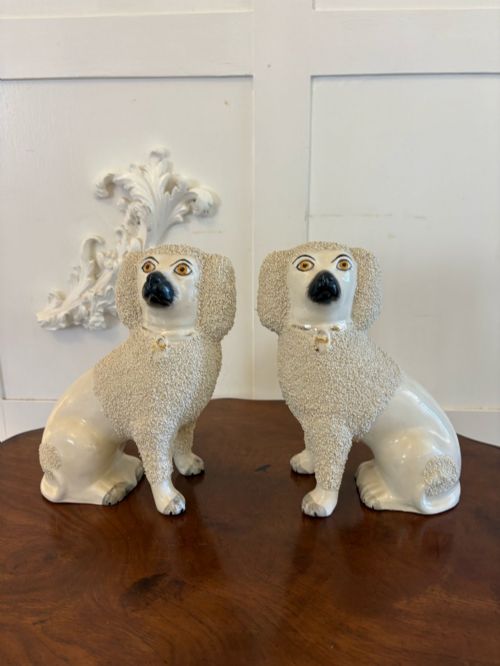
These white ceramic dog pair figures bring mantelpiece symmetry and traditional charm to a room.
White Ceramic Dog Pair
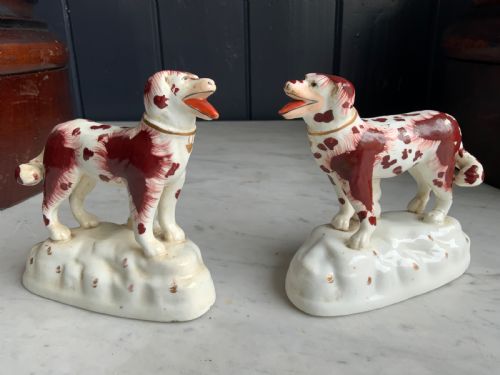
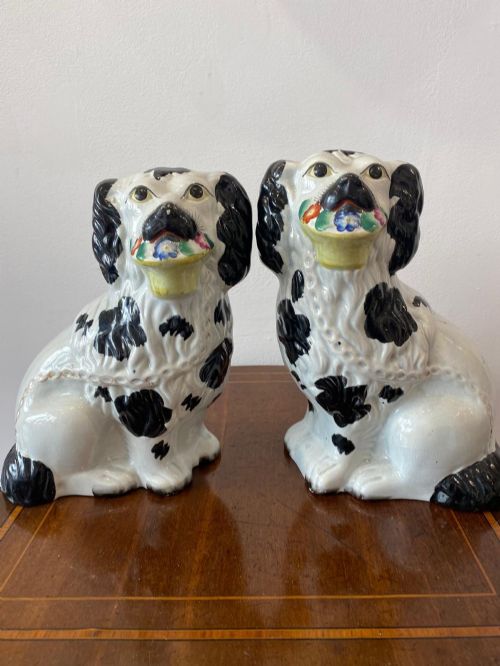
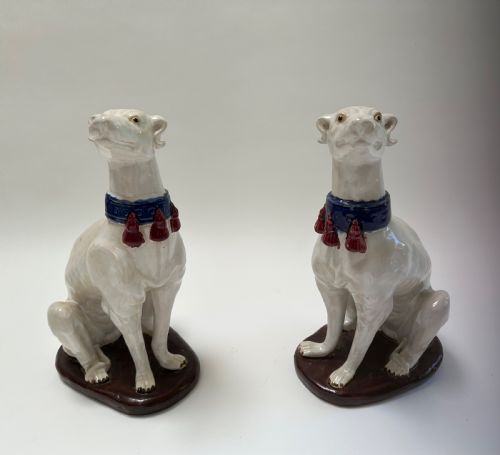
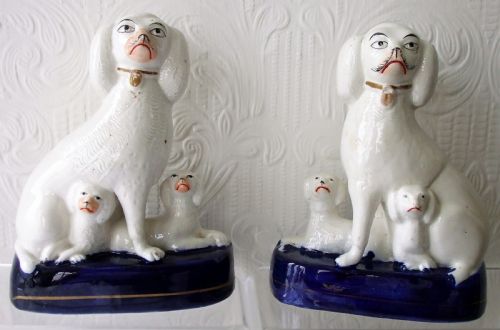
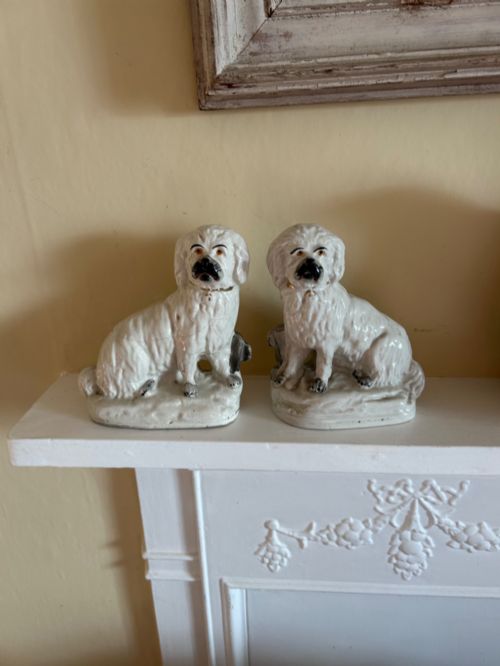
A white ceramic dog pair consists of matching mantelpiece figures modelled as spaniels, poodles, terriers, greyhounds, and dalmatians. These domestic animals appear singly or with pups, sometimes functioning as inkwells or quill holders.
The most common examples on this page date from the Victorian period and the nineteenth century, originating from English potteries. Makers also produced Continental porcelain versions and Italian majolica interpretations.
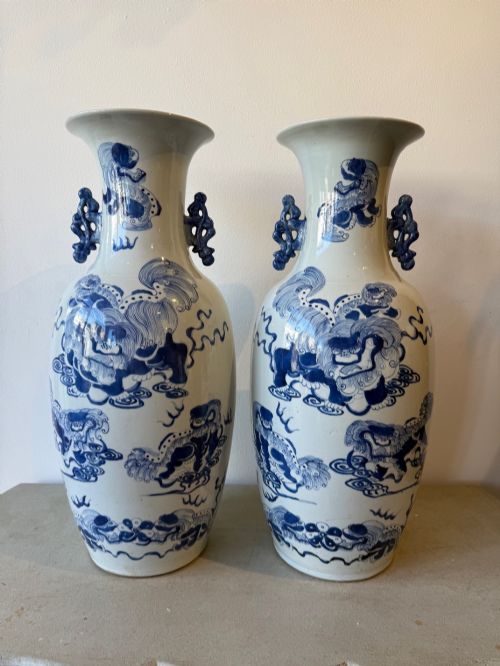
Beyond earthenware and porcelain, these ornamental pairs incorporate glaze, lead glaze, enamel, and gilt details. Collectors encounter pieces shaped in the English traditional manner alongside Chinese Qing style and Chinoiserie forms.
Materials and methods of manufacture
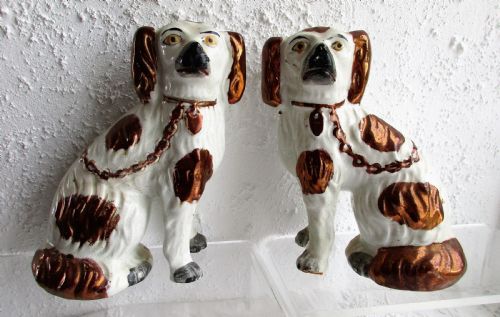
Potters shaped these earthenware and porcelain figures using local clays before applying lead glaze and enamel colours. Artisans added surface ornamentation including gold leaf, gilt highlights, and copper lustre.
Listings feature Victorian earthenware and porcelain pieces from the nineteenth century alongside Italian and Chinese styles.
Distinctions in quality and finish
Quality rests in the crispness of the modelling, particularly in the rendering of facial expressions, paws, and textured fur. Softer details and blurred enamel painting indicate lower grade production.
The application of gilt and enamel decoration creates visual separation, with carefully brushed touches outlasting mass-applied colour. Miniature examples and those with functional elements like inkwells show finer execution.
Thomas Parr·Wooley
The White Ceramic Dog Pair Glossary
- Earthenware
- A porous pottery fired at lower temperatures, commonly used for nineteenth-century Staffordshire figures. It requires a glaze to become impermeable to liquids.
- Lead glaze
- A glossy coating containing lead oxide applied to pottery before firing. It gives earthenware a smooth, shiny finish.
- Enamel
- Opaque glass fused to ceramic surfaces during firing. It provides the bright red, black, and copper colours on these figures.
- Majolica
- Tin-glazed earthenware decorated with brightly coloured metal oxides. This technique appears on Italian revival pieces.
White Ceramic Dog Pair: Frequently Asked Questions
Where were these dog figures displayed?
Victorian households placed these pairs on mantelpieces, often flanking a clock or placed at either end of a shelf.
Owners also set smaller versions on writing desks when the figures incorporated inkwells or quill holders.
How do I identify nineteenth-century pieces?
Nineteenth-century examples show hand-painted enamel details and heavier earthenware bodies typical of Staffordshire production.
Earlier models often feature simple vertical vent holes underneath and minimal markings compared to later factory output.
What dog breeds are represented?
Staffordshire potters most frequently modelled spaniels, known as comforter spaniels, alongside poodles, greyhounds, and dalmatians.
Terriers and Maltese dogs also appear less commonly, occasionally accompanied by small pups.
Are all these figures made in England?
While the majority originate from English potteries, the selection includes Continental porcelain and Italian majolica.
Asian influences appear in Chinese Qing style figures and blanc de chine lamp adaptations.