





White and Red Vases
White and red vases bring striking contrast into a room, spanning centuries of porcelain, glass, and ironstone craftsmanship.
White and Red Vases
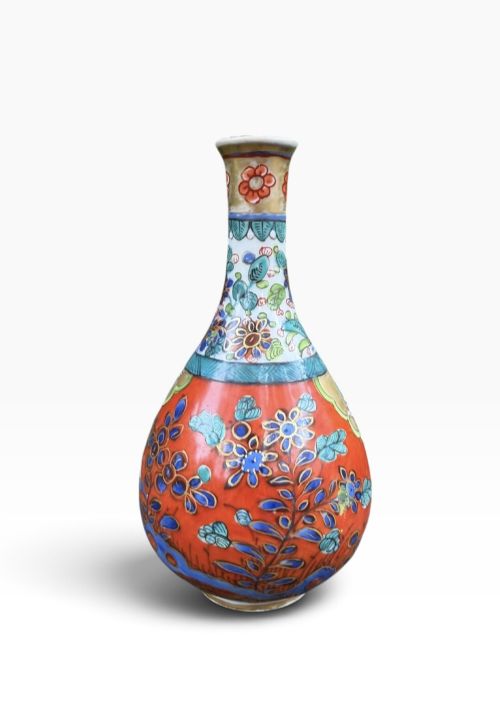
White and red vases encompass a rich variety of historic decorative pieces, drawing primarily from 17th, 18th, and 19th-century ceramic and glass traditions. You will most frequently encounter Japanese Imari wares and Victorian cranberry glass examples on this page, alongside Chinese export porcelain and English ironstone.
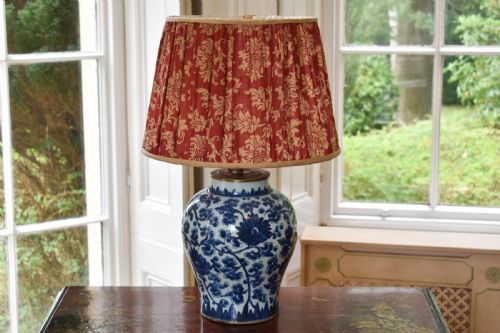
Forms range from lidded ginger jars and garlic-mouth vessels to slender spill holders and converted table lamps. Makers employed contrasting palettes of crisp white surfaces paired with vibrant iron red, underglaze blue, or ruby glass overlays to create dynamic visual impact.
Assessing quality and execution
Quality rests upon the precision of the hand-painting, the clarity of the glaze, and the crispness of the moulded form. Superior examples display confident, fluid brushwork in the red enamel and cobalt underglaze, with well-balanced proportions and minimal kiln blemishes.
The depth and consistency of colour mark the division between standard production and exceptional work, particularly in ruby glass overlays and multi-layered Imari patterns. Finer pieces retain intact gilding and well-defined decorative motifs that remain sharp upon close inspection.
White and Red Vases Retail Price Guide 2026
Typical asking prices for white and red vases among the pieces listed under this phrase on Sellingantiques today, from the lower quarter to the upper quarter. They describe what is for sale here now, not the wider market.
Listings span multiple centuries, uniting 17th-century Chinese Wucai jars, 18th-century Arita Imari porcelain, and 19th-century Victorian cranberry glass.
Kinrin Workshop·Masons Ironstone
The White and Red Vases Glossary
- Imari
- A style of Japanese porcelain originating in Arita, typically decorated in underglaze blue, iron red, and gold. These wares were heavily exported to Europe from the seventeenth century onward.
- Cranberry Glass
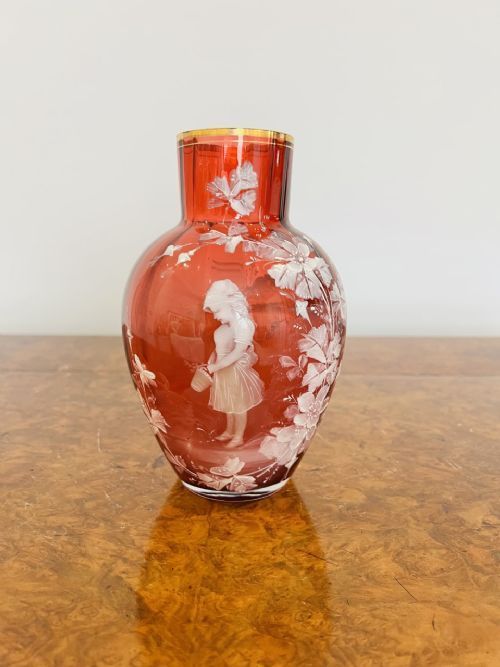
- A type of transparent red glass produced by adding gold chloride to the molten batch. It is frequently associated with Victorian decorative glassware.
- Mary Gregory
- A style of Victorian glass decoration featuring white enamel silhouettes of children or figures amidst foliage. The technique was widely applied to cranberry and tinted glass vessels.
- Wucai
- A Chinese porcelain decoration style meaning five colours, combining underglaze blue with contrasting overglaze enamels such as iron red and green.
White and Red Vases: Frequently Asked Questions
What is an Imari vase?
An Imari vase is a Japanese porcelain vessel decorated in a distinctive palette of iron red, cobalt blue, and gold. These pieces were produced primarily in Arita for both domestic use and export to Western markets.
The style dates back to the Edo period and remains celebrated for its rich patterning and vibrant contrast between the white porcelain body and the warm red tones.
How do I date antique red and white vases?
Dating relies on examining the characteristics of the ceramic body, glaze consistency, and painting style. Earlier pieces from the seventeenth and eighteenth centuries often show heavier potting and subtle variations in the iron red enamel.
Nineteenth-century examples, such as Victorian Staffordshire spill holders or Mary Gregory glass, exhibit different manufacturing signatures and mould seams that help pinpoint their era of production.
How were Mary Gregory vases used?
Mary Gregory vases served primarily as decorative chimney-piece ornaments in Victorian households. Their bright cranberry glass and white enamel figures added warmth and colour to nineteenth-century interiors.
While occasionally used for small fresh blooms, their primary function was aesthetic, designed to catch the light on mantelpieces and parlour tables.
Are these vases suitable for daily use?
Historic vases require careful handling due to their age and delicate painted surfaces. While ceramic and glass vessels can hold water, antique pieces with overglaze enamels or gold leaf are best kept away from harsh dishwashers and direct sunlight.
Displaying them securely on stable surfaces ensures they remain preserved for years to come without risking accidental damage.