

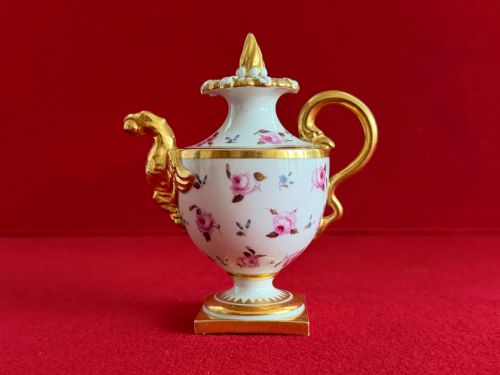
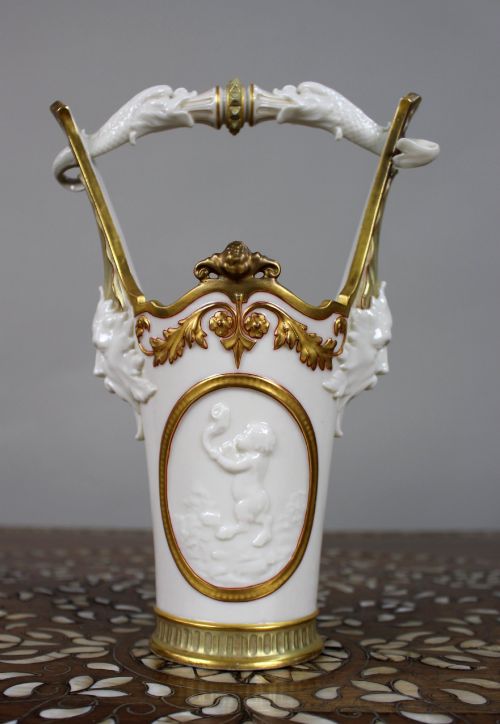


White and Gold Decorative Vases
White and gold decorative vases bring together crisp ceramics and rich gilding, offering striking visual contrast for any interior.
White and Gold Decorative Vases
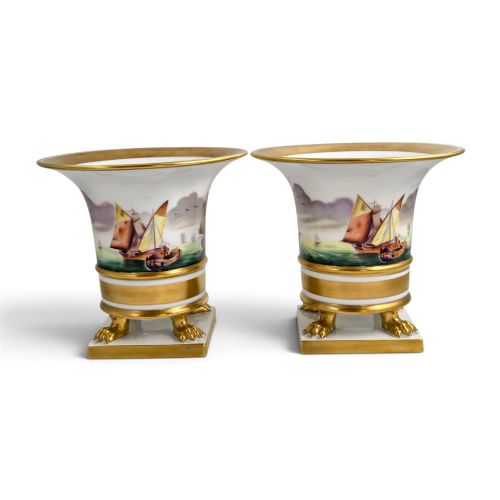
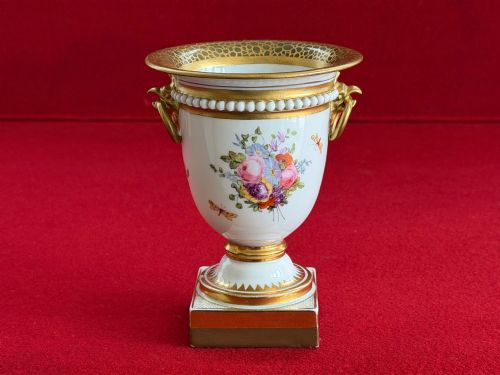
White and gold decorative vases encompass a range of ceramic forms from the nineteenth century onward, including spill vases, moon flasks, and grand exhibition urns. You will frequently encounter Regency porcelain pieces alongside Victorian works and later mid-twentieth-century designs.
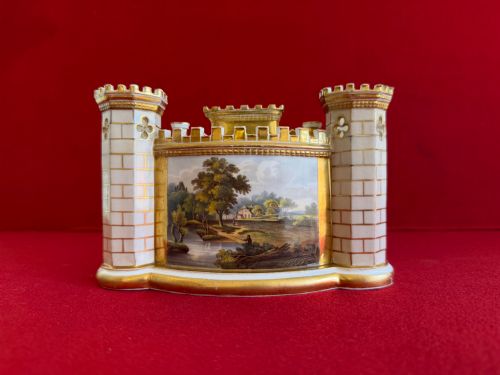
The selection ranges from English factories like Worcester and Royal Crown Derby to continental makers and Japanese Satsuma ware. Forms vary from simple castle spill vases to elaborate paw-foot vessels and hand-painted opaline glass pairings.
How they were made
Makers utilised hard-paste porcelain, earthenware, and ceramic bodies, shaping them into classical urns, flasks, and figurative vessels before applying initial glazes. These foundational white surfaces provided a clean canvas for subsequent decorative work.
Artisans then applied enamel paints and intricate gilding, using gold leaf or fine gilding techniques to highlight handles, rims, and pictorial scenes. Firing fixed the metallic details and colours to the ceramic body for lasting brilliance.
White and Gold Decorative Vases Retail Price Guide 2026
Typical asking prices for white and gold decorative vases among the pieces listed under this phrase on Sellingantiques today, from the lower quarter to the upper quarter. They describe what is for sale here now, not the wider market.
Listings feature porcelain, earthenware, and opaline materials spanning the Regency, Victorian, and mid-twentieth-century periods.
What varies in quality
Quality rests in the precision of the hand-painting and the crispness of the porcelain moulding, where skilled artists achieved finer detail on faces, florals, and architectural motifs. Superior pieces demonstrate confident brushwork and well-defined gilding that remains sharp across complex reliefs.
The reputation of the maker and the complexity of the form also dictate distinction within the range. Pieces bearing signatures from known artists or originating from esteemed factories command greater recognition for their artistic ambition.
Flight Barr and Barr·Royal Worcester·Royal Crown Derby·Baccarat·Herend
The White and Gold Decorative Vases Glossary
- Spill vase
- A tall, narrow vessel traditionally used to hold taper candles or spills for lighting fires. These examples often take architectural or cylindrical forms.
- Moon flask
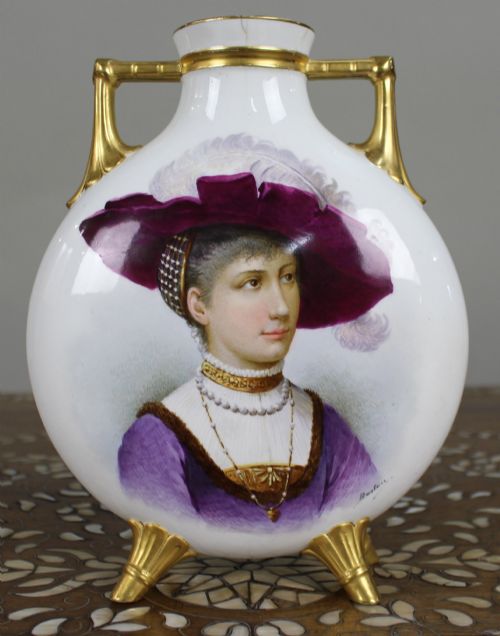
- A flat-bodied circular flask with a short neck and foot, frequently decorated with painted scenes on the wide sides. This form draws on ancient pilgrim flask traditions.
- Gilding
- The application of gold leaf, gold dust, or liquid gold paint to ceramic surfaces. It provides the metallic contrast characteristic of these pieces.
- Hard-paste porcelain
- A durable ceramic composition fired at high temperatures using kaolin and petuntse. It creates a dense, white body that accepts fine enamels and gilding securely.
White and Gold Decorative Vases: Frequently Asked Questions
How do I date an antique white and gold vase?
Dating relies on factory backstamps, ceramic body composition, and stylistic clues inherent to periods like the Regency or Late Victorian eras.
Examining the wear on the gilding and the style of hand-painting also helps narrow the decade of production.
Were these vases used for flowers?
Many larger urns and exhibition pieces served purely as decorative mantel or table ornaments rather than functional water vessels.
Smaller forms like spill vases and rose water sprinklers had specific domestic tasks, such as holding tapers or dispensing scented water.
What is the difference between porcelain and earthenware here?
Porcelain is fired at higher temperatures, resulting in a vitrified, non-porous white body that often feels harder and rings slightly when tapped.
Earthenware uses a more porous clay body that requires complete glazing to seal the material beneath the white surface and gold paint.