
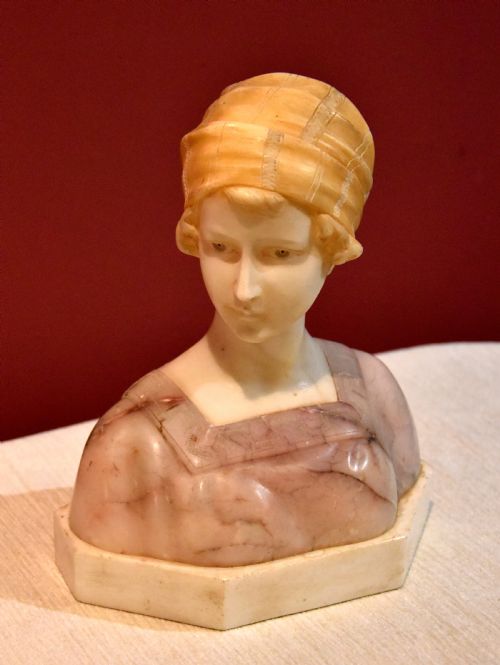
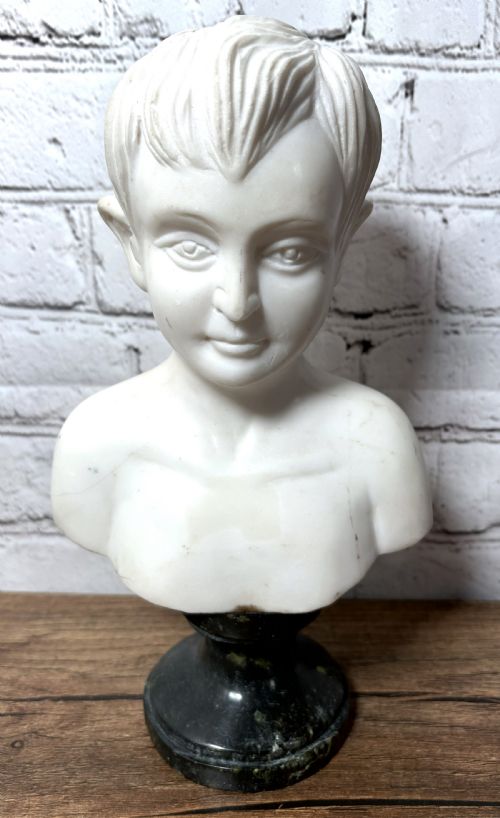


White Alabaster Figurine
A white alabaster figurine captures neoclassical grace and soft translucence, offering collectors finely carved figures spanning the Victorian era through the early twentieth century.
White Alabaster Figurine
A white alabaster figurine brings classic sculpture into domestic spaces, drawing on mythological subjects, literary heroines, and youthful portraits. These pieces range from intimate library busts to substantial gallery figures carved across Europe.
The selections available here lean heavily toward nineteenth-century works and turn-of-the-century creations. Buyers encounter reclining nudes, goddesses like Diana and Hestia, and allegorical representations of young women and children.
Originating predominantly from French and Italian workshops, these carvings reflect academic training and grand tour influences. They capture the transition from Victorian sentimentality through Art Nouveau curves to early Art Deco stylisation.
Distinctions in craftsmanship
The standard of carving defines the hierarchy of these works, separating mechanised tourist souvenirs from master-carved gallery pieces. Superior examples display anatomical precision, realistic hand positions, and masterfully undercut drapery.
Signatures by documented European sculptors and foundries elevate a piece, as do well-proportioned multi-figure groups and integration with contrasting base materials like veined marble or cast bronze.
Listings feature works spanning the nineteenth century through the 1930s, executed in alabaster, white marble, bronze, and parcel-gilt.
Auguste Henri Carli·Fritz Kochendorfer·Mieczyslaw Leon Zawiejski·Antonio Frilli·Pugi·P. Emilio Fiaschi·Joseph Gott·R. Lusili·Greuze·A. Cipriani
The White Alabaster Figurine Glossary
- Alabaster
- A soft, fine-grained stone that allows light to penetrate slightly beneath its surface, creating a warm, flesh-like glow. It is considerably softer than marble and requires careful handling to prevent scratching.
- Grand Tour
- A cultural journey of Europe undertaken by wealthy young men in the eighteenth and nineteenth centuries, which generated a strong demand for miniature sculptures and copies of classical antiquities. These souvenir pieces were often carved in Italian studios.
- Patination
- The surface alteration or coloration that develops on metals and stones over time through handling, exposure to air, and natural ageing. In mixed-media sculptures, it provides a visual contrast to the pale stone.
White Alabaster Figurine: Frequently Asked Questions
Where were these figures made?
The majority originate from specialised carving centres in Italy, particularly Florence and Volterra, as well as artistic studios in France. Master sculptors in these regions produced works for international exhibition and private collectors.
Many pieces were acquired by travellers touring Europe during the nineteenth and early twentieth centuries.
How do I identify the subject?
Subjects often draw from classical mythology, literature, and allegorical themes, identifiable by attributes like harps, lyres, or hunting bows. Inscribed titles on the base or plinth frequently name goddesses such as Hestia or Diana.
Portrait busts and genre figures of children or dancers represent popular nineteenth-century romantic motifs.
Are signatures common on alabaster?
Signatures appear on numerous exhibition-quality pieces, either carved directly into the stone or applied via a brass plaque on the plinth. They indicate the studio master or the sculptor responsible for the model.
Unsigned works remain frequent, reflecting the high volume of decorative sculpture produced in European workshops during this period.