



Whisky Decanter Set
When you search for a whisky decanter set, you encounter secure lockingtantaluses, fitted wooden boxes, and matched glass groupings designed to hold fine spirits in style.
Whisky Decanter Set
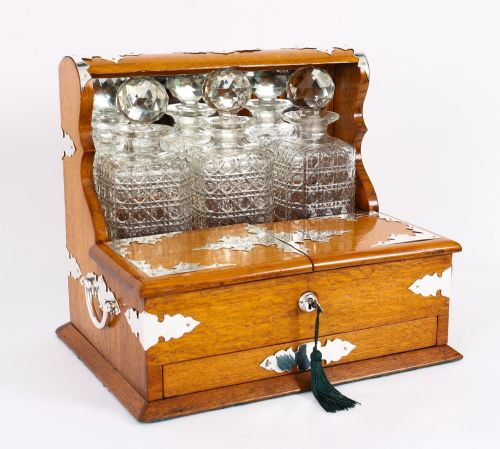
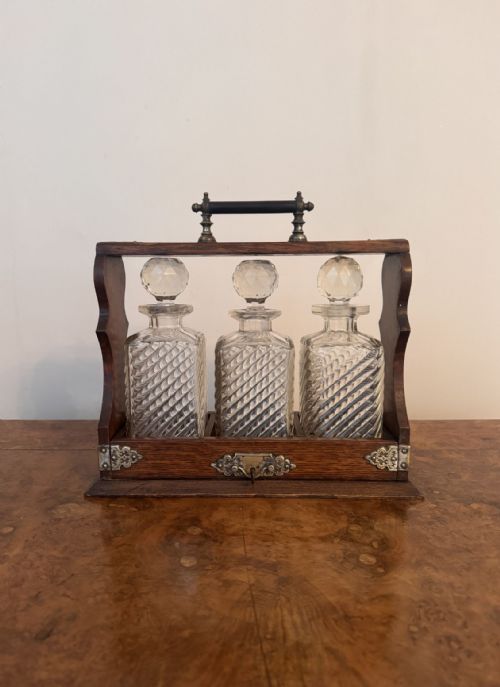
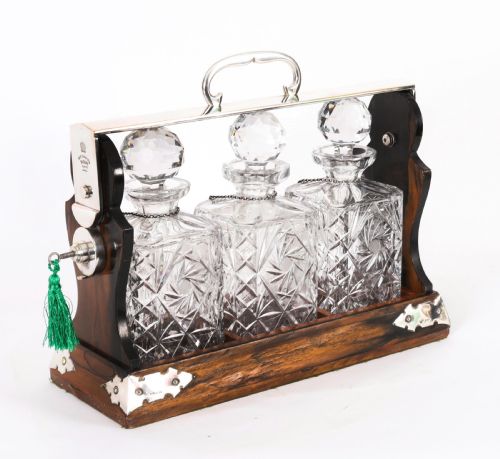
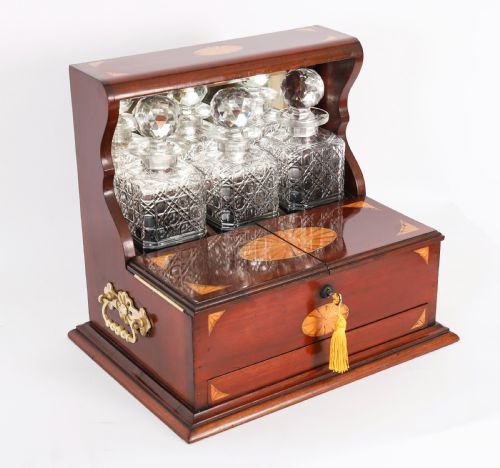
A whisky decanter set brings together spirit bottles and serving vessels within a unified presentation, ranging from Victorian locking frames to Art Deco glass services. When exploring this selection, buyers frequently encounter the tantalus, a secure wooden or metal framework holding two or three crystal bottles under a locking mechanism. Other common forms include fitted wooden boxes and open trays bearing matching glasses and decanters.
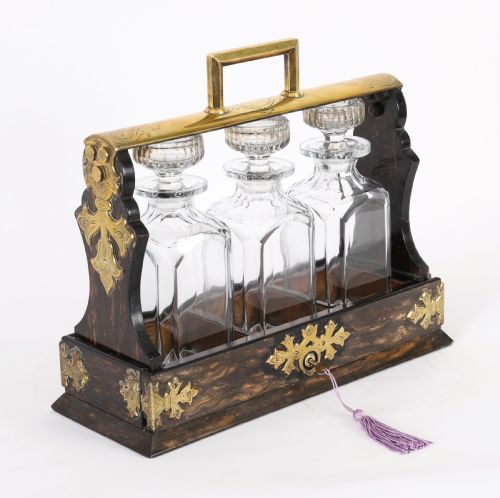
The material origins span across periods such as the Victorian era, Edwardian period, and the 1930s. Victorian and Edwardian examples predominantly utilise oak, walnut, or coromandel fitted with silver-plated or brass mounts and deep-cut crystal. Conversely, 1930s variants often display geometric Czech glass or hand-enamelled lead crystal alongside matching drinking glasses.
How they were made
The construction of these pieces relies on heavy timber framing combined with metalwork and blown glass. Cabinetmakers utilised oak, satinwood, and mahogany to build compartmentalised boxes and locking tantalus frames, frequently incorporating brass hinges, handles, and silver-plated locking bars. Glass bottles and decanters were mouth-blown, optically blown, or moulded from lead crystal and cut glass, sometimes finished with hand-applied enamel decoration.
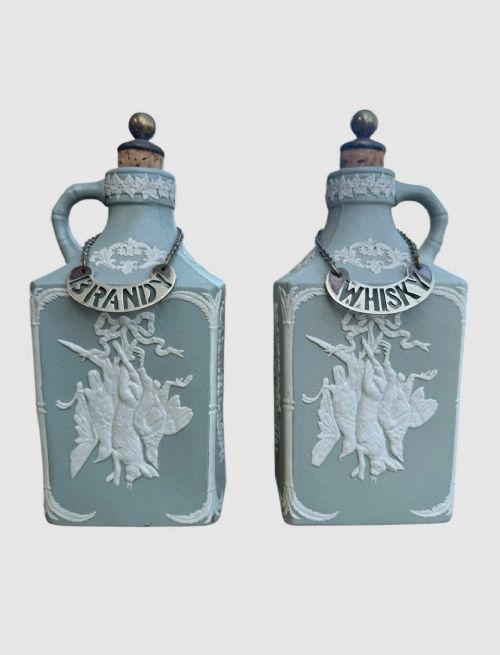
Hardware and labelling received meticulous attention from makers and silversmiths. Spirit bottles often featured matching silver chains and labels designating specific contents like brandy or whisky. Secure locking mechanisms required precise engineering within the wooden framework to prevent the removal of bottles without a key.
Whisky Decanter Set Retail Price Guide 2026
Typical asking prices for whisky decanter set among the pieces listed under this phrase on Sellingantiques today, from the lower quarter to the upper quarter. They describe what is for sale here now, not the wider market.
Materials range from solid coromandel and satinwood to brass mountings, silver plate, and hand-enamelled glass.
What varies in quality
The distinction between tiers rests upon the integration of materials and the reputation of the maker. Finer examples display high-grade timbers such as coromandel or satinwood paired with hallmarked silver mounts and substantial cut lead crystal decanters. Lesser versions employ simpler oak or base metals with straightforward moulded glass.
Design complexity also defines the upper range, particularly in pieces that combine a tantalus with a games compendium or dry bar. The precision of the locking action, the integrity of the fitted interior, and the presence of matching glasses or original decanter labels elevate the standing of an individual piece.
Betjemann·Elkington·Mappin and Webb·James Powell·Hukin and Heath·Karl Palda
The Whisky Decanter Set Glossary
- Tantalus
- A locking drink container frame that displays bottles while preventing access without a key. Named after the mythological figure who was kept just out of reach of food and water.
- Cut Crystal
- Glass containing lead oxide that is faceted by hand on a wheel to create brilliant refractive patterns. The deep cuts produce a heavier bottle with sharp light reflection.
- Optically Blown
- A glassblowing technique where molten metal is inflated inside a ribbed mould to impart internal vertical patterns. This method creates subtle optical distortion within the walls of the decanter.
- Compendium
- A fitted box containing multiple pastimes such as games alongside the drinking vessels. These multi-purpose containers served after-dinner entertainment in 19th-century drawing rooms.
- Decanter Label
- A small tag suspended by a chain around the neck of a bottle to identify the contents. They were frequently cast or stamped in silver during the Victorian and Edwardian periods.
Whisky Decanter Set: Frequently Asked Questions
What is a tantalus?
A tantalus is a locking wooden or metal stand designed to hold decanters securely in place. A metal bar locks across the stoppers, preventing anyone from pouring a drink without the key.
This invention allowed hosts to secure expensive spirits from household staff while keeping the bottles visibly displayed in a dining room or study.
How do I tell Victorian from Art Deco sets?
Victorian and Edwardian sets typically feature heavy solid woods like oak and walnut, deep-cut lead crystal, and brass or silver-plated hardware. They lean towards traditional compartmentalised boxes and locking frames.
Art Deco sets from the 1930s embrace geometric shapes, vibrant colours such as blue or black glass, and hand-enamelled decoration, often presented on matching glass trays with tumblers.
Were all decanter sets locked?
Not all sets featured locking mechanisms. While many tantalus frames incorporated locks, open decanter services, tray sets, and fitted boxes relied on presentation rather than restriction.
Locking versions were specifically engineered for the 19th-century formal household, whereas open tray sets served direct hospitality during the 20th century.
How were games compendiums used with decanters?
Combined decanter boxes and games compendiums served as comprehensive after-dinner entertainment units. The lower compartments held spirit bottles while upper trays housed playing cards, chess pieces, or boards.
Hosts used these portable dry bars to transition guests from dining to parlour games in a single piece of furniture.