





Wheelback Carver Armchairs
Wheelback carver armchairs combine sturdy domestic timbers with distinctive pierced wheel motifs, offering practical seating built for long daily use.
Wheelback Carver Armchairs
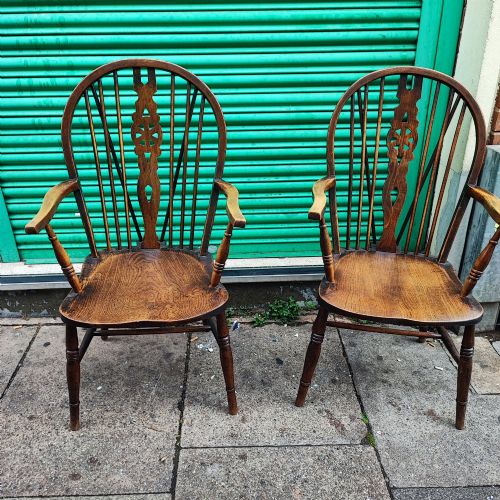
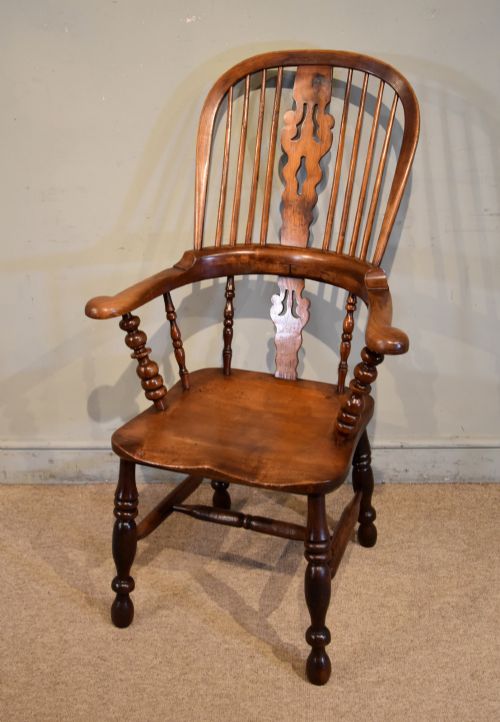
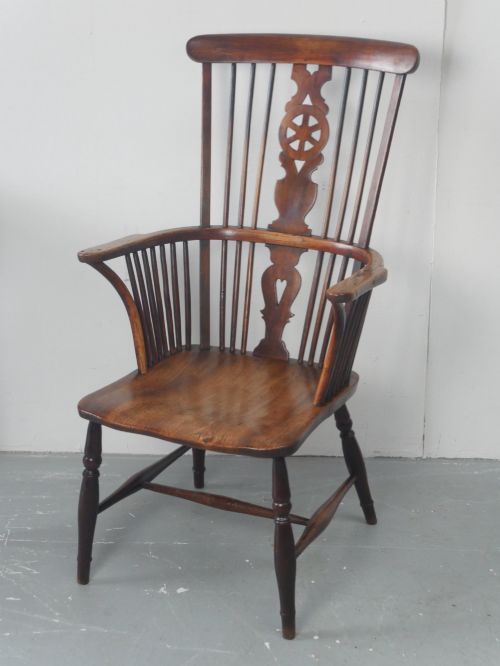
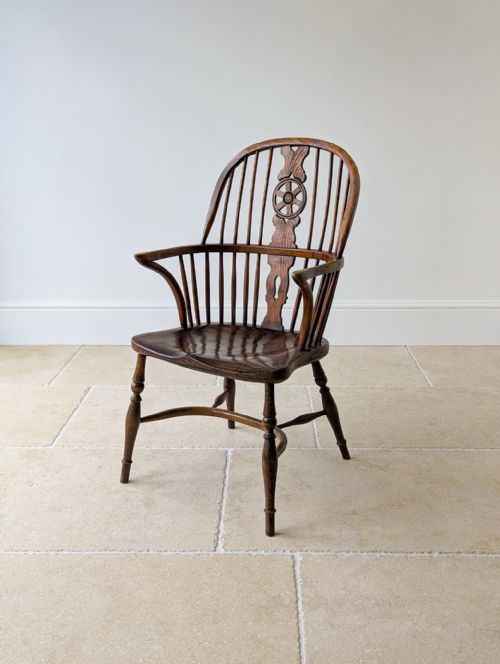
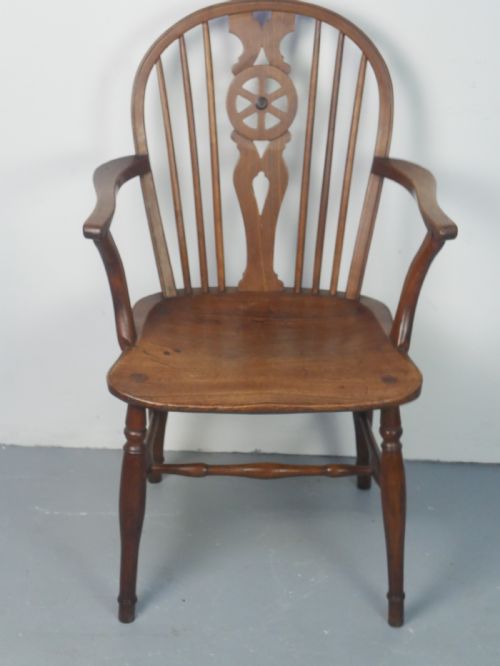
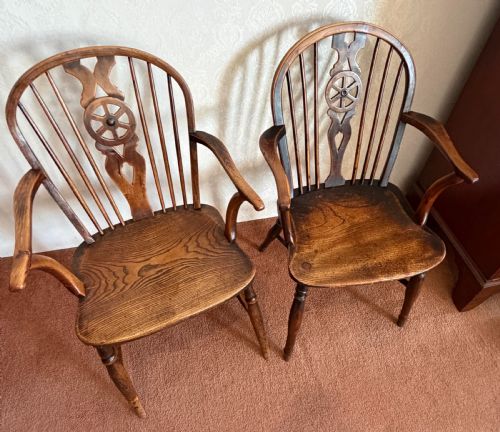
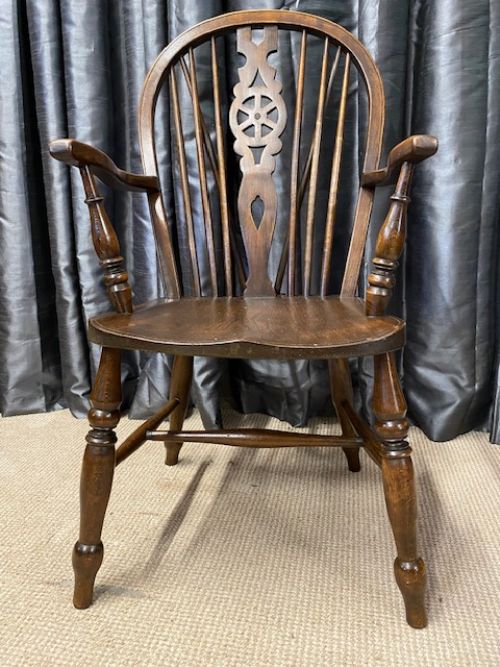
Wheelback carver armchairs are robust wooden seating forms featuring a characteristic pierced wheel design incorporated into the central splat of the backrest. These items serve primarily as sturdy seating around dining tables or within domestic kitchens and living spaces.
The versions most commonly encountered on this page originate from periods spanning the Georgian era through the Victorian period and into the early twentieth century. These pieces predominantly take the form of Windsor or kitchen armchairs constructed with distinctive arm supports.
Makers across various regions produced these armchairs using traditional framing techniques suited to domestic duties. Buyers frequently encounter examples finished in plain wood or painted surfaces reflecting regional English workshop traditions.
How they were made
The construction of these armchairs relies heavily on native timbers such as elm, beech, ash, and yew, selected for strength and flexibility. Craftsmen frequently combined these woods within a single piece, using ash or beech for the structural framing and elm for the solid saddle-shaped seat.
Turned components form the legs and spindles, while steam-bending techniques shape the overarching bows and armrests. The distinctive wheel motif is carved or pierced into a central wooden splat fitted between the seat and the top rail.
Wheelback Carver Armchairs Retail Price Guide 2026
Typical asking prices for wheelback carver armchairs among the pieces listed under this phrase on Sellingantiques today, from the lower quarter to the upper quarter. They describe what is for sale here now, not the wider market.
Current listings feature elm, beech, ash, yew, oak, mahogany, fruitwood, and painted wood across Georgian, Victorian, and Edwardian periods.
What varies in quality
Quality in these armchairs depends upon the choice of timbers and the crispness of the turning on the legs and spindles. Better examples display carefully matched grain patterns across the elm seats and well-proportionate wheel splats.
Structural integrity and the retention of original surface patination distinguish superior specimens from altered ones. The integration of the arms into the main bow assembly also indicates the level of joinery skill employed during production.
The Wheelback Carver Armchairs Glossary
- Carver armchair
- An armchair designed with arms, traditionally placed at the head of a dining table or used as a desk chair. These pieces provide additional side support compared to standard dining chairs.
- Wheelback
- A chair back featuring a carved or pierced circular wooden motif resembling a spoked wheel within the central splat. This design became popular during the nineteenth century in vernacular seating.
- Windsor chair
- A chair built with a heavy solid wooden seat into which the legs and back spindles are wedged directly. Regional variations include high backs and comb backs.
- Saddle seat
- A wooden seat base carved into a concave shape resembling a saddle for enhanced seating comfort. This technique is common in traditional Windsor construction using elm.
- Stickback
- A chair back constructed from multiple plain vertical wooden spindles rather than a solid carved splat. These spindles connect the seat directly to the top rail or bow.
Wheelback Carver Armchairs: Frequently Asked Questions
What is a wheelback carver?
A wheelback carver is a wooden armchair featuring a pierced wheel motif in the back splat and supportive armrests. These chairs were traditionally used as head-of-table seating.
They combine vernacular woodworking techniques with domestic comfort, utilising solid timber seats and turned spindle supports.
Which woods were used?
Maker workshops utilised native British hardwoods including elm, beech, ash, yew, fruitwood, and oak. Elm was frequently chosen for seats due to its resistance to splitting.
Ash and beech provided strong, flexible material for turned legs, spindles, and steam-bent bows.
How old are these chairs?
The pieces shown span from the Georgian period through the Victorian and Edwardian eras up to the early twentieth century. Many examples date from the nineteenth century.
Stylistic details and timber choices help distinguish between eighteenth-century origins and later revival pieces.
Where were they made?
These armchairs originated in English regional workshops, including traditional production centres such as the Thames Valley. Country makers supplied local homes, farms, and kitchens.
Production methods varied slightly by region, reflecting local access to specific timber stocks.
How to care for elm?
Elm furniture benefits from stable indoor humidity levels and protection from direct heat sources. Regular dusting with a dry cloth maintains the surface.
Application of traditional waxes preserves the natural grain and historic patination without sealing the timber.