




Wharfedale Landscape Canvas
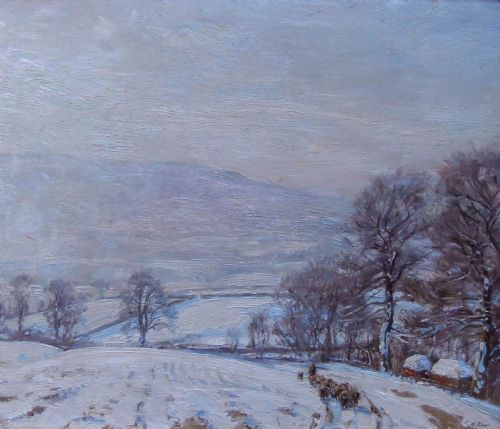
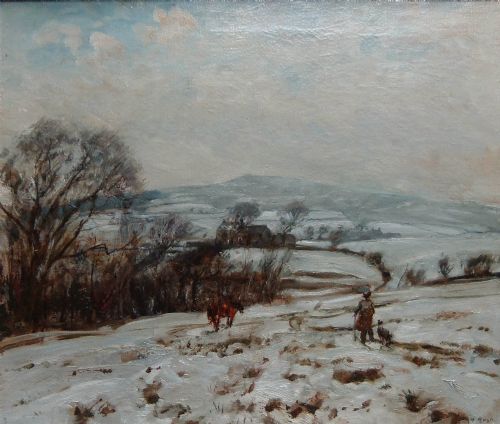
These wharfedale landscape canvas works capture the Yorkshire dales through rural scenes of haymaking, pasturing, and winter frost.
Wharfedale Landscape Canvas
When you search for wharfedale landscape canvas, you are looking at pastoral oil paintings depicting the Yorkshire valleys, rivers, and farms. The examples available date from the nineteenth century up to the nineteen-thirties.
The subjects focus heavily on agricultural life, including sheep grazing, hay harvesting, and timber hauling. Winter scenes and quiet riverbanks also appear frequently across the selection.
British impressionist and Victorian pastoral styles dominate these works, rendered by painters who worked directly within the landscape. They offer a grounded view of northern rural industry and topography.
How they were made
These works are executed in oil paint applied to woven canvas supports. The physical texture of the paint often remains visible, recording the rapid brushwork characteristic of plein air painting.
Many of these canvases sit within traditional wooden and gilt wood frames that complement the pastoral subject matter. The combination of oil on canvas and period framing preserves the original aesthetic of the early twentieth century.
The listings combine oil on canvas works from the nineteenth century up to nineteen-thirty, focusing on British impressionism and Victorian pastoral styles.
What varies in quality
The strength of a wharfedale landscape canvas lies in the confidence of the brushwork and the management of natural light. Stronger pieces capture the atmosphere of seasonal changes, such as winter frost or harvest warmth, with economy and precision.
Compositional balance separates the finer works from simpler studies. The placement of farmsteads, figures, or livestock gives the valley scenes their spatial depth and structural integrity.
Owen Bowen·Herbert Royle·William Manners·Reginald Grange Brundrit·William Greaves·Ernest Moore
The Wharfedale Landscape Canvas Glossary
- Canvas
- A heavy woven fabric used as a surface for oil painting. It is typically stretched over a wooden frame before work begins.
- Oil paint
- A slow-drying paint made by mixing pigments with oils such as linseed. This medium allows for rich blending and textured impasto surfaces.
- Gilt wood
- Wood that has been coated with a thin layer of gold leaf or metallic gilt. It is commonly found on period picture frames.
- British Impressionism
- A painting style developed in the late nineteenth and early twentieth centuries focusing on light and everyday subjects. Artists working in this manner often painted outdoors to capture transient atmospheric effects.
Wharfedale Landscape Canvas: Frequently Asked Questions
What periods do these paintings cover?
The works span from the nineteenth century through the nineteen-thirties. This era covers late Victorian painting traditions and the development of British impressionism.
Most pieces cluster around the early decades of the twentieth century. Artists working during this time frequently revisited the same Yorkshire locations to record seasonal shifts.
What subjects appear most often?
Agricultural scenes dominate the selection, including hay harvesting, timber hauling, and sheep pasturing. Painters also recorded local farmsteads, riverbanks, and winter snow.
Human activity is often integrated into the wider valley topography. Figures and working animals provide scale against the expansive Yorkshire backdrop.
How should I frame these canvases?
Many examples retain their period wooden or gilt wood frames. Keeping the work in its original surround maintains the historical context of the piece.
If framing is needed, select a traditional wooden moulding that suits the palette of the oil paint. Avoid overly ornate modern frames that clash with the impressionist aesthetic.
Where were these scenes painted?
The locations centre on Wharfedale in Yorkshire. Specific spots include Crosshills, Beamsley Beacon, and Netherside.
Artists lived and worked in the area to study the local light and landscape firsthand. These specific regional titles ground each painting in a precise topography.