


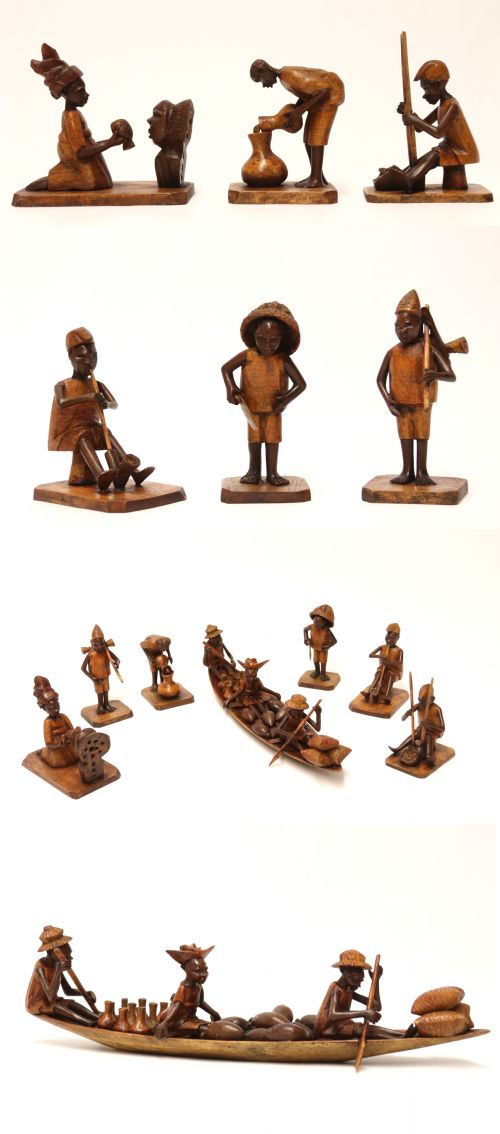


West African Wood Carving
A west african wood carving brings sculptural presence and rich cultural history into a room through hand-chiselled forms shaped by traditional makers.
West African Wood Carving
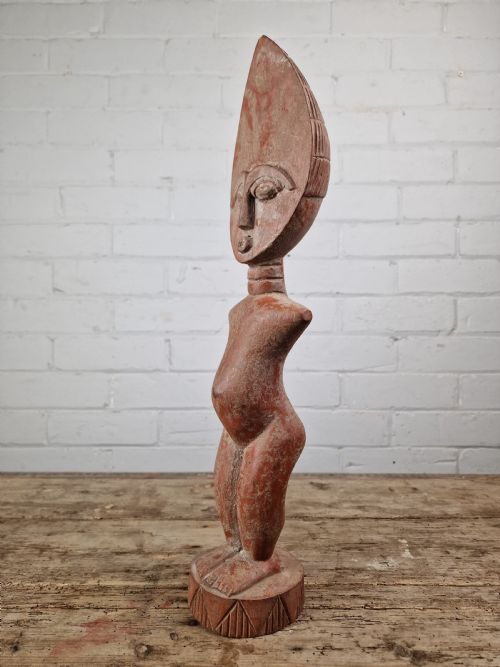
When you search for a west african wood carving, you enter a diverse field of tribal art, ritual objects and functional items spanning the nineteenth and twentieth centuries. These pieces encompass ceremonial masks, fertility figures, stools, combs and architectural elements originating from regions such as Nigeria, Ghana, Mali and the Ivory Coast.
You are most likely to encounter figurative sculptures, tribal masks from groups like the Baule, Gouro, Ligbi and Baga, alongside carved wooden stools associated with the Ashanti and Yoruba peoples. Dating ranges from the late nineteenth century through to the mid-twentieth century, capturing both traditional ritual artefacts and colonial-era production.
Materials and Working Methods
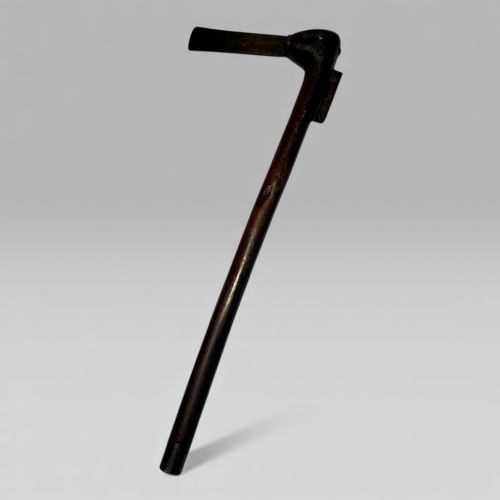
Makers fashioned these objects primarily from dense tropical hardwoods and indigenous woods, often enhancing the surfaces with applied pigments, ink and brass details. Bone and brass components appear in specific utilitarian items such as pipes and ceremonial axes.
The working method relies on traditional hand-carving techniques utilising adzes and chisels to reveal expressive contours and intricate surface patterns. Prolonged handling and ritual use built up a deep, natural patina over the exposed wood grain.
Listings span the nineteenth century, the Edwardian era, and the mid-twentieth century up to 1950, utilising woods, brass, pigment and ink.
Judging Quality and Authority
Quality rests upon the sculptural vigour of the carving, the sureness of the chisel work, and the depth of the established patina. Pieces attributed to specific groups or identified master carvers command attention through superior anatomical proportion and cultural authenticity.
Condition varies according to historical use, where field-collected items often display ritual wear, native repairs or insect traces that tell the working life of the object. Finer examples retain their original pigments and structural integrity without intrusive modern restoration.
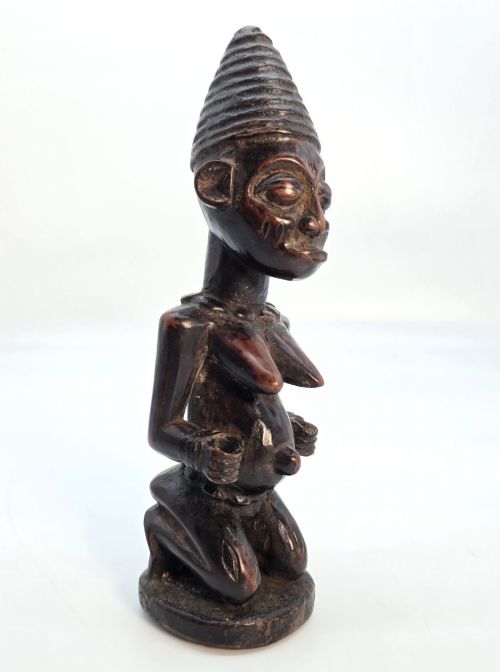
Abegunde of Ede
The West African Wood Carving Glossary
- Patina
- The lustrous surface sheen developed on wood through years of handling, oils and environmental exposure. This characteristic layer helps confirm the age and authenticity of tribal carvings.
- Ibeji
- A carved wooden figure commissioned among the Yoruba people to represent a deceased twin. These sculptures often feature distinct coiffures and ritual pigments.
- Récade
- A ceremonial axe or staff associated with the Kingdom of Dahomey, used as a symbol of royal authority and messenger status.
- Scholar board
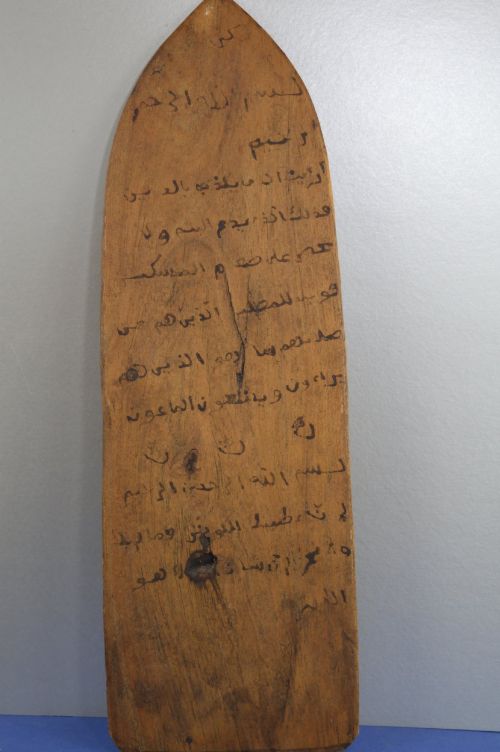
- A wooden writing or prayer tablet inscribed with Islamic script, historically used in West African Islamic education and spiritual practice.
West African Wood Carving: Frequently Asked Questions
What is a West African tribal mask?
These carved wooden visors and face coverings were utilised in ritual dances, ceremonies and seasonal festivals across regions like the Ivory Coast and Mali. They represent spirits, animals or ancestors and embody significant cultural authority.
Collectors appreciate them for their bold geometric forms and striking expression. Many display traces of ritual pigments and long-term handling on the reverse side.
How do I care for antique carved wood?
Keep wooden sculptures and masks away from direct sunlight and sources of artificial heat to prevent the material from drying out and splitting. Maintain a stable indoor humidity.
Avoid applying modern polishes, waxes or oils to surfaces with original patina or pigment. A gentle dusting with a soft, dry brush is generally sufficient for maintenance.
Are Ashanti stools still functional?
Traditional Ashanti stools were carved from a single block of hardwood to serve as personal seats of honour for their owners. Their curved seats and stepped bases remain structurally robust.
While they can support gentle sitting, many collectors choose to display them as sculptural works of art. Their distinctive form makes them versatile interior objects.
What indicates age in these carvings?
Age reveals itself through the dryness of the timber, the depth of the worn patina, and the evidence of native tool marks left by hand chisels. Field use often leaves characteristic marks, minor losses and ancient wear.
Stylistic conventions tied to specific periods, such as late nineteenth-century execution or Edwardian-era accession dates, help anchor the piece in time.