
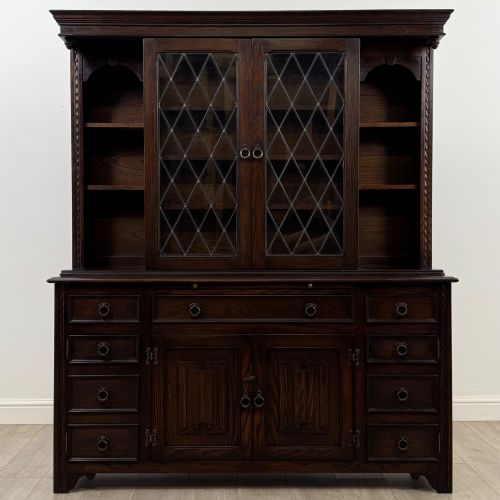
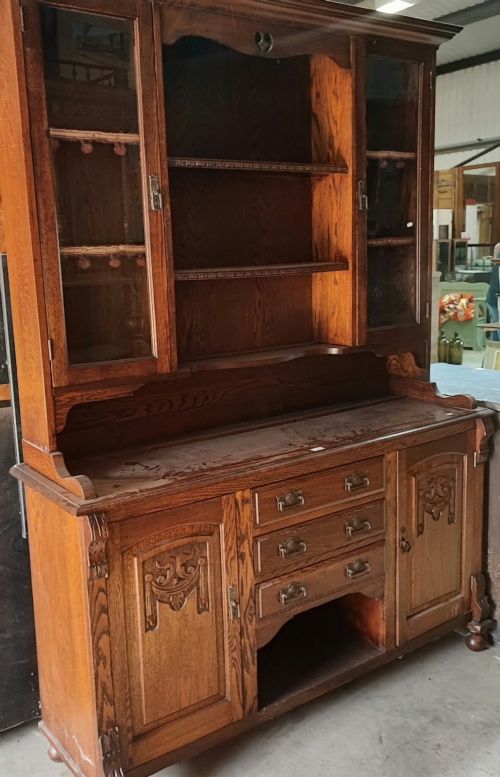
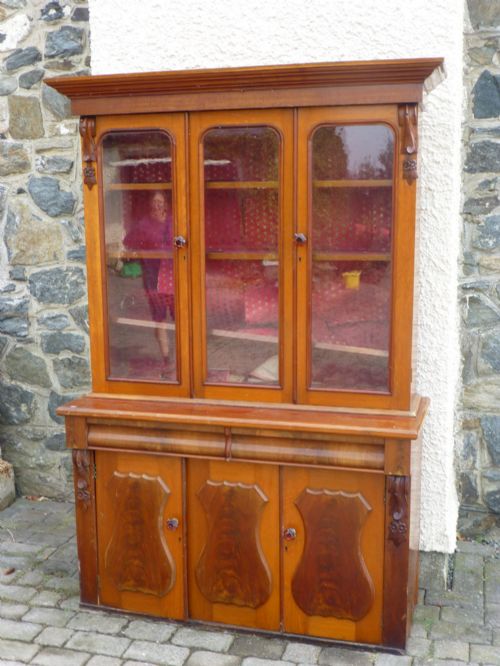
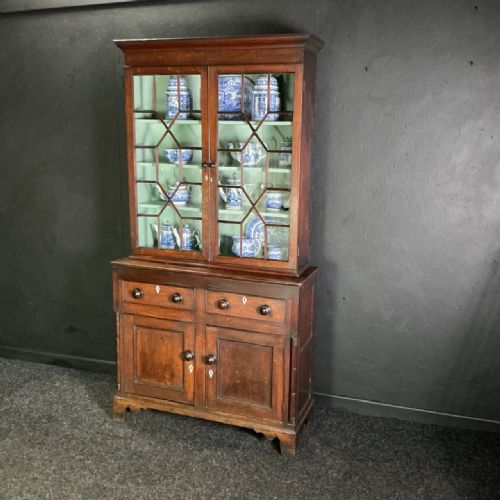
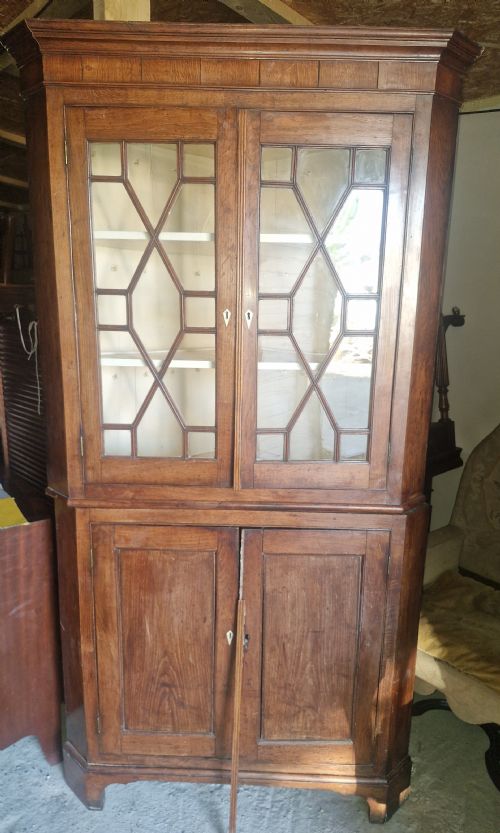
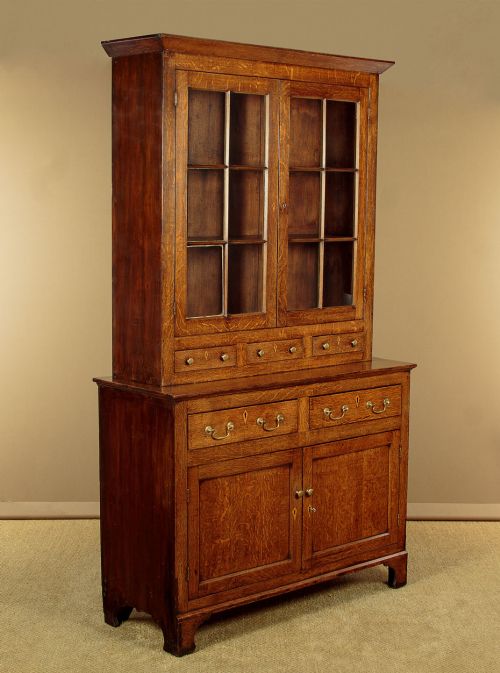


Welsh Oak Glazed Cabinet
A welsh oak glazed cabinet brings regional craft and warm timber straight into a room, offering display space combined with sturdy storage.
Welsh Oak Glazed Cabinet
A welsh oak glazed cabinet bridges the gap between utilitarian storage and formal display, taking forms such as corner cupboards, bureau bookcases, and large dressers. These pieces originate across the 18th and 19th centuries, drawing on regional vernacular traditions that prioritise honest construction and generous proportions.
Buyers encountering this selection will frequently find vernacular adaptations featuring glazed upper doors alongside timber lower cupboards or drawers. Styles range from Georgian and Regency forms to Victorian interpretations, often incorporating local cabinet-making traits unique to Welsh workshops.
How they were made
Maker construction relies heavily on solid oak timbers, occasionally paired with mahogany highlights or brass hardware to accentuate doors and drawers. Glass panes, sometimes set in leaded frames, protect the contents of the upper display sections while revealing the shelves within.
Cabinet makers utilised traditional joinery methods to build these two-part or free-standing units, ensuring durability across centuries of domestic use. The timber surfaces display natural grain patterns that receive simple finishes to highlight the warmth of the oak.
Some corner cupboards were built specifically to fit awkward farmhouse walls where straight furniture simply refused to go.
What varies in quality
Quality rests upon the selection of timber figure, the harmony of proportions, and the integrity of the original glazing bars. Pieces retaining their early brass fittings and untouched surface patination stand apart from those altered or overly restored over time.
The refinement of the regional vernacular style dictates the character of each cabinet, distinguishing simpler country pieces from more ambitious architectural designs with intricate cornice details.
The Welsh Oak Glazed Cabinet Glossary
- Cwpwrdd Gwydr
- A traditional Welsh term for a glazed cupboard, often denoting regional vernacular furniture built to display household china.
- Glazing bars
- The wooden or lead strips that divide individual panes of glass within a cabinet door, shaping the visual rhythm of the upper section.
- Vernacular
- Architecture and furniture created by local craftsmen using regional traditions and readily available materials rather than high-style metropolitan designs.
- Bureau bookcase
- A multi-functional form combining a sloping writing flap above drawers with a glazed bookcase section on top.
Welsh Oak Glazed Cabinet: Frequently Asked Questions
Where should I place a corner cabinet?
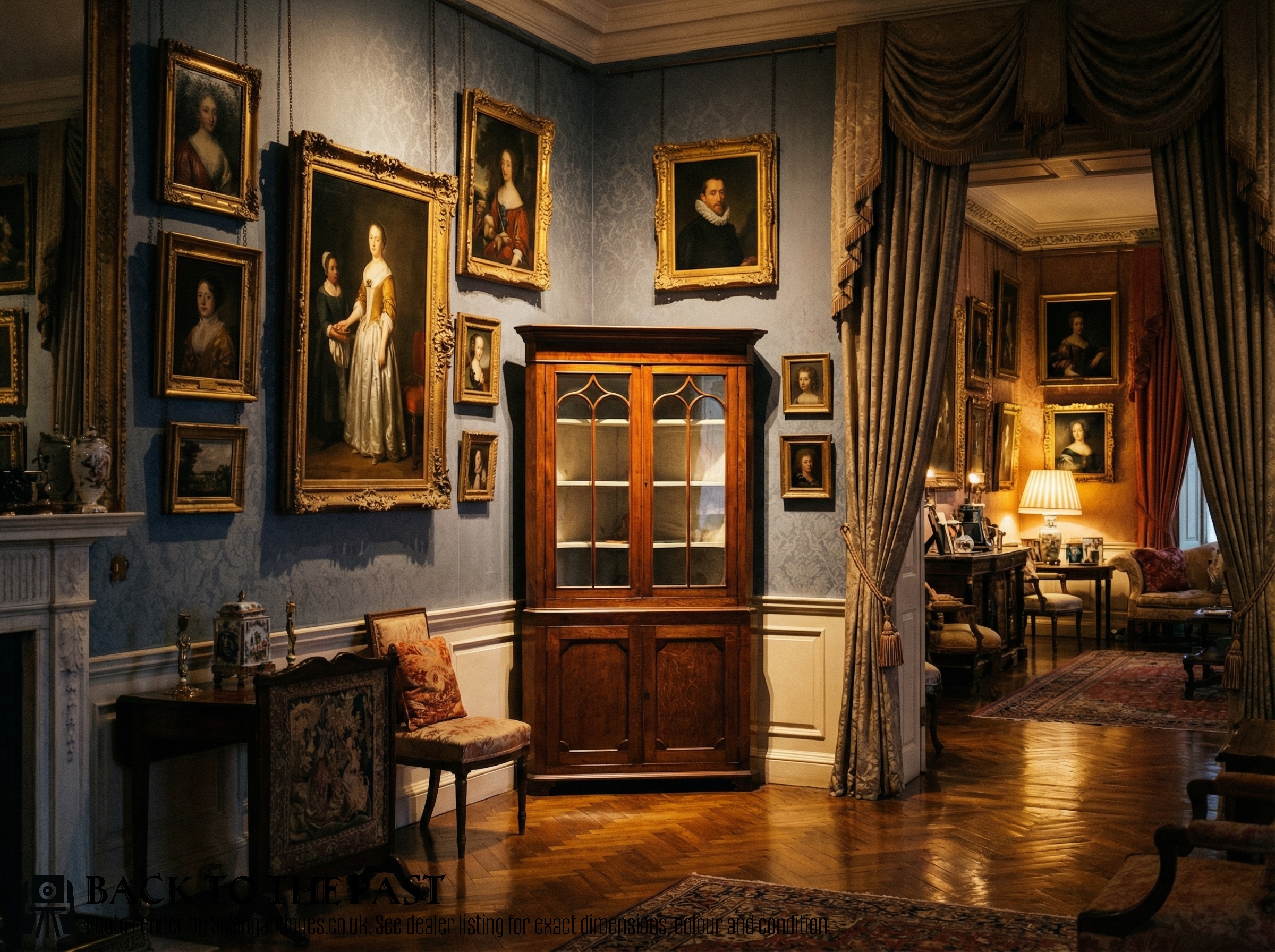
These units fit neatly into unused room angles, making them practical for smaller spaces where a standard rectangular cupboard would overwhelm the floor plan.
Position them away from direct heat sources to protect the historic timber from drying out and splitting over time.
How do I clean the historic glass?
Use a soft cloth and a gentle glass cleaner applied directly to the cloth rather than the panes, preventing moisture from seeping into old wooden glazing bars.
Take care around leaded sections to avoid bending the soft metal camings that hold the glass in place.
Can these cabinets support heavy books?
Many examples designed as bookcases or bureau bookcases feature sturdy fixed shelving built to bear substantial volumes.
Inspect the shelf supports within older pieces to ensure they remain secure before loading them with heavy items.
How do I tell an 18th century piece from a 19th century one?
Earlier examples often display hand-sawn timber marks and simpler, robust corner construction rooted in country workshop traditions.
Later Victorian and Edwardian pieces frequently introduce refined mouldings, mahogany crossbanding, or machine-finished components.