


Brown Wooden Corner Display Unit
These brown wooden corner display unit pieces utilise awkward angles, turning wasted wall junctions into useful display space for treasured objects.
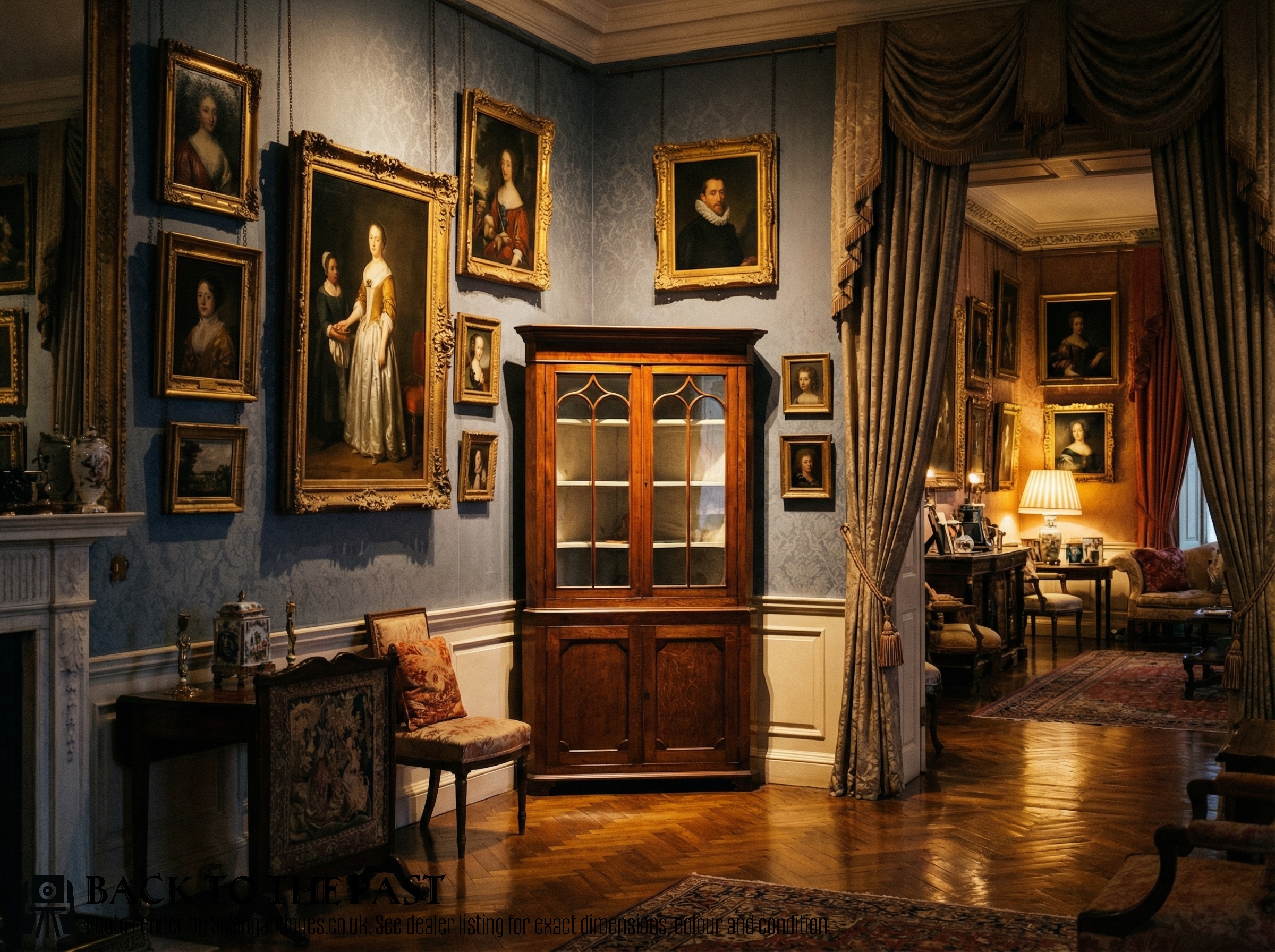
Brown Wooden Corner Display Unit
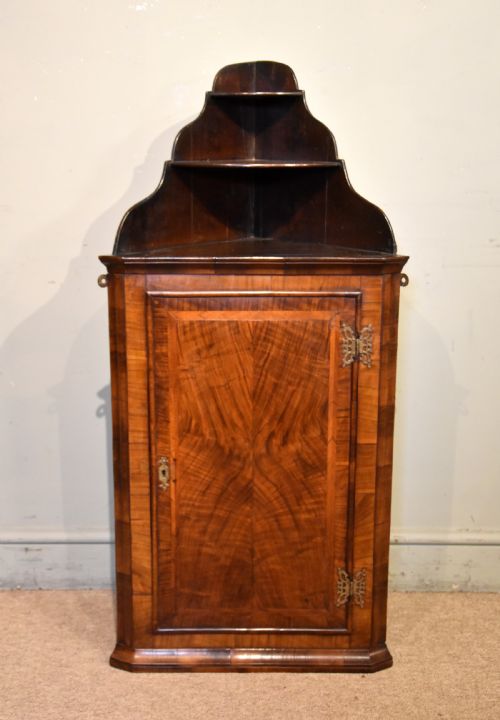
A brown wooden corner display unit uses timber to solve the problem of empty junctions in a room, offering both concealed storage and open display. These pieces range from hanging oak cupboards to tall floor-standing etageres and whatnots.
Georgian, Victorian, and Edwardian periods dominate these selections, alongside Regency and 1930s examples. Woods such as mahogany, oak, walnut, and olive wood shape the primary aesthetic of the furniture.
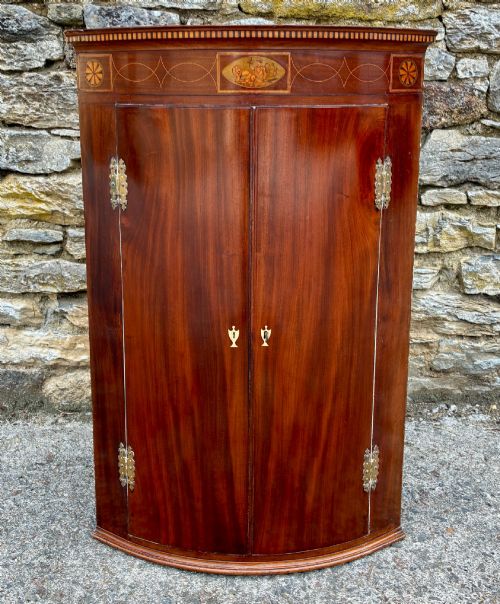
Most items you encounter adopt specific regional or stylistic traits, from Welsh country oak builds to bow fronted George I and George III cabinets. The scale varies from compact hanging models to substantial country house freestanding units.
How they were made
Carpenters built these corner cabinets and whatnots primarily from solid hardwoods like mahogany and oak, applying walnut veneers on finer examples. Boxwood inlay often provides linear contrast along panel edges and cornices.
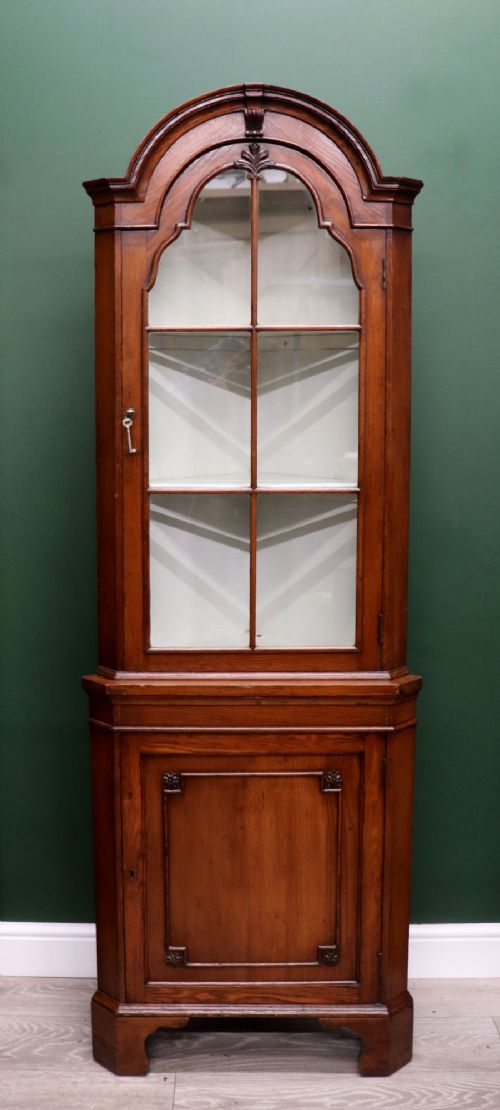
Glass panels are glazed into cabinet doors to protect contents while allowing visibility, supported by brass hinges and key escutcheons. Joinery relies on traditional framing methods designed to fit snugly into ninety-degree wall angles.
Listings feature woods including mahogany, oak, walnut, burr walnut, olive wood, and boxwood inlay across Georgian to Edwardian periods.
What varies in quality
The choice of timber and figuring defines the visual tier of a piece, with burr walnut and richly grained mahogany sitting above plain domestic oak. Crispness in inlay work and boxwood stringing separates standard workshop production from finer cabinetmaking.
Proportion and scale dictate the success of the design, particularly in bow fronted formats and multi-tiered whatnots. The survival of original brass hardware and glass panes contributes to the integrity of the piece.
Liberty and Co
The Brown Wooden Corner Display Unit Glossary
- Bow front
- A convex curved front section that projects outward from the corners, common on finer Georgian and Regency cabinets. This shape softens the angular geometry of the room.
- Etagere
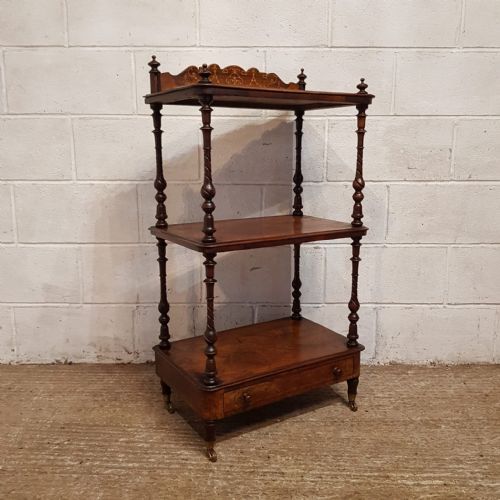
- A set of open shelves for displaying small ornaments and curiosities, often standing free in a corner. These pieces emerged in various tiered formats during the nineteenth century.
- Whatnot
- A multi-tiered shelving unit designed for books, ornaments, or display, sometimes incorporating small drawer sections below. They appear in both standing and corner formats.
- Inlay
- A decorative technique where contrasting materials such as boxwood are fitted into recessions in the primary wood surface. This creates geometric or floral borders along the panels.
- Escutcheon
- A small plate of brass or other metal surrounding the keyhole of a cabinet door. It protects the surrounding wood from wear caused by the key.
Brown Wooden Corner Display Unit: Frequently Asked Questions
Are these cabinets hung on walls or freestanding?
Both formats exist within the selection, depending on the period and specific room requirements. Hanging models secure directly to wall studs, while floor-standing cabinets and whatnots rest firmly on the ground.
Floor-standing versions often provide greater capacity and include lower cupboard sections alongside upper display shelves. Hanging variants save floor space in smaller rooms while utilising upper wall junctions effectively.
What is the difference between a whatnot and a corner cabinet?
A corner cabinet primarily encloses objects behind panelled or glass doors, keeping dust away from contents. A whatnot consists entirely of open shelves designed for immediate display.
Whatnots prioritise accessibility and visual lightness over security and dust protection. Cabinets offer private storage below or within a secure housing.
How do I date a mahogany corner cupboard?
Dating relies on examining construction methods, timber choice, and stylistic details such as bracket feet or dental cornices. Georgian pieces often display hand-cut dovetails and dense, heavy mahogany.
Later Victorian and Edwardian examples might feature machine-sawn elements and lighter internal secondary woods. Inlay styles and brass hardware types also shift noticeably across the eighteenth and nineteenth centuries.
How do I care for antique wood corner furniture?
Keep wooden surfaces away from direct sunlight and sudden temperature shifts to prevent timber splitting or veneer lifting. Regular dusting with a dry, soft cloth maintains the finish without needing heavy polishes.
Occasional application of traditional wax feeds the wood and preserves the natural lustre of mahogany and oak. Avoid placement near active heat sources or damp exterior walls.