
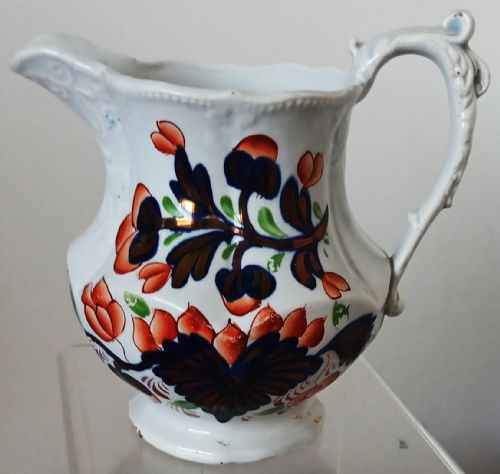
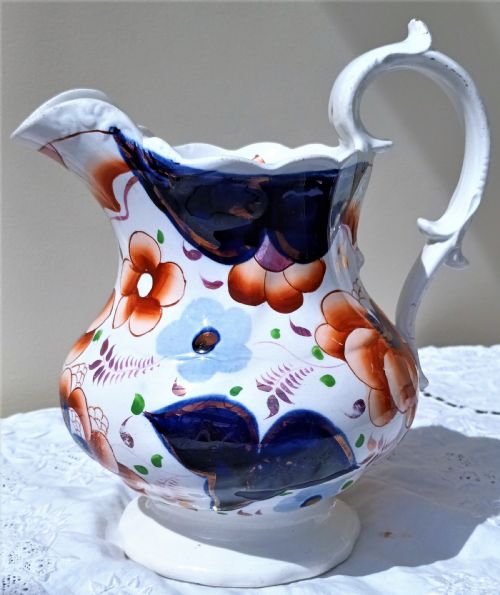
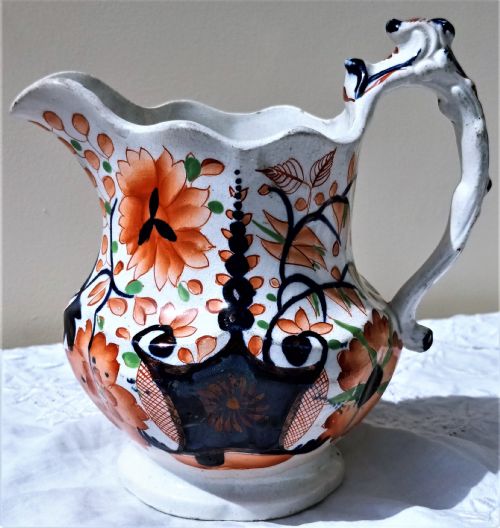
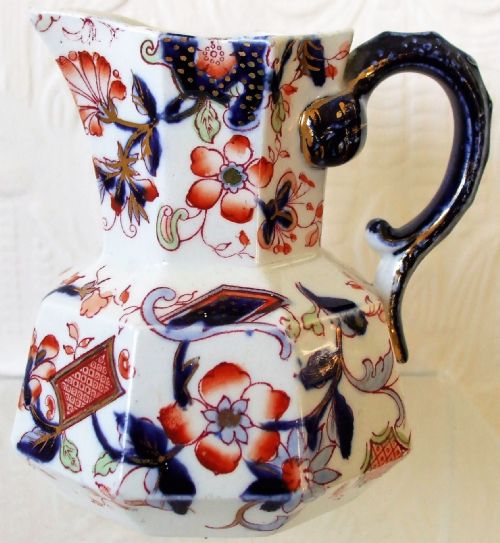
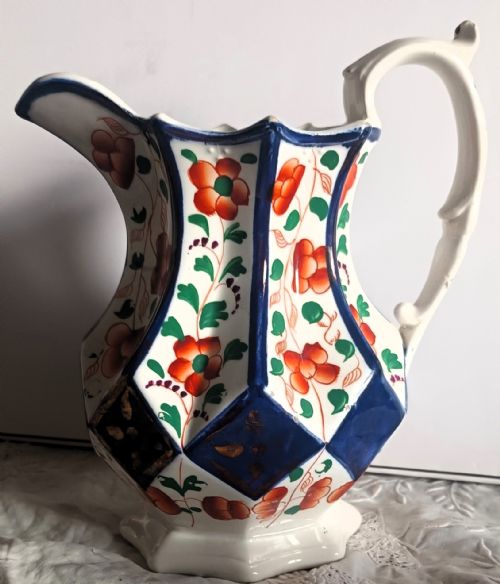
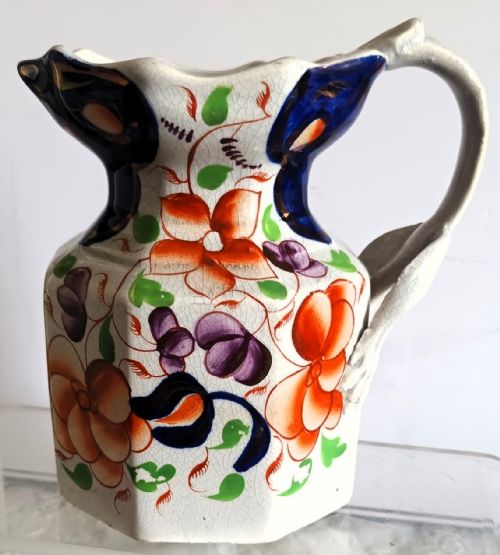
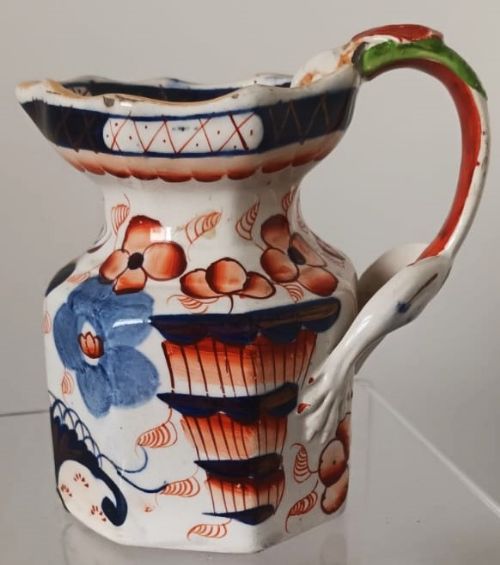
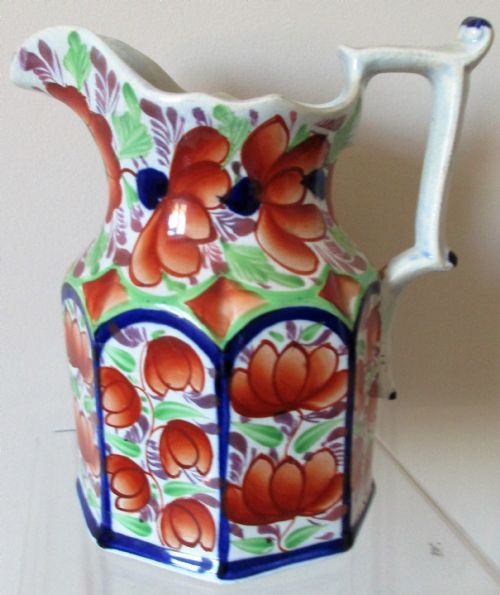
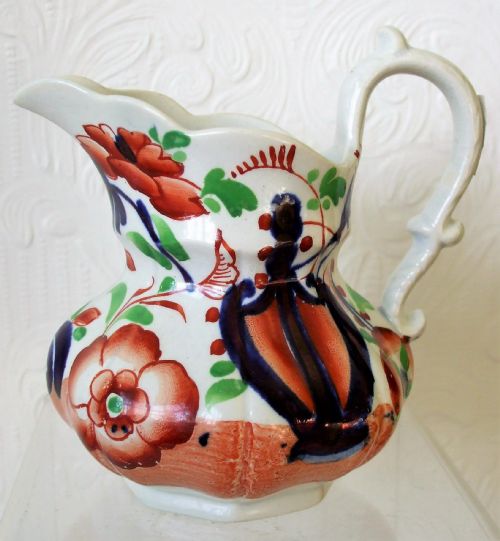
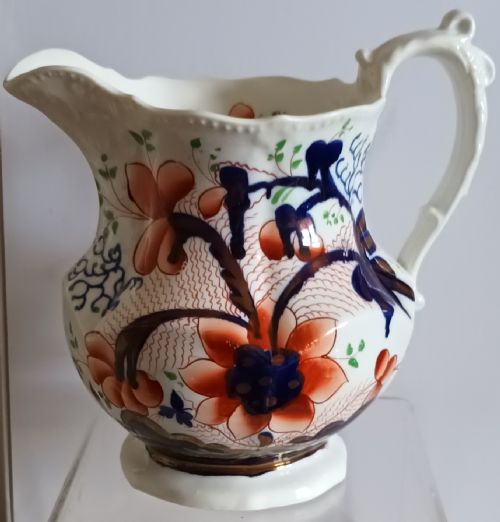


Welsh Gaudy Earthenware Jug
These robust welsh gaudy earthenware jug examples bring vibrant nineteenth-century pattern and lustre to a shelf.
Welsh Gaudy Earthenware Jug
A welsh gaudy earthenware jug belongs firmly to the nineteenth century, sitting within Georgian and Victorian production. The pieces seen here showcase named patterns such as Grape, Drape, Pagoda, Harlech, Gower, Bethesda, Gwent, Aberaeron, and Conwy.
Most examples function as jugs and pitchers in domestic settings, displaying stout earthen bodies shaped for daily service. Collectors meet standard jugs alongside distinct pouch jug forms.
The style merges folk art traditions with cottage pottery manufacture, creating utilitarian vessels defined by bright decoration. These items represent a distinct branch of nineteenth-century ceramics.
Materials and manufacture
The foundation rests on earthenware and glazed ceramic bodies, shaped into robust pitchers and jugs. A protective glaze seals the clay before the application of hand-painted decoration.
Makers applied vivid enamel colours alongside copper lustre and gilding to create the characteristic vibrant appearance. This combination of ceramic base and metallic sheen defines the visual language of the group.
Pattern names recorded in the evidence include Grape, Drape, Pagoda, Harlech, Gower, Bethesda, Gwent, Aberaeron, and Conwy.
Judging quality in nineteenth-century jugs
Quality rests upon the crispness of the painted patterns and the richness of the copper lustre highlights. Stronger examples exhibit precise application of enamel colours across motifs like Pagoda or Grape.
The finesse of the earthenware form itself separates standard production from finer pieces, particularly in unusual shapes like pouch jugs. Preservation of the original glaze and metallic gilding dictates the overall visual impact.
Keeling and Co.
The Welsh Gaudy Earthenware Jug Glossary
- Earthenware
- A porous clay body fired at a lower temperature and rendered impervious to liquids by a glassy glaze. It forms the heavy, durable base of these nineteenth-century vessels.
- Copper Lustre
- A metallic glaze application that imparts a coppery, reflective sheen to the ceramic surface. It catches the light and frames the painted enamel motifs.
- Enamel
- Opaque glass-like paint applied over the fired glaze in bright colours. It provides the bold palette characteristic of nineteenth-century folk pottery.
- Gilding
- The application of gold leaf or gold paint to highlight rims and handles. This decorative touch elevates domestic earthenware into display pieces.
Welsh Gaudy Earthenware Jug: Frequently Asked Questions
What defines a welsh gaudy earthenware jug?
These vessels are nineteenth-century ceramic jugs decorated with bold enamels and copper lustre. They combine Victorian folk art styles with named patterns.
Collectors find them in standard jug shapes and pouch pitcher forms. The bright palette remains their most recognizable trait.
How were these jugs used originally?
Households used these pitchers for serving liquids at the table during the nineteenth century. Their sturdy earthenware construction suited daily domestic tasks.
Over time, many transitioned from utilitarian service to decorative display. Their bright patterns made them popular cottage ornaments.
Are these pieces Victorian or Georgian?
The evidence places these jugs within the nineteenth century, spanning both Georgian and Victorian eras. Most surviving examples belong to the Victorian period.
Stylistic shifts reflect changing tastes in folk pottery throughout the eighteen-hundreds. Exact dating depends on stylistic markers and potters' conventions.