


Earthenware Floral Milk Jug
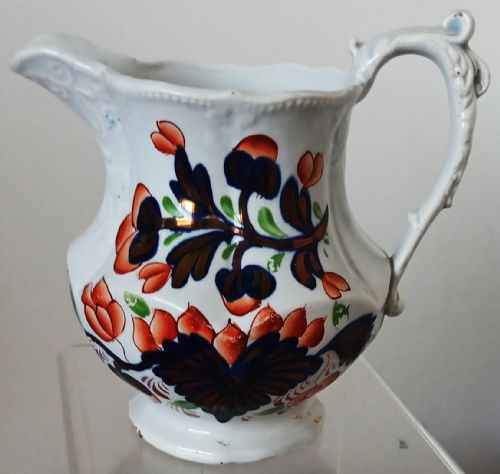
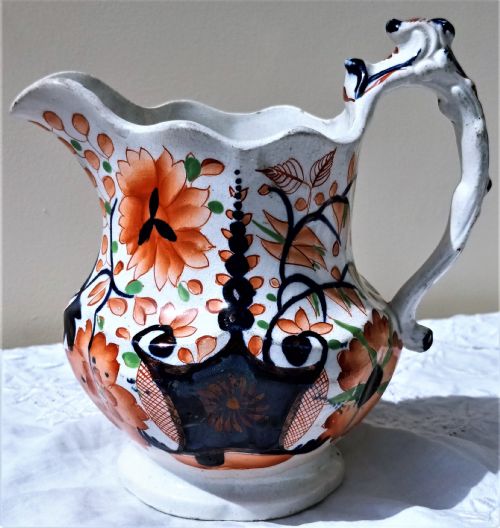
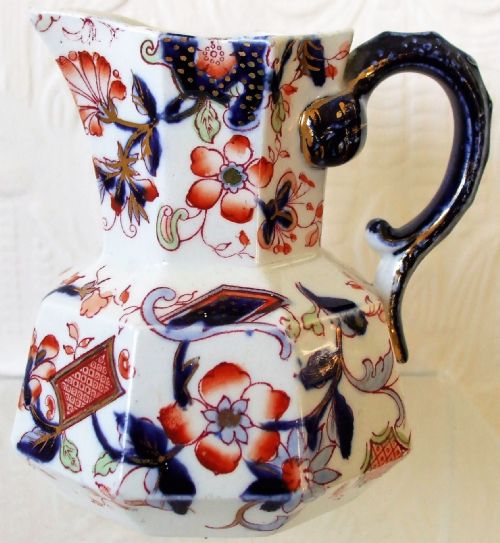
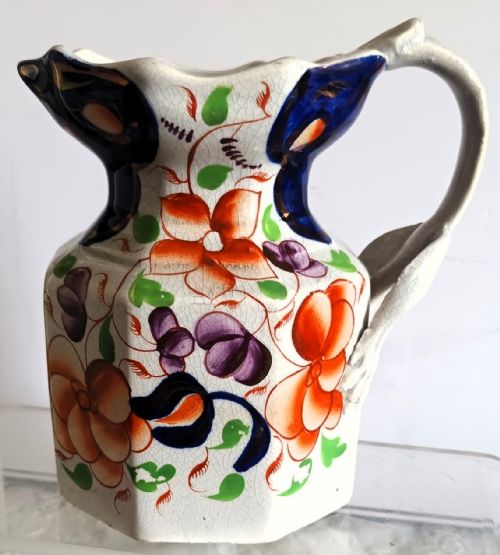
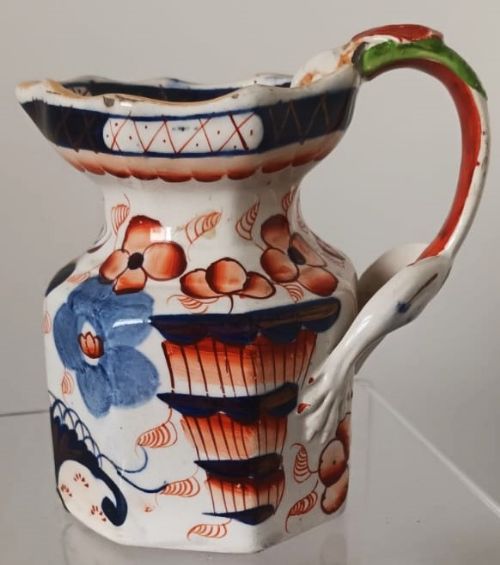
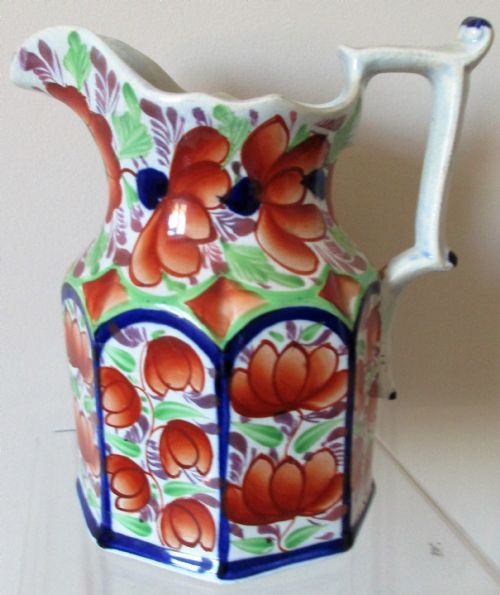
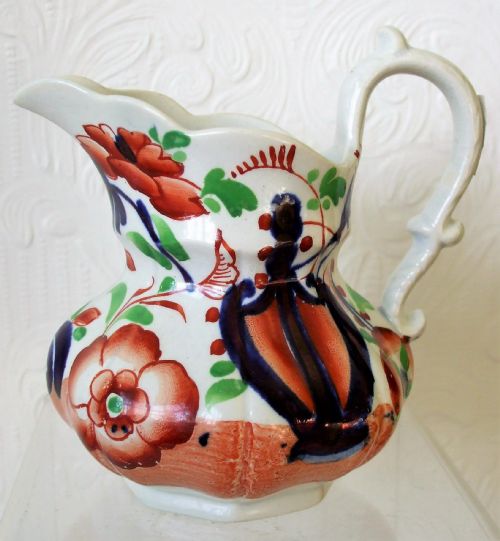
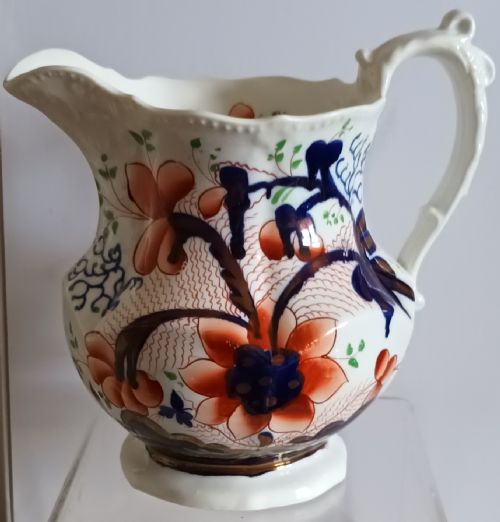
These earthenware floral milk jugs bring bright nineteenth-century folk patterns and vibrant copper lustre to the table.
Earthenware Floral Milk Jug
An earthenware floral milk jug is a small pouring vessel designed for dairy at the table, shaped with a rounded body, a defined spout and a looped handle. When you search for an earthenware floral milk jug, you are looking primarily at nineteenth-century pieces decorated with botanical and architectural motifs.
The pieces on this page are overwhelmingly Victorian examples associated with Gaudy Welsh patterns. You will frequently encounter named designs such as Pagoda, Gwent and Grape, alongside regional patterns like Gower, Aberaeron, Harlech and Conwy.
Originating largely from Georgian and Victorian workshops, these jugs combine sturdy earthenware bodies with colourful hand-applied decoration. They bridge formal ceramic production and folk art traditions, making them practical items with strong visual character.
Materials and construction
Makers shaped these jugs from earthenware or ceramic bodies, providing a robust base for fluid pouring forms like the pouch jug. The surfaces were then finished with glaze to seal the porous clay and create a smooth canvas for decoration.
Decoration relied on applied enamel paint and copper lustre, which delivered rich metallic sheens and bright contrasting colours. Some vessels also incorporated porcelain elements or gilding to add fine detail to the rims and handles.
Victorian potters named patterns after Welsh towns they had probably only ever visited in daydreams.
Judging quality and execution
Quality in these jugs rests on the crispness of the transfer-printed outlines beneath the hand-applied enamel colours. Stronger pieces display precise alignment where the vibrant cobalt, iron red and copper lustre sit neatly within the floral or architectural design.
The handling of the clay body also distinguishes better examples, visible in the balanced weight of the pouch jug and the clean pull of the handle from the rim. Finer potting ensures the vessel sits level and pours cleanly without drips from the spout.
Keeling and Co
The Earthenware Floral Milk Jug Glossary
- Earthenware
- Porous pottery fired at lower temperatures than stoneware or porcelain, requiring a vitreous glaze to hold liquids. It forms the heavy, durable body of these nineteenth-century jugs.
- Copper Lustre
- A metallic glaze technique producing a coppery, reflective sheen over ceramic surfaces. It frequently frames the brightly coloured floral and geometric panels on Welsh pottery.
- Gaudy Welsh
- A distinctive style of brightly coloured pottery featuring cobalt blue, iron red and copper lustre highlights. It was largely produced in English potteries for the Welsh market during the nineteenth century.
- Pouch Jug
- A pitcher form characterised by a rounded, bulbous belly that tapers toward the neck. This shape provides generous capacity for milk while maintaining a stable base.
- Enamel
- Opaque glass-like paint applied over the fired glaze and refired at a lower temperature to fuse with the surface. It provides the vivid pinks, greens and blues seen in floral patterns.
Earthenware Floral Milk Jug: Frequently Asked Questions
What is a Gaudy Welsh jug?
A Gaudy Welsh jug is a nineteenth-century earthenware vessel decorated with striking cobalt blue, iron red, green and copper lustre. These pieces were made in English potteries specifically for domestic use in Wales.
They combine bold floral and geometric patterns with reflective metallic finishes. Collectors value them for their exuberant folk art aesthetic.
How were these jugs used?
These jugs served as practical table vessels for pouring milk or cream during tea and dining. Their sturdy earthenware construction made them suitable for daily household tasks.
Over time, many transitioned from pantry items to decorative cabinet pieces due to their bright enamel decoration.
Are these jugs dishwasher safe?
These nineteenth-century earthenware pieces require hand washing in warm water. Modern dishwashers and harsh detergents will damage the delicate overglaze enamels and copper lustre.
Gentle care preserves the hand-painted colours and metallic sheens that define the Victorian folk art style.
How do I identify a Victorian pattern?
Victorian patterns often feature descriptive names stamped or painted on the base, or identifiable motifs like the Pagoda, Grape or regional Welsh town names. You can cross-reference these titles with nineteenth-century ceramic records.
The combination of transfer-printed outlines and hand-applied enamel colours points directly to this period of production.